
What Are the Treatment Options for Female Pattern Hair Loss?
Short answer
Treatment for female pattern hair loss may include topical or oral minoxidil, spironolactone for selected patients, and hair-restoration procedures such as PRP or transplantation.
This answers one question. It is not a diagnosis and does not replace an assessment by a licensed doctor.
At a glance
- Common pattern
- Gradual crown or part-line thinning
- Medical choices
- Topical minoxidil, oral minoxidil, or selected hormonal treatment
How options differ
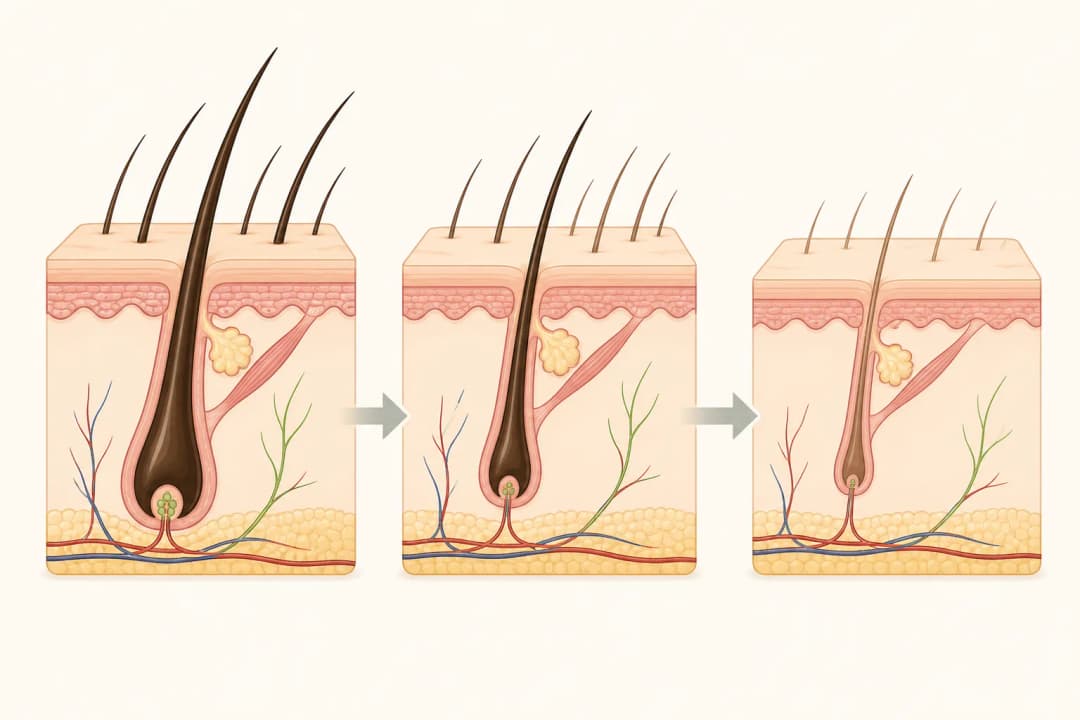
Female pattern hair loss often appears as gradual thinning over the crown or a widening part, while the front hairline may remain relatively preserved. A clinician may examine the scalp, review medicines and health changes, and check whether shedding suggests another cause. Topical minoxidil is applied to the scalp; oral minoxidil affects the whole body and needs medical supervision. Spironolactone may be considered when hormonal factors are relevant and is not suitable for everyone.
Building a treatment plan
Use a prescribed medicine consistently and discuss pregnancy plans, blood pressure, heart symptoms, and other medicines before starting oral treatment. PRP and hair mesotherapy are procedure-based options that involve scalp injections and a planned series of visits. A hair transplant moves follicles from a donor area to areas of visible thinning; it requires assessment of donor supply and the pattern of loss. Gentle hair care can reduce breakage while treatment is evaluated.
When to seek assessment
Arrange a medical review when thinning is sudden, patchy, associated with scalp pain or scaling, or accompanied by loss of eyebrows or body hair. Prompt assessment is also useful when heavy shedding follows illness, major stress, dietary restriction, or a new medicine. Finding the cause early helps prevent treating a different scalp or health problem as female pattern hair loss.
Questions for your doctor
Ask whether your pattern fits female pattern hair loss, whether testing is needed, and which treatment suits your medical history. Discuss expected monitoring, pregnancy safety, scalp procedures, donor hair, and how progress will be assessed over time.
Find care
General Clinics & Polyclinics in Abu Dhabi
That answer is general. If you want it applied to your own case, these are licensed general clinics & polyclinics listed in Abu Dhabi.
27 Ar Ruwwad St - Shakhbout City - MSH4 - Abu Dhabi - United Arab Emirates
Accepts: Daman, Thiqa, Cigna, MetLife +20 more
Al Ruwais, Al Dhafrah
Accepts: Daman, Thiqa, AXA, Cigna +16 more
Al Bahyah - Al Bahyah Old - Abu Dhabi - United Arab Emirates
Accepts: Daman, Thiqa, Cigna, Allianz Care +18 more
Abu Dhabi
Accepts: Daman, Thiqa, AXA, Cigna +27 more
Ordered by verification status and how complete each clinic's public record is, then alphabetically. This is a directory listing, not a ranking — Zavis does not rate or recommend providers.
A factual listing drawn from the DHA, DOH and MOHAP licence registers. It is not a referral, an endorsement, or advice that any of these providers is right for you.
Questions people ask
Is topical minoxidil the only option?
No. Depending on the cause and medical history, a clinician may discuss oral minoxidil, spironolactone, PRP, mesotherapy, or transplantation.
Can a hair transplant treat every case?
Suitability depends on the pattern of loss, donor hair supply, scalp health, and the underlying cause.
Related
Related reading
Keep reading
Medical disclaimer. This page is general health information, not medical advice, and it cannot diagnose you. Always consult a licensed healthcare provider about your own symptoms and treatment. In an emergency in the UAE, call 998 for an ambulance.