
What are the symptoms of patellar tendinitis?
Short answer
Patellar tendinitis usually presents with pain and tenderness below the kneecap, stiffness and pain that increases during jumping, running, squatting or stairs.
This answers one question. It is not a diagnosis and does not replace an assessment by a licensed doctor.
At a glance
- Pain location
- Often below the kneecap along the patellar tendon
- Common triggers
- Jumping, running, squatting and stairs
- Rehabilitation focus
- Gradual tendon loading and movement control
Where the symptoms come from
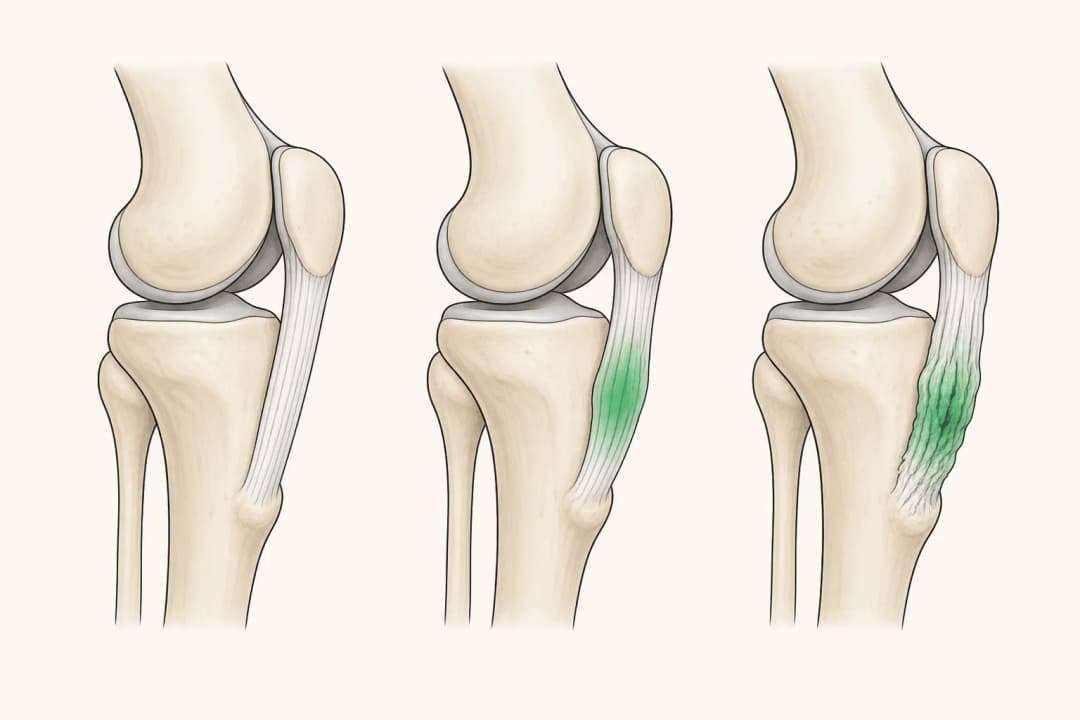
The patellar tendon connects the kneecap to the shin and transfers force when the knee straightens. Irritation commonly feels focused at the lower edge of the kneecap or along the tendon, rather than deep inside the whole knee. Pain may start during activity, linger afterwards or make the first movements after rest uncomfortable. Pressing the tendon can reproduce tenderness, and repeated loading may make stairs, landing or rising from a squat harder. Knee Pain and Kneecap Pain have many possible causes, so an examination helps distinguish tendon symptoms from joint or bone problems.
Managing activity while it settles
Temporarily reduce the jumping, sprinting or deep-knee activity that provokes symptoms, while keeping comfortable movement. A physiotherapist can adjust load and build tendon capacity through Strength Training Rehabilitation. Physiotherapy may also review landing technique, flexibility and movement control. Ice after activity may soothe symptoms for some people; avoid using pain relief to push through a worsening pattern. Discuss options such as Shockwave Therapy or PRP Injection only after a clinician has confirmed the diagnosis and explained the evidence and risks.
When pain needs assessment
Arrange an assessment when pain persists, worsens, causes limping or limits stairs, work or sport. Seek prompt care after a sudden snap, immediate weakness, major swelling or inability to straighten the knee, as these signs can indicate a tendon tear or another acute injury rather than uncomplicated tendinitis.
Useful questions
Is the pain coming from the patellar tendon or another knee structure? Which activities should I modify, and how should load be increased? What strength and movement tests will guide rehabilitation? When would imaging or an additional treatment be useful?
Find care
General Clinics & Polyclinics in Abu Dhabi
That answer is general. If you want it applied to your own case, these are licensed general clinics & polyclinics listed in Abu Dhabi.
27 Ar Ruwwad St - Shakhbout City - MSH4 - Abu Dhabi - United Arab Emirates
Accepts: Daman, Thiqa, Cigna, MetLife +20 more
Al Ruwais, Al Dhafrah
Accepts: Daman, Thiqa, AXA, Cigna +16 more
Al Bahyah - Al Bahyah Old - Abu Dhabi - United Arab Emirates
Accepts: Daman, Thiqa, Cigna, Allianz Care +18 more
Abu Dhabi
Accepts: Daman, Thiqa, AXA, Cigna +27 more
Ordered by verification status and how complete each clinic's public record is, then alphabetically. This is a directory listing, not a ranking — Zavis does not rate or recommend providers.
A factual listing drawn from the DHA, DOH and MOHAP licence registers. It is not a referral, an endorsement, or advice that any of these providers is right for you.
Questions people ask
Is patellar tendinitis only caused by sport?
No. Repeated knee loading in work, exercise or daily activity can irritate the tendon.
Can I keep exercising with these symptoms?
Usually the aggravating load should be reduced and replaced with comfortable activity while a tailored plan is made.
Related
Related reading
Keep reading
Medical disclaimer. This page is general health information, not medical advice, and it cannot diagnose you. Always consult a licensed healthcare provider about your own symptoms and treatment. In an emergency in the UAE, call 998 for an ambulance.