
What are the first signs of hyperthyroidism?
Short answer
The first signs of hyperthyroidism may include palpitations, tremor, sweating, heat intolerance, diarrhoea, and unintentional weight loss.
This answers one question. It is not a diagnosis and does not replace an assessment by a licensed doctor.
At a glance
- Common early pattern
- Fast heartbeat, shakiness, heat intolerance, sweating, and bowel changes
- Assessment
- Clinical review and thyroid function testing
What these changes can mean
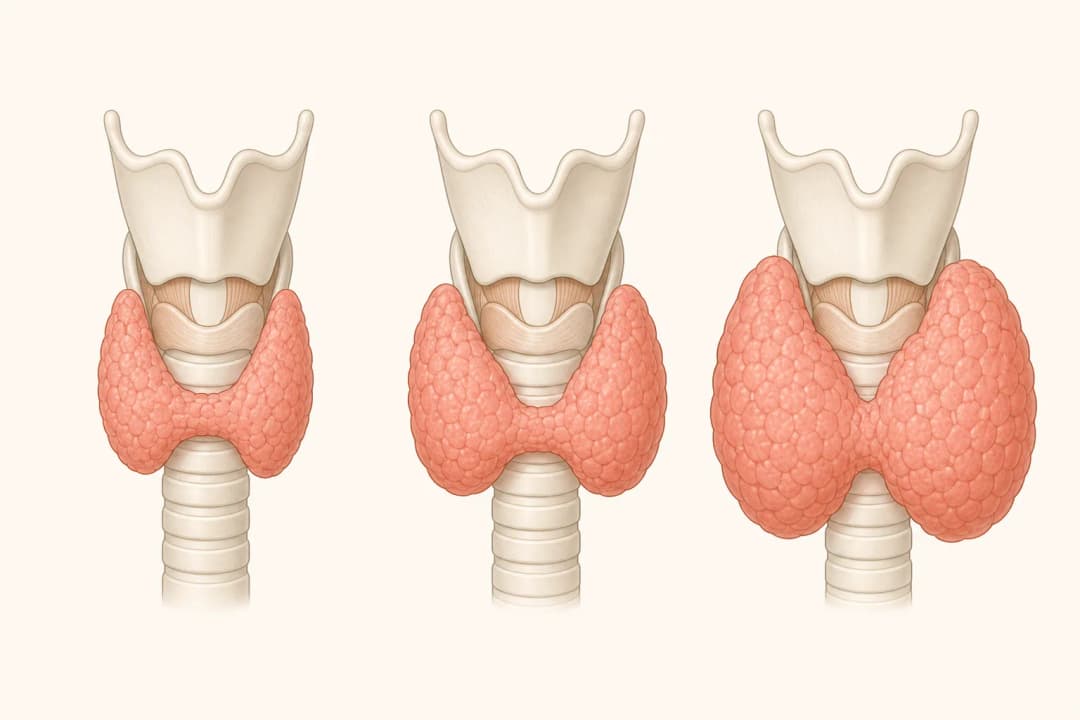
Hyperthyroidism occurs when the thyroid produces more hormone than the body needs. This can speed up body processes. Most people with hyperthyroidism notice a combination of symptoms rather than one isolated change. A racing, pounding, or irregular heartbeat is a common presentation of hyperthyroidism; see Palpitations for more detail. Fine shaking in the hands, feeling unusually warm, increased perspiration, restlessness, trouble sleeping, and frequent bowel movements may appear gradually. Some people develop a swollen thyroid, called a goitre. These signs can also have other causes, so symptoms alone cannot confirm the diagnosis.
What to do next
Arrange a GP Consultation if several symptoms persist, recur, or interfere with sleep, work, or daily activity. A clinician can review medicines, supplements, family history, pulse, weight changes, and neck swelling. A Thyroid Function Test is commonly used to check thyroid hormone patterns. Until assessed, note when symptoms occur and whether caffeine, illness, stress, or exercise makes them stronger. Do not start or stop thyroid medicine without clinical advice.
When to seek care
Seek urgent medical help for chest pain, fainting, severe breathlessness, confusion, or a very fast or irregular heartbeat that does not settle. Arrange prompt assessment for worsening tremor, repeated vomiting or diarrhoea, marked weakness, or rapid unexplained weight loss. Emergency symptoms need immediate care and should not be attributed to the thyroid without assessment.
Questions for your doctor
Ask whether your symptoms fit hyperthyroidism, which tests are appropriate, whether your medicines or supplements could affect the thyroid, and whether a goitre needs examination. Ask how to monitor your pulse and which changes should prompt urgent review.
Find care
General Clinics & Polyclinics in Abu Dhabi
That answer is general. If you want it applied to your own case, these are licensed general clinics & polyclinics listed in Abu Dhabi.
27 Ar Ruwwad St - Shakhbout City - MSH4 - Abu Dhabi - United Arab Emirates
Accepts: Daman, Thiqa, Cigna, MetLife +20 more
Al Ruwais, Al Dhafrah
Accepts: Daman, Thiqa, AXA, Cigna +16 more
Al Bahyah - Al Bahyah Old - Abu Dhabi - United Arab Emirates
Accepts: Daman, Thiqa, Cigna, Allianz Care +18 more
Abu Dhabi
Accepts: Daman, Thiqa, AXA, Cigna +27 more
Ordered by verification status and how complete each clinic's public record is, then alphabetically. This is a directory listing, not a ranking — Zavis does not rate or recommend providers.
A factual listing drawn from the DHA, DOH and MOHAP licence registers. It is not a referral, an endorsement, or advice that any of these providers is right for you.
Questions people ask
Can hyperthyroidism begin with only one symptom?
Yes. An early change such as palpitations, tremor, or unexplained weight loss may occur before other features become noticeable, but it is not specific to hyperthyroidism.
Does a goitre always cause hyperthyroidism?
No. A goitre is thyroid enlargement and can occur with different thyroid hormone patterns, so examination and testing are needed.
Related
Related reading
Keep reading
Medical disclaimer. This page is general health information, not medical advice, and it cannot diagnose you. Always consult a licensed healthcare provider about your own symptoms and treatment. In an emergency in the UAE, call 998 for an ambulance.