
What are the first signs of genitourinary syndrome of menopause?
Short answer
The first signs of genitourinary syndrome of menopause are often vaginal dryness, irritation, burning, discomfort during sex, or urinary urgency and recurrent urinary symptoms.
This answers one question. It is not a diagnosis and does not replace an assessment by a licensed doctor.
At a glance
- Common early changes
- Dryness, irritation, burning, or discomfort during sex
- Urinary changes
- Urgency, frequency, or burning can occur
How it can begin
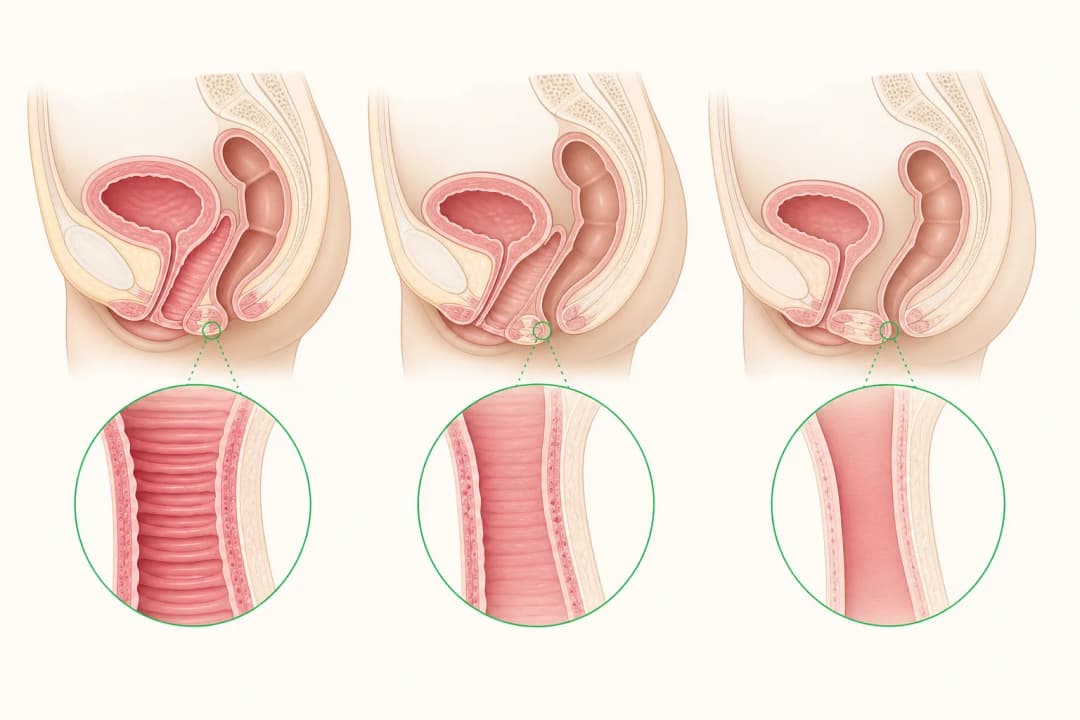
Genitourinary syndrome of menopause happens when lower oestrogen levels affect the tissues of the vagina, vulva, urethra, and bladder. Early changes may feel like dryness, itching, stinging, or a less comfortable sensation during washing or sexual activity. Sex may become painful, and some people notice reduced desire because intimacy is uncomfortable.
Urinary changes can include needing to pass urine more often, urgency, burning, or repeated symptoms that resemble a urinary infection. These symptoms can overlap with infection, skin conditions, or other pelvic problems, so new or persistent symptoms deserve a clinical review.
Practical next steps
Note when symptoms occur, whether they are linked to sex or urination, and any changes in discharge, odour, or bleeding. A clinician can check for infection and discuss moisturisers, lubricants, vaginal oestrogen therapy, or other options suited to your health history. Vaginal dilator therapy may be discussed when narrowing or pain makes internal examination or penetration difficult; it should be introduced gradually with guidance.
When to seek care
Arrange an appointment for ongoing dryness, itching, pain during sex, urinary burning, or repeated urinary symptoms. Seek prompt assessment for bleeding after sex or any bleeding after menopause, especially if it recurs. Urgent care is appropriate for fever, back or side pain, vomiting, blood in the urine, or feeling very unwell, because these may signal an infection needing treatment.
Questions for your doctor
Ask: Could infection or another condition explain these symptoms? Would vaginal oestrogen therapy be suitable for me? Which lubricant or moisturiser should I use? What should I do if sex remains painful or urinary symptoms return?
Find care
General Clinics & Polyclinics in Abu Dhabi
That answer is general. If you want it applied to your own case, these are licensed general clinics & polyclinics listed in Abu Dhabi.
27 Ar Ruwwad St - Shakhbout City - MSH4 - Abu Dhabi - United Arab Emirates
Accepts: Daman, Thiqa, Cigna, MetLife +20 more
Al Ruwais, Al Dhafrah
Accepts: Daman, Thiqa, AXA, Cigna +16 more
Al Bahyah - Al Bahyah Old - Abu Dhabi - United Arab Emirates
Accepts: Daman, Thiqa, Cigna, Allianz Care +18 more
Abu Dhabi
Accepts: Daman, Thiqa, AXA, Cigna +27 more
Ordered by verification status and how complete each clinic's public record is, then alphabetically. This is a directory listing, not a ranking — Zavis does not rate or recommend providers.
A factual listing drawn from the DHA, DOH and MOHAP licence registers. It is not a referral, an endorsement, or advice that any of these providers is right for you.
Questions people ask
Can genitourinary syndrome of menopause affect the bladder?
Yes. Lower oestrogen can affect the urethral and bladder area, causing urgency, frequency, or urinary discomfort.
Is bleeding a normal first sign?
Bleeding after sex or after menopause should be assessed rather than assumed to be caused by genitourinary syndrome of menopause.
Related
Related reading
Keep reading
Medical disclaimer. This page is general health information, not medical advice, and it cannot diagnose you. Always consult a licensed healthcare provider about your own symptoms and treatment. In an emergency in the UAE, call 998 for an ambulance.