
What should you know about vertebroplasty surgery?
Short answer
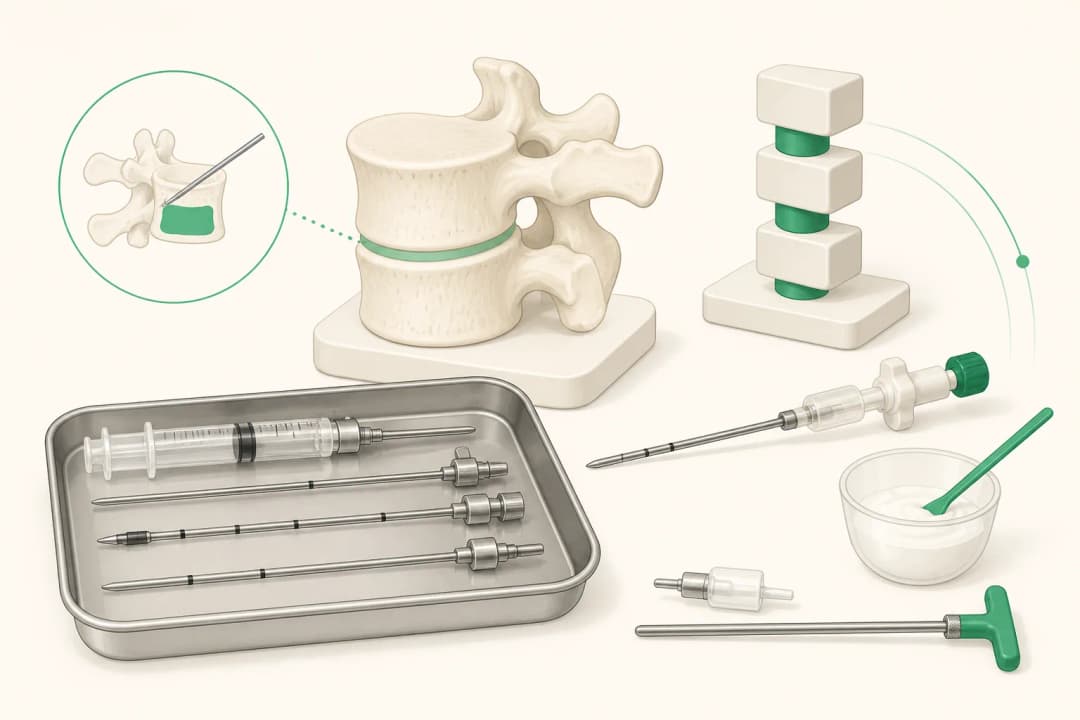
Vertebroplasty is a minimally invasive treatment that places bone cement inside a selected fractured vertebra for support.
This answers one question. It is not a diagnosis and does not replace an assessment by a licensed doctor.
At a glance
- Approach
- Needle-guided treatment through the skin
- Purpose
- Support a selected fractured vertebra
- Planning
- Review medicines, sedation, and aftercare
What happens during vertebroplasty
After the treatment area is cleaned and numbed, the clinician uses imaging to guide a narrow needle through the skin into the damaged vertebra. Bone cement is delivered through the needle and hardens inside the vertebral body. The aim is to stabilise a painful compression fracture; it is not a replacement for assessment of the condition that weakened the bone.
The decision depends on the fracture pattern, pain, scan findings, general health, and response to other care. Vertebroplasty is different from kyphoplasty, which uses an additional step to create space before cement is placed.
Preparing for the procedure
Give the team a complete list of medicines and supplements, especially anticoagulants, and mention allergies, recent illness, pregnancy, or previous reactions to sedation. Follow their instructions about food and drink. Arrange an adult to take you home when advised, and plan for a gradual return to usual activities. Do not lift, drive, or exercise until your clinician says those activities are appropriate.
Ask how the fracture will be protected afterward and whether you need a plan for osteoporosis. Related reading includes Vertebral Compression Fracture, Bone Cement, Kyphoplasty, and Vertebroplasty.
Warning signs after treatment
Call the treating service for increasing pain, fever, wound discharge, or redness that is spreading. Get emergency help for new loss of bladder or bowel control, marked weakness or numbness, breathing difficulty, chest pain, or a rapidly worsening neurological symptom. Do not wait for a routine appointment when these problems appear.
Useful questions
What type of fracture do I have, and what is the goal of treatment? Why is vertebroplasty suitable now? What sedation and aftercare will I need? How does kyphoplasty compare for my scan findings? How will we address bone weakness and monitor recovery?
Find care
General Clinics & Polyclinics in Abu Dhabi
That answer is general. If you want it applied to your own case, these are licensed general clinics & polyclinics listed in Abu Dhabi.
27 Ar Ruwwad St - Shakhbout City - MSH4 - Abu Dhabi - United Arab Emirates
Accepts: Daman, Thiqa, Cigna, MetLife +20 more
Al Ruwais, Al Dhafrah
Accepts: Daman, Thiqa, AXA, Cigna +16 more
Al Bahyah - Al Bahyah Old - Abu Dhabi - United Arab Emirates
Accepts: Daman, Thiqa, Cigna, Allianz Care +18 more
Abu Dhabi
Accepts: Daman, Thiqa, AXA, Cigna +27 more
Ordered by verification status and how complete each clinic's public record is, then alphabetically. This is a directory listing, not a ranking — Zavis does not rate or recommend providers.
A factual listing drawn from the DHA, DOH and MOHAP licence registers. It is not a referral, an endorsement, or advice that any of these providers is right for you.
Questions people ask
Is vertebroplasty an open spinal operation?
No. It is performed through a skin puncture with imaging guidance, although the team still assesses procedure-specific risks and recovery needs.
Can vertebroplasty treat any back pain?
No. It is considered for selected vertebral fractures, so imaging and clinical assessment are needed before deciding.
Related
Related reading
Keep reading
Medical disclaimer. This page is general health information, not medical advice, and it cannot diagnose you. Always consult a licensed healthcare provider about your own symptoms and treatment. In an emergency in the UAE, call 998 for an ambulance.