
What Should You Know About a USG Urine Test?
Short answer
A USG urine test usually refers to urine specific gravity, which shows how concentrated your urine is and helps a clinician assess hydration and kidney function.
This answers one question. It is not a diagnosis and does not replace an assessment by a licensed doctor.
At a glance
- Also called
- Urinalysis or urine specific gravity test
- Sample
- Urine collected in a clean container
- Measures
- How concentrated or dilute the urine is
What is a USG urine test?
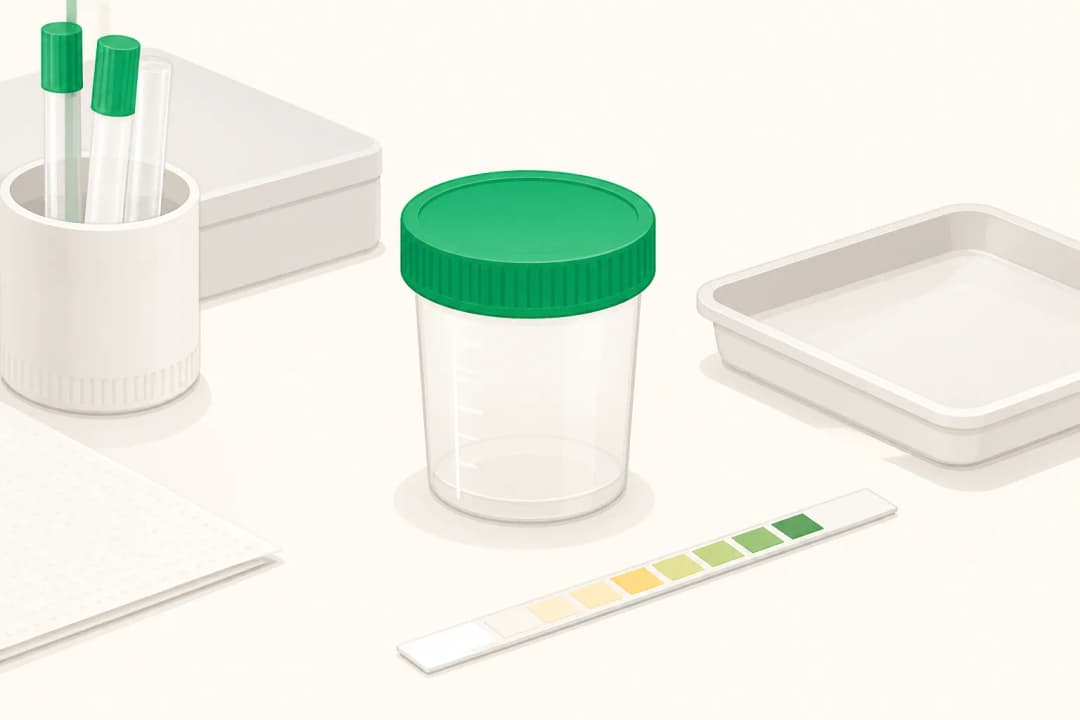
A USG urine test usually refers to urine specific gravity, which shows how concentrated your urine is and helps a clinician assess hydration and kidney function. It is commonly performed as part of a urinalysis, using a sample collected in a clean container. The result is interpreted alongside your symptoms, medical history, medicines, and other urine findings rather than on its own.
What the result can mean
More concentrated urine can occur when you have not taken in enough fluid, have lost fluid through sweating, vomiting, or diarrhoea, or have substances in the urine that increase its concentration. More dilute urine may follow high fluid intake or reflect a problem with the kidneys' ability to concentrate urine. A single unusual result does not identify a diagnosis. A clinician may compare it with urine colour, protein, glucose, blood, infection markers, blood tests, or repeat testing.
The test may be requested when someone has frequent urination, unusual thirst, painful urination, blood in the urine, swelling, or a concern about hydration. It can support assessment of conditions such as a urinary tract infection or kidney infection, but it does not by itself prove that either condition is present.
How to prepare and give the sample
Follow the laboratory's instructions about timing, fasting, and medicines. Do not deliberately drink excessive water before testing unless a clinician tells you to, because this can dilute the sample. Wash your hands, clean the genital area as instructed, begin urinating into the toilet, and collect the midstream urine in the supplied container if a clean-catch sample is requested. Seal it promptly and return it within the stated timeframe. Tell the healthcare professional if you are menstruating, have recently exercised intensely, or cannot provide the sample in the usual way, since these details can affect interpretation.
If infection is suspected, the clinician may request additional testing to identify bacteria and guide treatment. Antibiotics are used only when a bacterial infection is diagnosed or strongly suspected; do not use leftover medicine.
When to seek medical care
Arrange medical advice for persistent burning when urinating, repeated trips to the toilet, cloudy or bloody urine, fever, or pain in the side or back. Seek urgent care for severe flank pain, confusion, fainting, inability to pass urine, or fever with shaking chills, particularly if you are pregnant, have kidney disease, or have a weakened immune system. These symptoms can require prompt examination and tests beyond a USG urine result.
Questions for your doctor
Ask what the specific gravity result means in the context of your other findings, whether the sample needs repeating, and whether medicines or fluid intake could have influenced it. You can also ask which symptoms should prompt a same-day review and whether additional urine or blood tests are needed.
Find care
General Clinics & Polyclinics in Abu Dhabi
That answer is general. If you want it applied to your own case, these are licensed general clinics & polyclinics listed in Abu Dhabi.
27 Ar Ruwwad St - Shakhbout City - MSH4 - Abu Dhabi - United Arab Emirates
Accepts: Daman, Thiqa, Cigna, MetLife +20 more
Al Ruwais, Al Dhafrah
Accepts: Daman, Thiqa, AXA, Cigna +16 more
Al Bahyah - Al Bahyah Old - Abu Dhabi - United Arab Emirates
Accepts: Daman, Thiqa, Cigna, Allianz Care +18 more
Abu Dhabi
Accepts: Daman, Thiqa, AXA, Cigna +27 more
Ordered by verification status and how complete each clinic's public record is, then alphabetically. This is a directory listing, not a ranking — Zavis does not rate or recommend providers.
A factual listing drawn from the DHA, DOH and MOHAP licence registers. It is not a referral, an endorsement, or advice that any of these providers is right for you.
Questions people ask
Does a USG urine test diagnose a urinary tract infection?
No. It describes urine concentration. Infection is assessed using symptoms and other urine findings, and sometimes a culture.
Can drinking water change the result?
Yes. Large amounts of fluid can make urine more dilute, so follow the collection instructions and mention unusual fluid intake to the clinician.
Related
Related reading
Keep reading
Medical disclaimer. This page is general health information, not medical advice, and it cannot diagnose you. Always consult a licensed healthcare provider about your own symptoms and treatment. In an emergency in the UAE, call 998 for an ambulance.