
What should you know about urodynamic cystoscopy?
Short answer
Urodynamic cystoscopy usually refers to bladder assessment that combines visual inspection with tests of urine storage, pressure, and flow.
This answers one question. It is not a diagnosis and does not replace an assessment by a licensed doctor.
At a glance
- Cystoscopy
- Views the urethra and bladder lining
- Urodynamics
- Measures bladder pressure, storage, sensation, and flow
How the tests differ
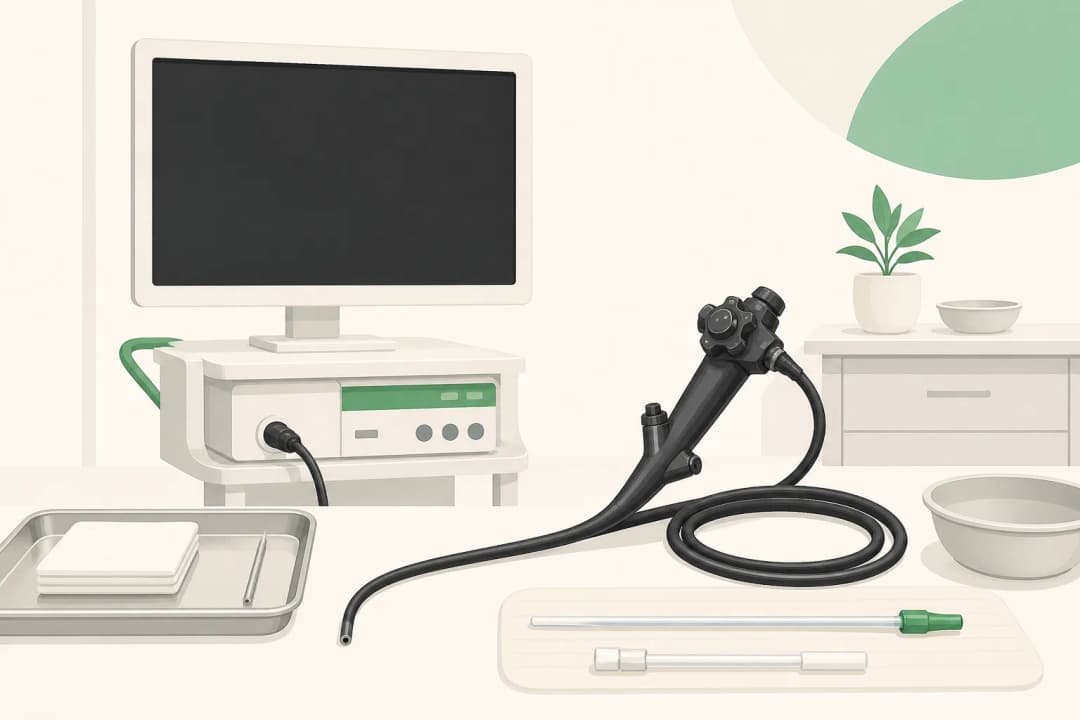
During cystoscopy, a small camera passes through the urethra so a clinician can inspect the bladder lining, look for inflammation, stones, narrowing, or an abnormal growth, and sometimes take a sample. Urodynamic testing answers a different question: it records bladder pressure, sensation, capacity, urine flow, and the action of the muscles that control emptying.
The tests may be performed during the same assessment or arranged separately. They can help explain urgency, leakage, weak flow, repeated infections, or difficulty emptying. Cystoscopy can identify a visible abnormality, but only tissue examination can confirm what a suspicious area is.
Preparing for the appointment
Follow instructions about fluids and medicines, and tell the clinic about urinary infection symptoms, pregnancy, allergies, or previous catheter problems. You may be asked to arrive with a comfortably full bladder or to record your drinks and toilet visits. During testing, describe pain, urgency, and the sensation of filling accurately; these details help the clinician interpret the measurements.
When to contact the team
Mild burning or a small amount of blood can occur briefly after an instrument has been used. Contact the care team for fever, chills, worsening pain, heavy bleeding, cloudy offensive urine, or inability to pass urine. These signs can indicate infection, bleeding, or blockage that needs review.
Questions for your doctor
Ask whether you need cystoscopy, urodynamics, or both; what symptom the test is investigating; and whether a urine sample is needed beforehand. Ask when results will be discussed and what further step would follow if the camera shows an abnormal area.
Questions people ask
Is urodynamic cystoscopy one test?
The phrase may describe combined assessment, but cystoscopy and urodynamic testing measure different things and may be arranged separately.
Can cystoscopy detect bladder cancer?
It can show a suspicious growth, but a tissue sample is needed to identify the diagnosis.
Related
Related reading
Keep reading
Cancer care in the UAE
Hospitals & Medical Centers in Abu Dhabi
Most UAE cancer care is delivered inside hospital services rather than by standalone oncology clinics, so these are licensed hospitals & medical centers listed in Abu Dhabi. Confirm the specific cancer service exists before you travel, and know that asking for a second opinion is routine.
Ahalia Hospital Musaffah Building - Musaffah - Musaffah Industrial - Abu Dhabi - United Arab Emirates
Accepts: Daman, Thiqa, AXA, Cigna +26 more
Al Ruwais Industrial City - Abu Dhabi - United Arab Emirates
Accepts: Daman, Thiqa, AXA, Cigna +30 more
Abu Dhabi, Abu Dhabi
Accepts: Daman, Thiqa, AXA, Cigna +30 more
Second opinions are routine in cancer care and asking for one does not affect your treatment. How to arrange a second opinion in the UAE.
Ordered by verification status and how complete each clinic's public record is, then alphabetically. This is a directory listing, not a ranking — Zavis does not rate or recommend providers.
A factual listing drawn from the DHA, DOH and MOHAP licence registers. It is not a referral, an endorsement, or advice that any of these providers is right for you.
Medical disclaimer. This page is general health information, not medical advice, and it cannot diagnose you. Always consult a licensed healthcare provider about your own symptoms and treatment. In an emergency in the UAE, call 998 for an ambulance.