
What should you know about a urine sensitivity test?
Short answer
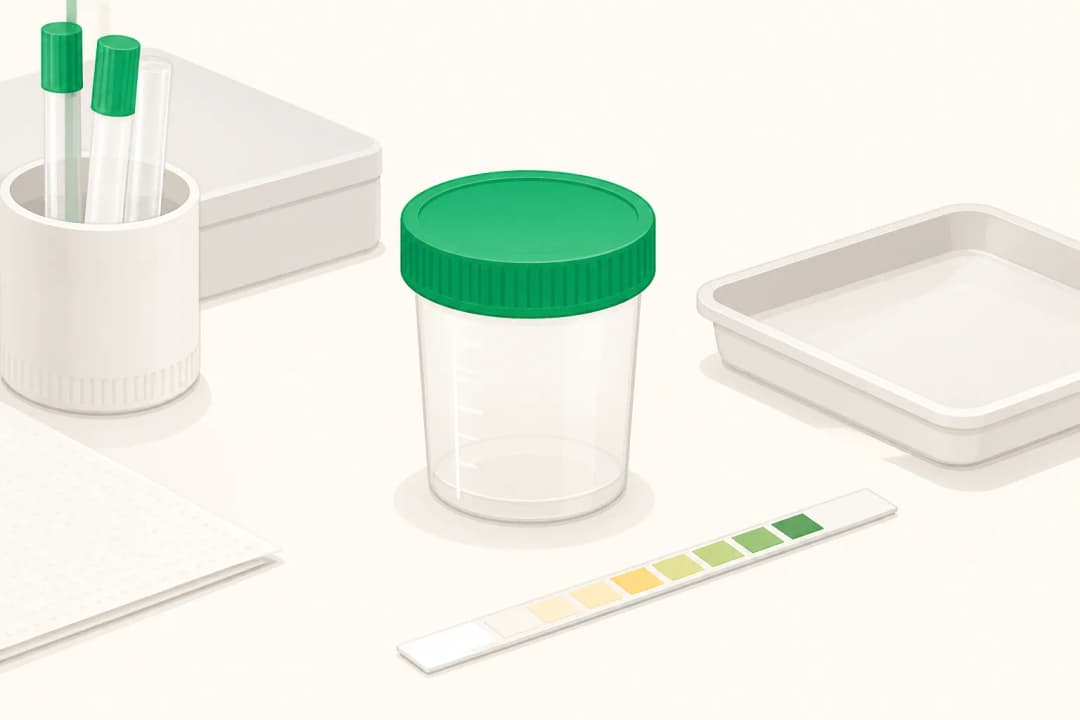
A urine sensitivity test compares cultured bacteria with antibiotics to guide a treatment choice when urinary infection is suspected.
This answers one question. It is not a diagnosis and does not replace an assessment by a licensed doctor.
At a glance
- Based on
- A urine culture that grows bacteria
- Reports
- How bacteria respond to selected antibiotics
- Decision factors
- Allergies, kidney function, pregnancy and infection location
How to understand the result
Sensitivity testing follows a urine culture. If bacteria grow, the laboratory exposes them to selected antibiotics and reports which medicines are likely to inhibit them. A result may also show reduced susceptibility, meaning a medicine may be less suitable. The report is a guide rather than a prescription: kidney function, allergies, pregnancy, other medicines, infection location, and previous treatment all matter.
A negative culture does not explain every urinary symptom, and a sample taken after antibiotics may be harder to interpret. Urinary tract infection symptoms can overlap with other problems, including obstruction or prostate-related urinary changes. Kidney infection symptoms require clinical assessment rather than waiting for a report alone.
What to do with the result
Give the sample exactly as instructed, ideally before starting a new antibiotic when the clinician advises this. Tell the care team about antibiotic allergies, medicines, pregnancy, kidney conditions, and recent antibiotics. Take only the prescribed medicine and follow the schedule; do not share doses or keep unused tablets for a future illness.
The clinician may change treatment when the culture and sensitivity report arrives. This is called tailoring therapy. Read more about [Urine Test](/treatments/diagnostics-and-screening/urine-test/) and [Antibiotic Treatment](/treatments/medical-management/antibiotic-treatment/).
When to seek care
Contact your clinician if symptoms do not improve as expected, return after treatment, or you develop a new reaction to the medicine. Seek urgent care for fever, shaking chills, flank or back pain, vomiting, confusion, or severe weakness. These features may occur with a kidney infection and need prompt assessment.
Questions for your doctor
Ask whether bacteria grew, which antibiotics were sensitive, whether your medicine should change, and when improvement should be reviewed. Also ask how allergies, kidney function, or prostate symptoms affect the plan. Relevant background may include [Urinary Tract Infection](/conditions/urinary-tract-infection/), [Kidney Infection](/conditions/kidney-infection/), or [Benign Prostatic Hyperplasia](/conditions/benign-prostatic-hyperplasia/).
Find care
General Clinics & Polyclinics in Abu Dhabi
That answer is general. If you want it applied to your own case, these are licensed general clinics & polyclinics listed in Abu Dhabi.
27 Ar Ruwwad St - Shakhbout City - MSH4 - Abu Dhabi - United Arab Emirates
Accepts: Daman, Thiqa, Cigna, MetLife +20 more
Al Ruwais, Al Dhafrah
Accepts: Daman, Thiqa, AXA, Cigna +16 more
Al Bahyah - Al Bahyah Old - Abu Dhabi - United Arab Emirates
Accepts: Daman, Thiqa, Cigna, Allianz Care +18 more
Abu Dhabi
Accepts: Daman, Thiqa, AXA, Cigna +27 more
Ordered by verification status and how complete each clinic's public record is, then alphabetically. This is a directory listing, not a ranking — Zavis does not rate or recommend providers.
A factual listing drawn from the DHA, DOH and MOHAP licence registers. It is not a referral, an endorsement, or advice that any of these providers is right for you.
Questions people ask
Does sensitivity testing decide my antibiotic automatically?
No. It provides laboratory guidance, while a clinician selects treatment using the report and your health history.
Should I stop an antibiotic when the result arrives?
Do not stop or change it without speaking with the prescriber. The report may support the current medicine or prompt a supervised change.
Related
Related reading
Keep reading
Medical disclaimer. This page is general health information, not medical advice, and it cannot diagnose you. Always consult a licensed healthcare provider about your own symptoms and treatment. In an emergency in the UAE, call 998 for an ambulance.