
What should you know about a urine sample cup?
Short answer
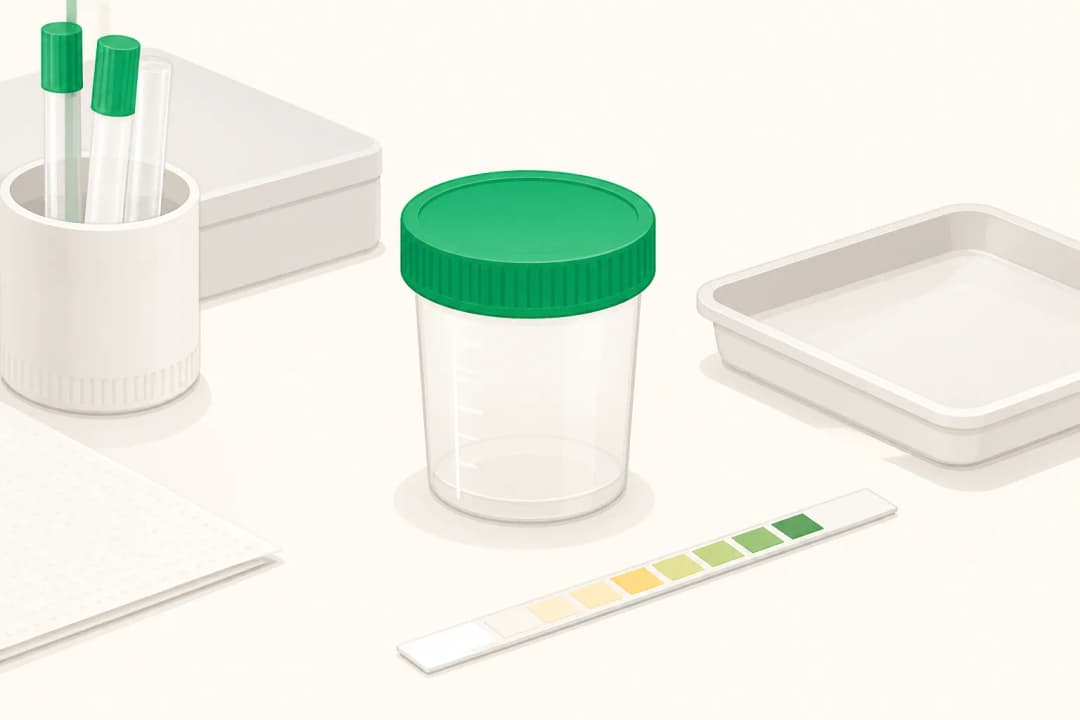
A urine sample cup is a sterile container used to collect urine safely and reduce contamination before laboratory testing.
This answers one question. It is not a diagnosis and does not replace an assessment by a licensed doctor.
At a glance
- Container
- Use the sterile cup supplied
- Collection
- Often midstream urine
- Afterward
- Close, label and return as instructed
What makes a specimen usable
The laboratory needs enough urine in the correct container, with the lid closed and the label matching your details. The inside of the cup and lid must remain clean. Soap, water, tissue or a household jar can change the sample or introduce material that looks like infection. A midstream sample often reduces contact with skin: pass a little urine first, collect the requested portion, then finish urinating normally. Follow the instructions from your clinic if they differ.
Using and returning the cup
Wash your hands and clean the genital area only if instructed. Do not touch the inner surface. Fill the cup as directed, secure the lid, label it immediately if asked, and place it in the transport bag. Return it within the advised time and keep it stored as instructed. Tell staff if the cup was dropped, opened, overfilled or contaminated. A clean sample supports a [Urine Test](/treatments/diagnostics-and-screening/urine-test/) and can help assess a [Urinary Tract Infection](/conditions/urinary-tract-infection/).
When the sample is not the only concern
Do not delay medical assessment because collecting a cup is difficult if you have fever, shaking chills, severe side or back pain, vomiting, confusion, visible blood or trouble passing urine. These symptoms can need prompt evaluation for a [Kidney Infection](/conditions/kidney-infection/) or blockage.
Questions to ask
Ask whether you need a clean-catch or other collection method, how much urine is required, where to store it, and when it must arrive. Ask whether a repeat sample is needed if skin cells or contamination are reported.
Find care
General Clinics & Polyclinics in Abu Dhabi
That answer is general. If you want it applied to your own case, these are licensed general clinics & polyclinics listed in Abu Dhabi.
27 Ar Ruwwad St - Shakhbout City - MSH4 - Abu Dhabi - United Arab Emirates
Accepts: Daman, Thiqa, Cigna, MetLife +20 more
Al Ruwais, Al Dhafrah
Accepts: Daman, Thiqa, AXA, Cigna +16 more
Al Bahyah - Al Bahyah Old - Abu Dhabi - United Arab Emirates
Accepts: Daman, Thiqa, Cigna, Allianz Care +18 more
Abu Dhabi
Accepts: Daman, Thiqa, AXA, Cigna +27 more
Ordered by verification status and how complete each clinic's public record is, then alphabetically. This is a directory listing, not a ranking — Zavis does not rate or recommend providers.
A factual listing drawn from the DHA, DOH and MOHAP licence registers. It is not a referral, an endorsement, or advice that any of these providers is right for you.
Questions people ask
Can I use a clean household jar?
Use the laboratory’s container unless a clinician gives different instructions; household containers may contain residues or microbes.
What if I touch the inside of the cup?
Tell the clinic. They may advise collecting another specimen to reduce the chance of an unreliable result.
Related
Related reading
Keep reading
Medical disclaimer. This page is general health information, not medical advice, and it cannot diagnose you. Always consult a licensed healthcare provider about your own symptoms and treatment. In an emergency in the UAE, call 998 for an ambulance.