
Types of electrosurgery: how they differ
Short answer
Types of electrosurgery include cutting, desiccation, fulguration and electrodesiccation, each using electrical energy differently.
This answers one question. It is not a diagnosis and does not replace an assessment by a licensed doctor.
At a glance
- Techniques
- Cutting, desiccation, fulguration and electrodesiccation
- Key variable
- Energy method and treatment depth are chosen for the lesion
How the techniques differ
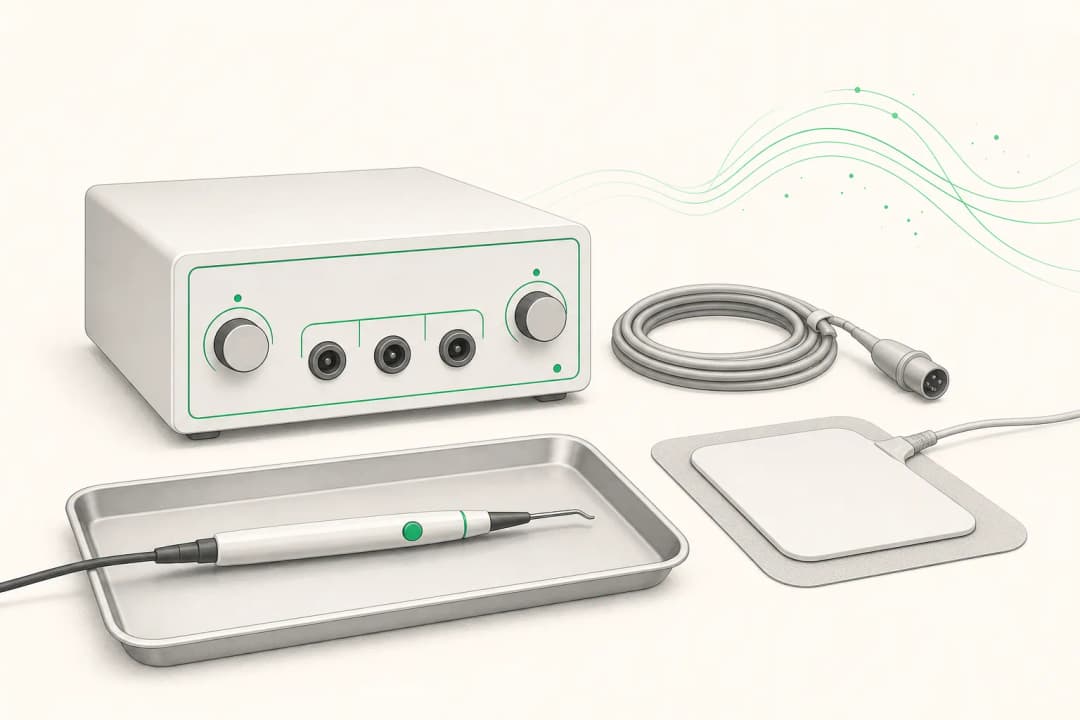
Electrosurgical cutting uses a concentrated electrical current to divide tissue. Desiccation dries tissue with a lower-intensity current, while fulguration applies sparks across a small gap to treat a surface. Electrodesiccation places the electrode against tissue to dry and destroy a targeted area. The clinician selects the method according to the lesion, depth, location and desired control of bleeding. An electrosurgical unit supplies and regulates the energy; it is not the diagnosis itself.
Before and after treatment
Tell the clinician about implanted electrical devices, medicines that affect bleeding, allergies to local anaesthetic and any history of slow wound healing. Follow instructions to keep the treated area clean and lightly protected. A scab, tenderness or temporary color change can occur as the site heals; do not pick the crust. Avoid unapproved creams, swimming or friction until the wound-care plan allows them. The final appearance may take time to settle, especially on visible skin.
When to seek care
Contact the treating clinic for worsening pain, spreading redness, increasing warmth, pus, persistent bleeding or fever. Urgent care is appropriate for heavy bleeding, breathing difficulty or a rapidly expanding swelling. A lesion that returns, changes or does not heal should be rechecked, because electrosurgery may treat visible tissue without explaining why it formed.
Questions for your doctor
Ask which technique is planned and why, whether tissue will be sent for testing, how deep the treatment will go, what scar or pigment changes are possible, and how to care for the wound.
Find care
General Clinics & Polyclinics in Abu Dhabi
That answer is general. If you want it applied to your own case, these are licensed general clinics & polyclinics listed in Abu Dhabi.
27 Ar Ruwwad St - Shakhbout City - MSH4 - Abu Dhabi - United Arab Emirates
Accepts: Daman, Thiqa, Cigna, MetLife +20 more
Al Ruwais, Al Dhafrah
Accepts: Daman, Thiqa, AXA, Cigna +16 more
Al Bahyah - Al Bahyah Old - Abu Dhabi - United Arab Emirates
Accepts: Daman, Thiqa, Cigna, Allianz Care +18 more
Abu Dhabi
Accepts: Daman, Thiqa, AXA, Cigna +27 more
Ordered by verification status and how complete each clinic's public record is, then alphabetically. This is a directory listing, not a ranking — Zavis does not rate or recommend providers.
A factual listing drawn from the DHA, DOH and MOHAP licence registers. It is not a referral, an endorsement, or advice that any of these providers is right for you.
Questions people ask
Is electrosurgery one single procedure?
No. The term covers several electrical methods, including cutting, drying, sparking and electrodesiccation.
Can electrosurgery treat genital warts?
It may be used for selected lesions, but suitability depends on examination, location and the clinician’s treatment plan.
Related
Related reading
Keep reading
Medical disclaimer. This page is general health information, not medical advice, and it cannot diagnose you. Always consult a licensed healthcare provider about your own symptoms and treatment. In an emergency in the UAE, call 998 for an ambulance.