
Types of chronic kidney disease
Short answer
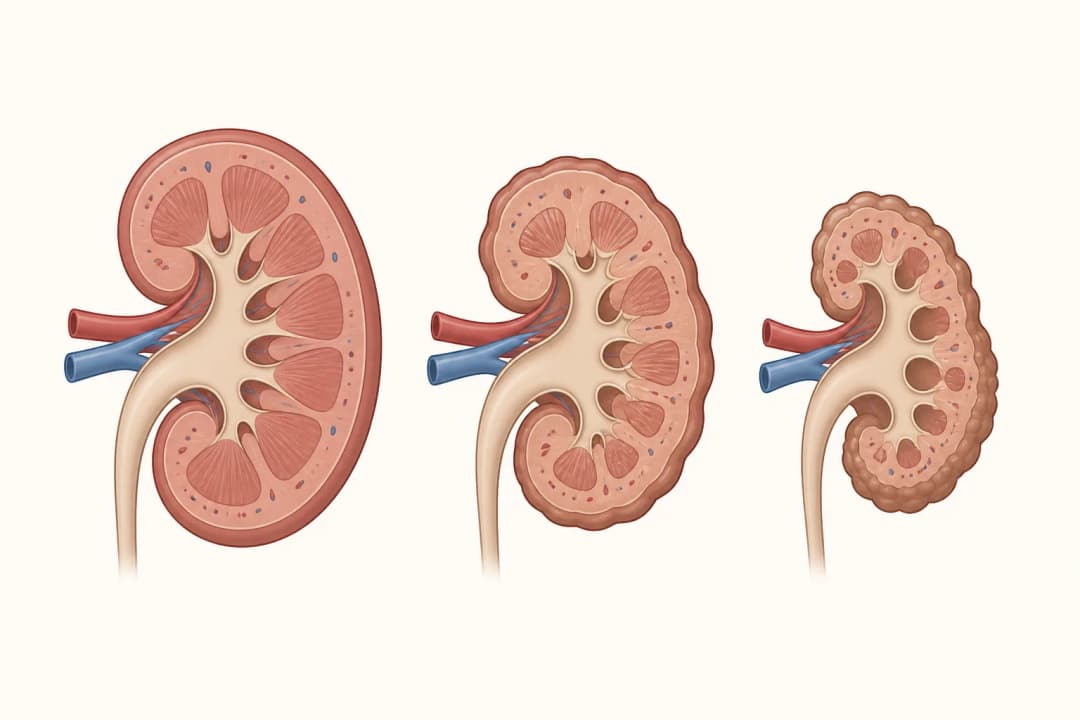
Types of chronic kidney disease are described by their cause, level of kidney function and signs of kidney damage in urine.
This answers one question. It is not a diagnosis and does not replace an assessment by a licensed doctor.
At a glance
- Classification
- Cause, kidney filtering function and urine findings are considered together.
- Monitoring
- Blood and urine tests are usually reviewed over time.
- Symptoms
- Early disease may cause no obvious symptoms.
How chronic kidney disease is grouped
Clinicians consider whether kidney changes are linked with Type 2 Diabetes, Hypertension, inflammation, inherited conditions or another cause. They also use blood tests to estimate filtering function and urine tests to look for protein or blood. Results are interpreted over time because one abnormal test does not by itself explain the whole picture.
Some people have few symptoms in the earlier stages. As kidney function changes, fluid balance, salt levels, red blood cell production and acid balance may be affected. Fatigue, excessive thirst, ankle swelling, changes in urination or itching can have many causes and do not identify a kidney disease on their own.
Living with the diagnosis
Attend planned blood and urine checks, take prescribed treatment, and keep a record of blood pressure and medicines. Your clinician may review salt intake, fluid advice, painkillers, diabetes control and medicines that are cleared by the kidneys.
Do not start supplements or stop treatment without advice. Tell a pharmacist or clinician that you have kidney disease before taking a new medicine. A care plan may also address anaemia, gout or restless legs when these are connected with reduced kidney function.
When to seek care
Seek urgent assessment for severe breathlessness, chest pain, confusion, fainting, very little urine, rapidly worsening swelling or persistent vomiting. These can reflect a serious change in fluid balance or another urgent illness.
Contact your kidney or primary-care team promptly if swelling increases, urine changes markedly, you become unusually weak, or you cannot keep fluids or medicines down. Bring your medicine list and recent readings if you attend.
Questions for your doctor
Ask what caused your kidney changes, how your blood and urine results are being followed, which medicines require adjustment, and what symptoms should prompt a call. Ask for practical advice about salt, fluids, exercise and sick-day medicines.
Find care
General Clinics & Polyclinics in Abu Dhabi
That answer is general. If you want it applied to your own case, these are licensed general clinics & polyclinics listed in Abu Dhabi.
27 Ar Ruwwad St - Shakhbout City - MSH4 - Abu Dhabi - United Arab Emirates
Accepts: Daman, Thiqa, Cigna, MetLife +20 more
Al Ruwais, Al Dhafrah
Accepts: Daman, Thiqa, AXA, Cigna +16 more
Al Bahyah - Al Bahyah Old - Abu Dhabi - United Arab Emirates
Accepts: Daman, Thiqa, Cigna, Allianz Care +18 more
Abu Dhabi
Accepts: Daman, Thiqa, AXA, Cigna +27 more
Ordered by verification status and how complete each clinic's public record is, then alphabetically. This is a directory listing, not a ranking — Zavis does not rate or recommend providers.
A factual listing drawn from the DHA, DOH and MOHAP licence registers. It is not a referral, an endorsement, or advice that any of these providers is right for you.
Questions people ask
Does a symptom prove chronic kidney disease?
No. Fatigue, thirst, swelling and urine changes have several possible causes and need proper assessment.
Can chronic kidney disease have different causes?
Yes. Diabetes, high blood pressure, inflammation, inherited disorders and other conditions may contribute.
Related
Related reading
Keep reading
Medical disclaimer. This page is general health information, not medical advice, and it cannot diagnose you. Always consult a licensed healthcare provider about your own symptoms and treatment. In an emergency in the UAE, call 998 for an ambulance.