
Types of asthma attacks
Short answer
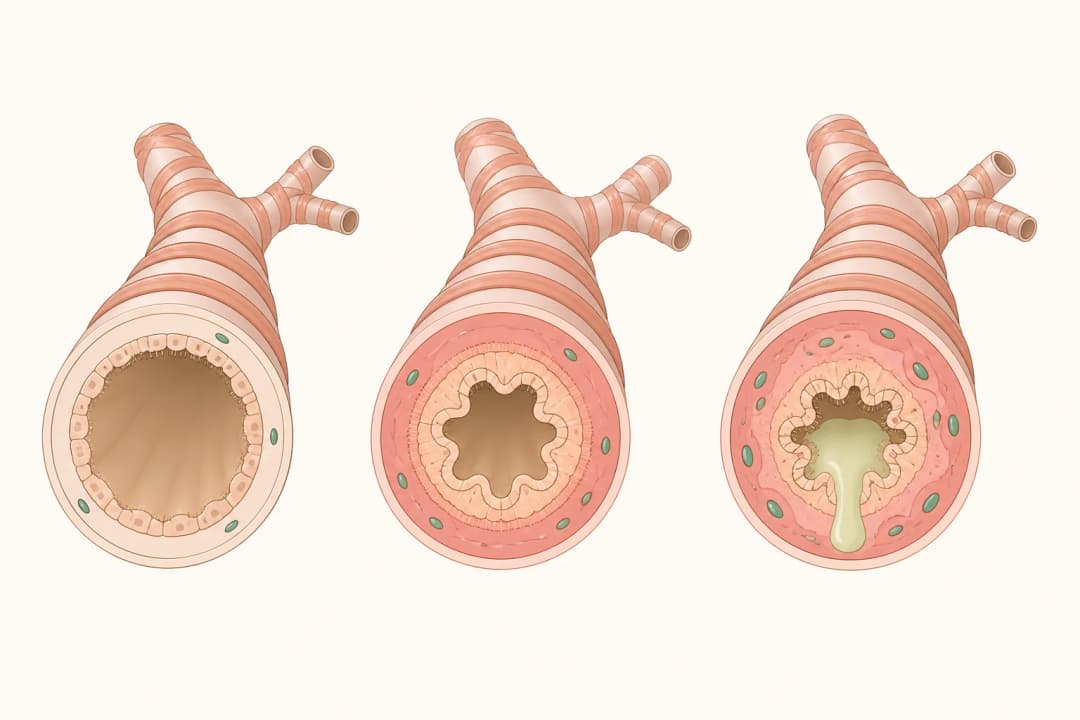
Asthma attacks can be mild, worsening or severe, with airway narrowing causing symptoms that range from cough and wheeze to serious breathing difficulty.
This answers one question. It is not a diagnosis and does not replace an assessment by a licensed doctor.
At a glance
- Typical symptoms
- Wheeze, cough, chest tightness and shortness of breath
- Common triggers
- Infections, exercise, smoke, cold air and allergens
- Emergency signs
- Unable to speak normally, confusion, blue lips or poor reliever response
How an attack may present
During a flare-up, muscles around the airways tighten, the lining swells and mucus can increase. You may notice wheezing, cough, chest tightness or shortness of breath. Some attacks build gradually after a trigger such as an infection, exercise, smoke, cold air or an allergen; others become difficult quickly.
A mild episode may settle with the reliever plan provided for you. A worsening episode may show through repeated symptoms, reduced ability to speak or do usual activities, or relief that does not last. Severity is judged by symptoms and response, not by a label alone.
What to do during symptoms
Stop the activity, sit upright and follow your personal asthma action plan, including the reliever dose it specifies. Move away from a known trigger if possible. Keep track of how symptoms respond and ask someone to stay with you if breathing is becoming harder.
If your plan says to use a spacer, use it as instructed. A nebuliser may be used by healthcare professionals when inhaled treatment needs to be delivered during an acute episode; it is not a substitute for emergency assessment.
When an asthma attack is an emergency
Call emergency services if you are struggling to breathe, cannot speak in full sentences, become drowsy or confused, develop blue or grey lips, or your reliever is not helping as your plan predicts. Do not drive yourself during severe breathing difficulty. Urgent review is also needed after a serious attack or repeated night symptoms.
Questions for your doctor
Ask how to recognise your early warning signs, when to repeat reliever treatment, when to call emergency services, and whether your preventer needs adjustment. Practise inhaler and spacer technique during a review.
Find care
General Clinics & Polyclinics in Abu Dhabi
That answer is general. If you want it applied to your own case, these are licensed general clinics & polyclinics listed in Abu Dhabi.
27 Ar Ruwwad St - Shakhbout City - MSH4 - Abu Dhabi - United Arab Emirates
Accepts: Daman, Thiqa, Cigna, MetLife +20 more
Al Ruwais, Al Dhafrah
Accepts: Daman, Thiqa, AXA, Cigna +16 more
Al Bahyah - Al Bahyah Old - Abu Dhabi - United Arab Emirates
Accepts: Daman, Thiqa, Cigna, Allianz Care +18 more
Abu Dhabi
Accepts: Daman, Thiqa, AXA, Cigna +27 more
Ordered by verification status and how complete each clinic's public record is, then alphabetically. This is a directory listing, not a ranking — Zavis does not rate or recommend providers.
A factual listing drawn from the DHA, DOH and MOHAP licence registers. It is not a referral, an endorsement, or advice that any of these providers is right for you.
Questions people ask
Can an asthma attack start with only a cough?
Yes. Cough can be an early or prominent symptom, but new or persistent cough still needs assessment to identify its cause.
When is a nebuliser used?
Healthcare professionals may use one during an acute episode when inhaled treatment needs delivery, alongside assessment of breathing.
Related
Related reading
Keep reading
Medical disclaimer. This page is general health information, not medical advice, and it cannot diagnose you. Always consult a licensed healthcare provider about your own symptoms and treatment. In an emergency in the UAE, call 998 for an ambulance.