
What should you know about type of anaemia in sickle cell disease?
Short answer
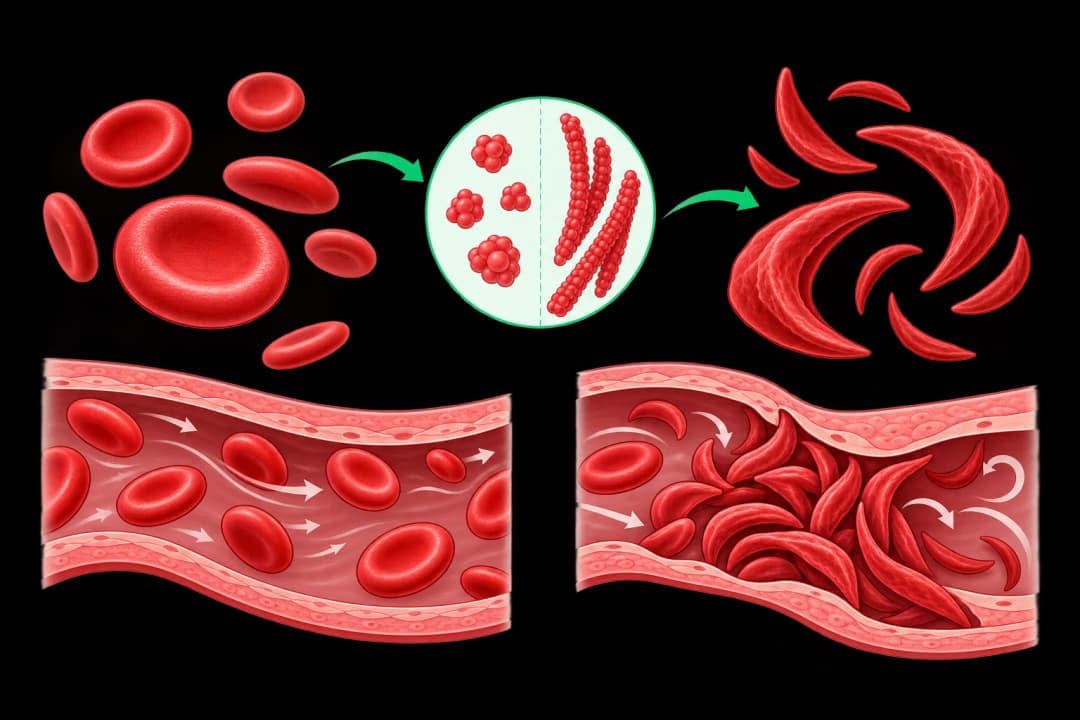
The anaemia in sickle cell disease is mainly haemolytic anaemia, caused by sickled red blood cells breaking down early and carrying less oxygen effectively.
This answers one question. It is not a diagnosis and does not replace an assessment by a licensed doctor.
At a glance
- Main mechanism
- Early breakdown of red blood cells
- Common effect
- Reduced oxygen delivery
- Useful assessment
- Blood results plus symptoms
How this anaemia develops
Red blood cells normally carry oxygen and circulate for a period before being replaced. In sickle cell disease, haemoglobin changes the shape and flexibility of some cells. These cells can break down early, producing anaemia, and can sometimes block small blood vessels. Most people with sickle cell disease experience anaemia as part of the condition. Fatigue, pale skin, breathlessness, or a fast heartbeat can reflect reduced oxygen delivery; joint pain can instead signal a pain crisis or another problem.
What to do next
Keep your regular haematology or primary-care appointments and follow the personal plan provided for hydration, medicines, vaccinations, and pain episodes. A Blood Test can help review haemoglobin and other blood measures, but results must be interpreted alongside symptoms. Do not take iron unless iron deficiency has been confirmed, because sickle-cell anaemia is not simply caused by low iron. If you are planning a family or marriage, Premarital Screening can support informed counselling about inherited haemoglobin conditions.
When to seek care
Get urgent help for severe pain, difficulty breathing, chest pain, sudden weakness, confusion, a high temperature, or marked dehydration. In a child, unusual sleepiness, poor feeding, or a swollen painful abdomen also needs prompt assessment. These symptoms may indicate a complication that requires rapid treatment, even when anaemia is already known.
Questions for your doctor
Ask what type of sickle cell disease is present, how your blood results compare with your usual level, which medicines reduce complications, what symptoms require emergency action, and whether relatives should receive genetic counselling.
Find care
General Clinics & Polyclinics in Abu Dhabi
That answer is general. If you want it applied to your own case, these are licensed general clinics & polyclinics listed in Abu Dhabi.
27 Ar Ruwwad St - Shakhbout City - MSH4 - Abu Dhabi - United Arab Emirates
Accepts: Daman, Thiqa, Cigna, MetLife +20 more
Al Ruwais, Al Dhafrah
Accepts: Daman, Thiqa, AXA, Cigna +16 more
Al Bahyah - Al Bahyah Old - Abu Dhabi - United Arab Emirates
Accepts: Daman, Thiqa, Cigna, Allianz Care +18 more
Abu Dhabi
Accepts: Daman, Thiqa, AXA, Cigna +27 more
Ordered by verification status and how complete each clinic's public record is, then alphabetically. This is a directory listing, not a ranking — Zavis does not rate or recommend providers.
A factual listing drawn from the DHA, DOH and MOHAP licence registers. It is not a referral, an endorsement, or advice that any of these providers is right for you.
Questions people ask
Is sickle-cell anaemia the same as iron-deficiency anaemia?
No. Sickle-cell anaemia is caused by an inherited haemoglobin change; iron deficiency is a separate condition that needs confirmation before iron treatment.
Can anaemia cause tiredness?
Yes. Reduced oxygen-carrying capacity can contribute to fatigue, but new or severe tiredness still needs clinical review.
Related
Related reading
Keep reading
Medical disclaimer. This page is general health information, not medical advice, and it cannot diagnose you. Always consult a licensed healthcare provider about your own symptoms and treatment. In an emergency in the UAE, call 998 for an ambulance.