
Type 2 diabetes: understanding the condition
Short answer
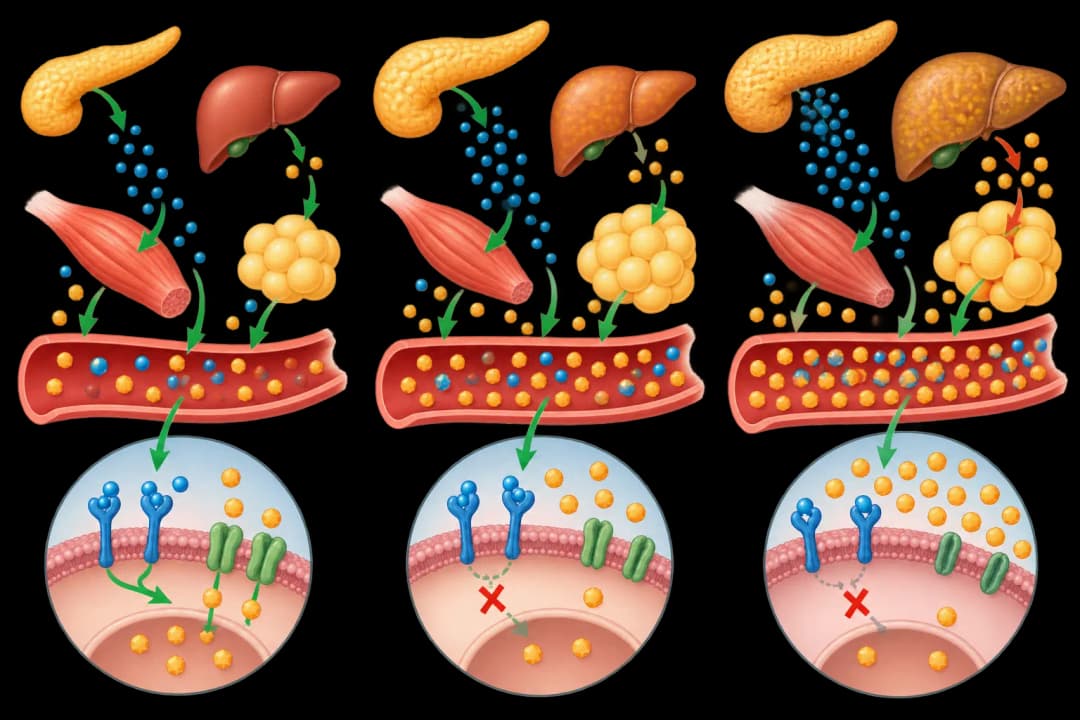
Type 2 diabetes is a long-term condition in which glucose stays too high because the body does not use insulin effectively or produce enough of it.
This answers one question. It is not a diagnosis and does not replace an assessment by a licensed doctor.
At a glance
- What changes
- How the body uses insulin and glucose
- Care may include
- Lifestyle support, medicines and monitoring
- Reviews may check
- Glucose, kidneys, eyes, feet and nerves
Understanding the condition
Glucose comes from food and is carried in the blood. Insulin helps move it into cells for energy. In type 2 diabetes, this process becomes less effective, so glucose can build up. Symptoms may include thirst, frequent urination, blurred vision, slow-healing cuts and tiredness, although some people notice none.
Over time, raised glucose can affect blood vessels, nerves, eyes, kidneys and feet. Prediabetes means glucose is above the usual range but below the level used to diagnose diabetes; it is not the same diagnosis.
Managing type 2 diabetes
Care is personalised. It may combine food planning, activity, weight-related support, tablets, injections or monitoring. Take medicines as prescribed and discuss side effects, fasting, travel, illness and missed doses with your clinician. Do not stop treatment because you feel well.
Attend planned reviews for glucose, blood pressure, cholesterol, kidneys, eyes, feet and nerves. Check your feet regularly and protect skin from injury. A balanced routine that you can maintain is more useful than sudden restrictive changes.
When to seek care
Contact your care team promptly for repeated high or low readings, new foot wounds, spreading skin redness, vomiting or dehydration. Get emergency help for severe confusion, a seizure, fainting, difficult breathing, or sudden facial drooping, speech difficulty or one-sided weakness, which can indicate a stroke.
Questions for your doctor
Ask what your personal glucose targets are, how often reviews are needed, which medicines suit your health, and how to manage illness or low glucose. Ask when your eyes, kidneys, feet and nerves should be checked.
Find care
General Clinics & Polyclinics in Abu Dhabi
That answer is general. If you want it applied to your own case, these are licensed general clinics & polyclinics listed in Abu Dhabi.
27 Ar Ruwwad St - Shakhbout City - MSH4 - Abu Dhabi - United Arab Emirates
Accepts: Daman, Thiqa, Cigna, MetLife +20 more
Al Ruwais, Al Dhafrah
Accepts: Daman, Thiqa, AXA, Cigna +16 more
Al Bahyah - Al Bahyah Old - Abu Dhabi - United Arab Emirates
Accepts: Daman, Thiqa, Cigna, Allianz Care +18 more
Abu Dhabi
Accepts: Daman, Thiqa, AXA, Cigna +27 more
Ordered by verification status and how complete each clinic's public record is, then alphabetically. This is a directory listing, not a ranking — Zavis does not rate or recommend providers.
A factual listing drawn from the DHA, DOH and MOHAP licence registers. It is not a referral, an endorsement, or advice that any of these providers is right for you.
Questions people ask
Is type 2 diabetes only caused by food?
No. It reflects several interacting factors, including insulin response, inherited risk, health conditions and lifestyle. It is not a personal failure.
Can type 2 diabetes be present without symptoms?
Yes. Some people have no noticeable symptoms, so appropriate blood testing and routine review matter.
Related
Related reading
Keep reading
Medical disclaimer. This page is general health information, not medical advice, and it cannot diagnose you. Always consult a licensed healthcare provider about your own symptoms and treatment. In an emergency in the UAE, call 998 for an ambulance.