
Is type 2 diabetes an autoimmune disease?
Short answer
Type 2 diabetes is generally not an autoimmune disease; it develops when the body becomes less responsive to insulin and insulin production cannot keep up.
This answers one question. It is not a diagnosis and does not replace an assessment by a licensed doctor.
At a glance
- Disease type
- Usually metabolic rather than autoimmune
- Main problem
- Insulin resistance with inadequate insulin production
- Monitoring
- Glucose, kidneys, feet, blood pressure and cholesterol
What this means
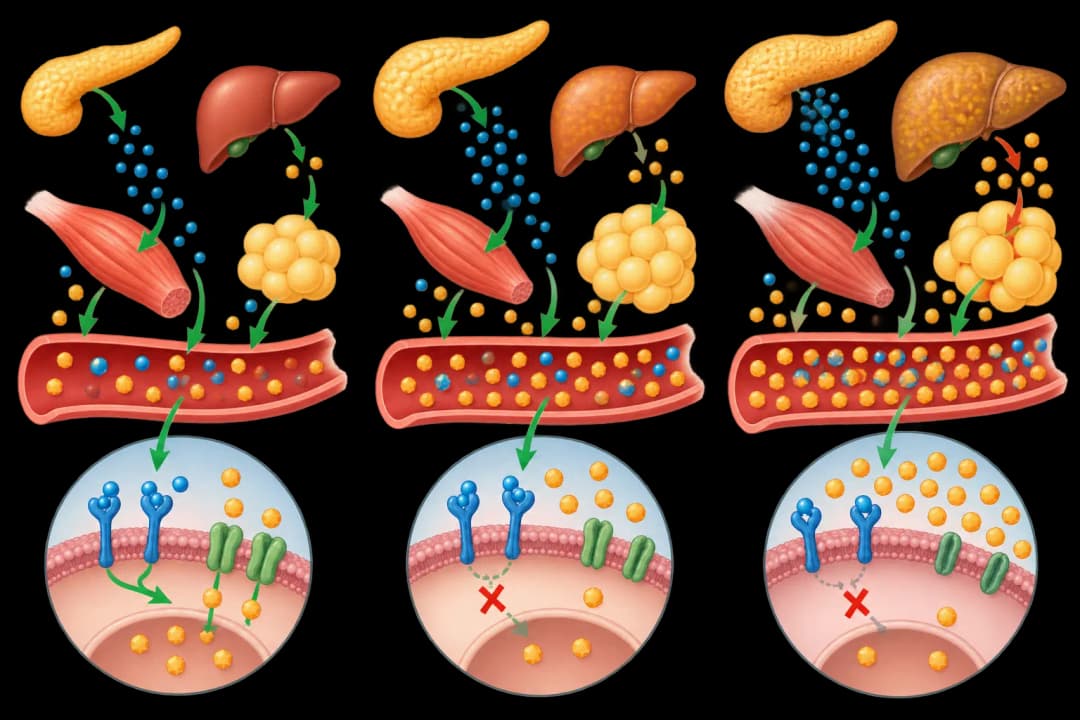
In an autoimmune condition, the immune system mistakenly targets the body's own cells. Type 2 diabetes usually follows a different pathway: muscle, liver and fat cells respond less effectively to insulin, while the pancreas struggles to release enough insulin to maintain a healthy glucose balance. Family history, weight, sleep, activity, age and other factors can contribute, but no single cause explains every case.
Over time, raised glucose can affect blood vessels and nerves. Possible consequences include kidney disease, reduced sensation in the feet, circulation problems and a greater risk of infections such as cellulitis. These are reasons for regular monitoring, not evidence that diabetes is an autoimmune illness.
Practical next steps
Ask your clinician to explain your glucose results, blood pressure, cholesterol and kidney checks together. Treatment may include food changes, regular movement, weight support where appropriate, tablets or insulin. Take medicines as prescribed and do not stop them because the condition is not autoimmune. Check your feet for blisters, cuts or colour changes, especially if sensation is reduced, and keep scheduled reviews.
When to seek care
Arrange prompt medical advice for repeated very high or low glucose readings, vomiting, dehydration, unusual drowsiness, confusion, breathing difficulty or an infected wound. Seek emergency help for severe confusion, loss of consciousness, sudden weakness on one side or trouble speaking. A clinician can assess the immediate problem and review whether treatment needs adjustment.
Questions for your doctor
Ask which type of diabetes best fits your results, whether another test is needed, how often your kidneys and feet should be checked, and which symptoms should trigger urgent help.
Find care
General Clinics & Polyclinics in Abu Dhabi
That answer is general. If you want it applied to your own case, these are licensed general clinics & polyclinics listed in Abu Dhabi.
27 Ar Ruwwad St - Shakhbout City - MSH4 - Abu Dhabi - United Arab Emirates
Accepts: Daman, Thiqa, Cigna, MetLife +20 more
Al Ruwais, Al Dhafrah
Accepts: Daman, Thiqa, AXA, Cigna +16 more
Al Bahyah - Al Bahyah Old - Abu Dhabi - United Arab Emirates
Accepts: Daman, Thiqa, Cigna, Allianz Care +18 more
Abu Dhabi
Accepts: Daman, Thiqa, AXA, Cigna +27 more
Ordered by verification status and how complete each clinic's public record is, then alphabetically. This is a directory listing, not a ranking — Zavis does not rate or recommend providers.
A factual listing drawn from the DHA, DOH and MOHAP licence registers. It is not a referral, an endorsement, or advice that any of these providers is right for you.
Questions people ask
Can type 2 diabetes later become type 1 diabetes?
They are different conditions, although a person may need insulin in either condition. Your clinician can reassess the diagnosis if the pattern of glucose results changes.
Does not being autoimmune mean type 2 diabetes is harmless?
No. Persistently raised glucose can damage blood vessels, nerves, eyes and kidneys, so treatment and routine checks remain important.
Related
Related reading
Keep reading
Medical disclaimer. This page is general health information, not medical advice, and it cannot diagnose you. Always consult a licensed healthcare provider about your own symptoms and treatment. In an emergency in the UAE, call 998 for an ambulance.