
Treatment for an Asthma Flare-Up
Short answer
Asthma flare-up treatment follows your action plan, usually using the prescribed reliever promptly and seeking emergency help if breathing remains difficult.
This answers one question. It is not a diagnosis and does not replace an assessment by a licensed doctor.
At a glance
- Position
- Sit upright and follow the personal asthma action plan.
- Escalation
- Severe or unresponsive breathing symptoms need emergency help.
- Prevention
- Technique, preventer review and trigger planning reduce future risk.
What happens during a flare-up
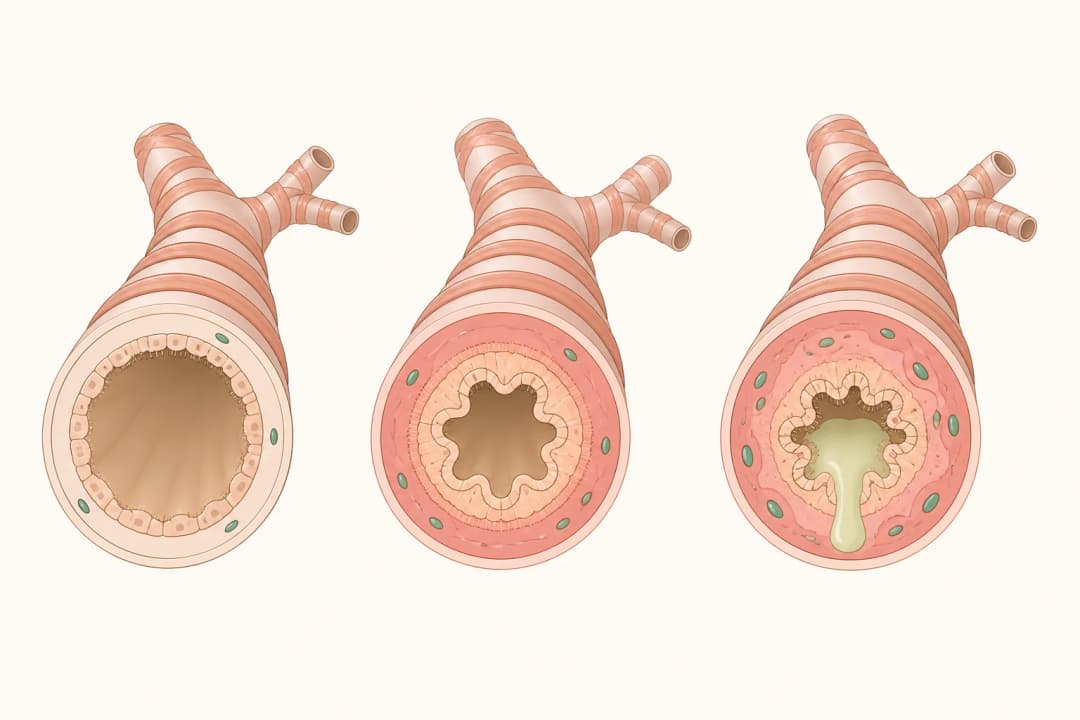
During a flare-up, the airways narrow and become inflamed, making it harder to move air. Cough, wheezing, chest tightness and shortness of breath may increase, sometimes after a viral infection, allergen, smoke, exercise or cold air. A person can have a serious flare-up without dramatic wheezing, so the ability to speak, walk and carry out the action plan matters. Asthma symptoms that repeatedly wake you or limit activity suggest that regular treatment needs review.
Steps to take
Stop the activity, sit upright and stay calm. Use the reliever inhaler exactly as your written asthma action plan says, with a spacer if prescribed. If the medicine is not helping, symptoms are worsening, or you have no inhaler, call emergency services. Do not drive yourself when breathing is severely difficult. A nebuliser may be used by healthcare professionals for selected severe attacks, but it is not a reason to delay emergency care. Once recovered, arrange a review to check inhaler technique, triggers, preventer use and the written plan.
Emergency warning signs
Call emergency services immediately if the person is struggling to breathe, cannot speak in full sentences, becomes drowsy or confused, has blue or grey lips, collapses, or gets little relief from the reliever. Seek urgent assessment for rapidly worsening symptoms, chest pain, or a flare-up after a severe allergic reaction. Keep taking prescribed preventer treatment unless a clinician gives different instructions; do not borrow another person’s inhaler.
How to prepare for future flare-ups
Ask the clinician to demonstrate inhaler and spacer technique, explain exactly when to repeat reliever doses, and provide a written action plan. Discuss preventer adherence, allergy or smoke triggers, vaccinations, exercise, and when lung-function review is needed.
Find care
General Clinics & Polyclinics in Abu Dhabi
That answer is general. If you want it applied to your own case, these are licensed general clinics & polyclinics listed in Abu Dhabi.
27 Ar Ruwwad St - Shakhbout City - MSH4 - Abu Dhabi - United Arab Emirates
Accepts: Daman, Thiqa, Cigna, MetLife +20 more
Al Ruwais, Al Dhafrah
Accepts: Daman, Thiqa, AXA, Cigna +16 more
Al Bahyah - Al Bahyah Old - Abu Dhabi - United Arab Emirates
Accepts: Daman, Thiqa, Cigna, Allianz Care +18 more
Abu Dhabi
Accepts: Daman, Thiqa, AXA, Cigna +27 more
Ordered by verification status and how complete each clinic's public record is, then alphabetically. This is a directory listing, not a ranking — Zavis does not rate or recommend providers.
A factual listing drawn from the DHA, DOH and MOHAP licence registers. It is not a referral, an endorsement, or advice that any of these providers is right for you.
Questions people ask
When should an asthma flare-up be treated as an emergency?
Call emergency services for severe breathing difficulty, inability to speak normally, blue or grey lips, confusion, collapse or poor response to the prescribed reliever.
Can a nebuliser replace an inhaler at home?
A nebuliser is not a substitute for an action plan or emergency assessment; healthcare professionals decide when it is appropriate.
Related
Related reading
Keep reading
Medical disclaimer. This page is general health information, not medical advice, and it cannot diagnose you. Always consult a licensed healthcare provider about your own symptoms and treatment. In an emergency in the UAE, call 998 for an ambulance.