
What should you know about transurethral cystoscopy?
Short answer
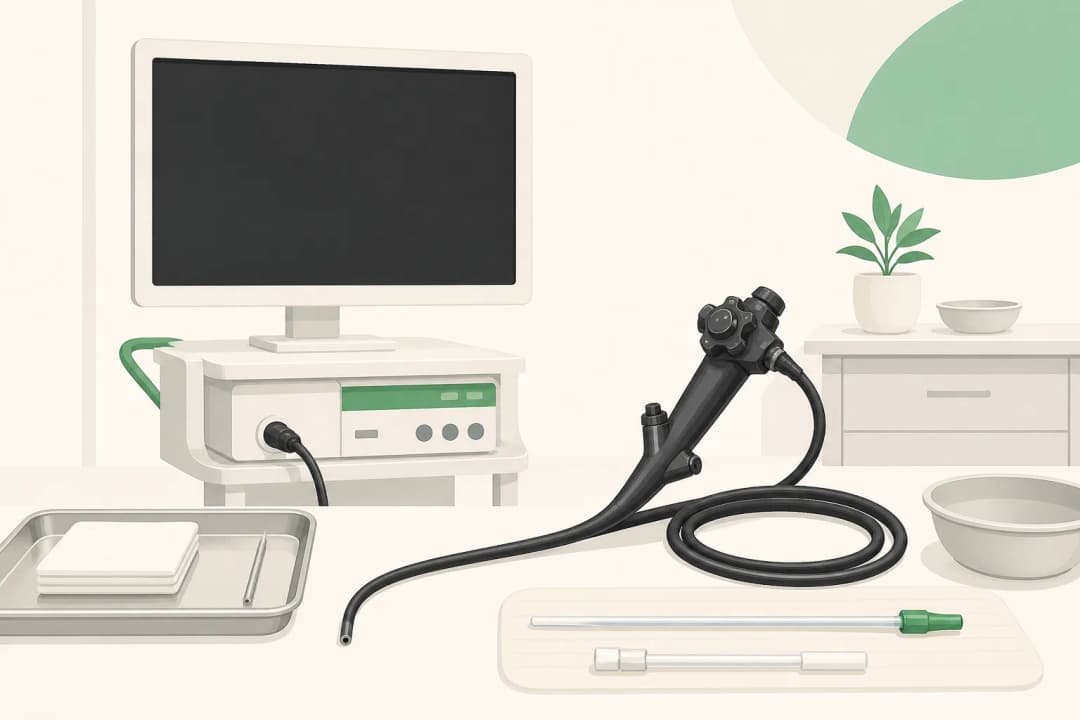
Transurethral cystoscopy uses a thin camera passed through the urethra to inspect the bladder and urinary passage.
This answers one question. It is not a diagnosis and does not replace an assessment by a licensed doctor.
At a glance
- Entry route
- Through the urethra
- What it views
- The urethra and bladder lining
- Possible extra step
- A small sample may be taken
What happens during it
The clinician cleans the area and inserts a cystoscope through the urethra. Local anaesthetic gel, sedation or another anaesthetic may be used. Sterile fluid gently fills the bladder so its lining can be seen. The clinician may take a small sample or treat a minor finding during the examination.
The test can investigate blood in urine, repeated urinary symptoms, a narrowing or a suspected bladder tumour. It can show the bladder lining but does not by itself answer every question about a finding; laboratory testing of a sample may be needed.
Preparing and recovering
Tell the clinic about allergies, medicines, pregnancy possibility and previous urinary problems. Follow instructions about eating, drinking and medicines, and arrange a lift if sedation is planned. After the test, drink fluids if your clinician advises this and use recommended pain relief.
Mild burning when passing urine, urinary frequency or a small amount of blood can occur for a short time. Follow the discharge instructions and attend any appointment arranged to discuss findings or test results.
When to seek care
Contact the clinic for worsening pain, fever, cloudy or foul-smelling urine, persistent heavy bleeding or difficulty passing urine. Seek urgent help if you cannot urinate, feel faint or develop severe pain. These signs may indicate infection, significant bleeding or urinary blockage.
Questions for your doctor
Ask why the cystoscopy is recommended, which anaesthetic will be used, whether a sample may be taken, when results will be ready, and what activity restrictions apply. Ask what symptoms after the test should prompt a call and whether another examination is needed.
Questions people ask
Is cystoscopy used to diagnose bladder cancer?
It can reveal abnormal areas, but a tissue sample and laboratory assessment may be needed to confirm the cause.
What symptoms can follow cystoscopy?
Temporary burning, frequency or a small amount of blood may occur; worsening symptoms need medical advice.
Related
Related reading
Keep reading
Cancer care in the UAE
Hospitals & Medical Centers in Abu Dhabi
Most UAE cancer care is delivered inside hospital services rather than by standalone oncology clinics, so these are licensed hospitals & medical centers listed in Abu Dhabi. Confirm the specific cancer service exists before you travel, and know that asking for a second opinion is routine.
Ahalia Hospital Musaffah Building - Musaffah - Musaffah Industrial - Abu Dhabi - United Arab Emirates
Accepts: Daman, Thiqa, AXA, Cigna +26 more
Al Ruwais Industrial City - Abu Dhabi - United Arab Emirates
Accepts: Daman, Thiqa, AXA, Cigna +30 more
Abu Dhabi, Abu Dhabi
Accepts: Daman, Thiqa, AXA, Cigna +30 more
Second opinions are routine in cancer care and asking for one does not affect your treatment. How to arrange a second opinion in the UAE.
Ordered by verification status and how complete each clinic's public record is, then alphabetically. This is a directory listing, not a ranking — Zavis does not rate or recommend providers.
A factual listing drawn from the DHA, DOH and MOHAP licence registers. It is not a referral, an endorsement, or advice that any of these providers is right for you.
Medical disclaimer. This page is general health information, not medical advice, and it cannot diagnose you. Always consult a licensed healthcare provider about your own symptoms and treatment. In an emergency in the UAE, call 998 for an ambulance.