
What should you know about tiny melanoma?
Short answer
A tiny melanoma still needs prompt specialist assessment because depth and cell behaviour matter more than visible size alone.
This answers one question. It is not a diagnosis and does not replace an assessment by a licensed doctor.
At a glance
- Visible size
- Does not show the full stage
- Key report
- Pathology examination of tissue
- Useful action
- Arrange specialist review promptly
Why size is not the whole story
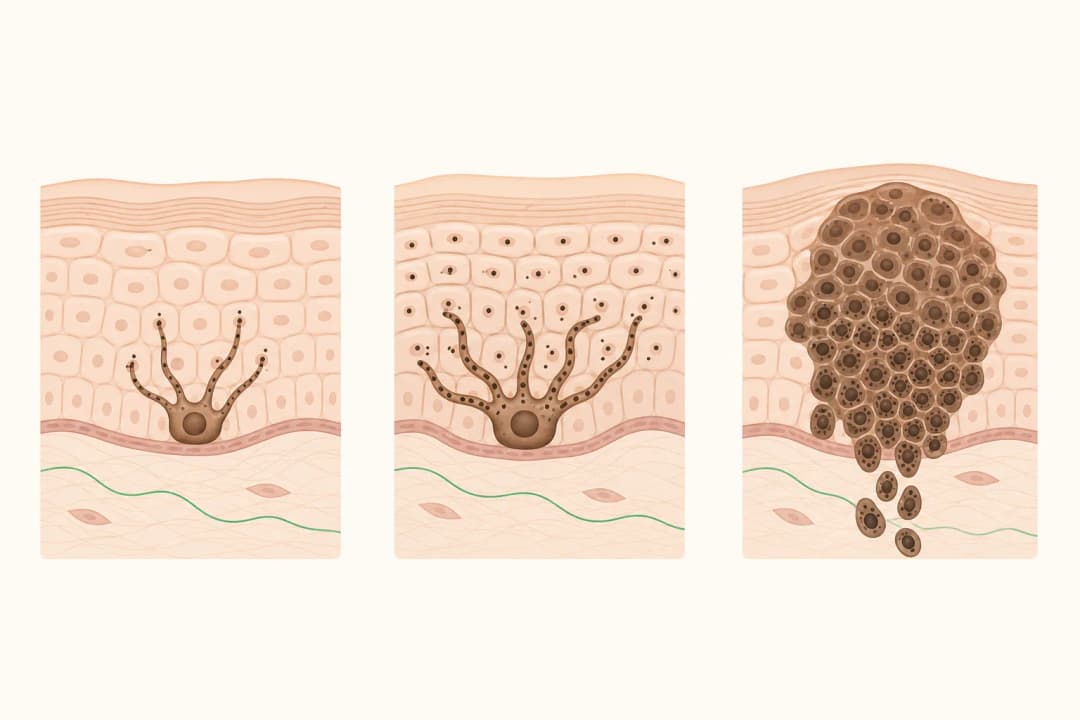
Melanoma begins in pigment-producing skin cells and can look like a very small new or changing mark. The pathology report examines the removed tissue, including how deeply abnormal cells extend into the skin and whether other features affect staging. A small-looking lesion can therefore need the same careful diagnostic pathway as a larger one.
A dermatologist may examine the surrounding skin and lymph nodes, review photographs or earlier notes, and discuss whether further testing is appropriate. [Melanoma](/conditions/melanoma/) information can help you understand the condition while your own report is being interpreted.
What to do after a concern is raised
Arrange a dermatology appointment without picking, burning, or trying to remove the mark yourself. Bring the pathology report if a biopsy has already been done, and mention when you first noticed the change. Treatment may involve [Surgical Excision](/treatments/surgical-dermatology/excisional-surgery/) and, depending on findings, discussion of lymph-node assessment or additional care.
Keep the wound clean according to the procedure instructions and attend every planned review. Follow-up helps clinicians check the treated area and look for new or changing lesions elsewhere.
When to seek care
Contact the treating team promptly if the lesion changes quickly, bleeds repeatedly, forms a persistent crust, or becomes painful. After a procedure, seek urgent help for heavy bleeding, spreading redness with fever, severe swelling, or difficulty breathing. New severe headaches, weakness, confusion, or seizures need emergency assessment; they are not signs to monitor at home.
Questions for your doctor
Ask what the pathology report says about depth and margins, whether more tissue should be removed, whether lymph-node assessment is relevant, and how often the skin should be checked. Ask who to contact if a new mark appears.
Find care
General Clinics & Polyclinics in Abu Dhabi
That answer is general. If you want it applied to your own case, these are licensed general clinics & polyclinics listed in Abu Dhabi.
27 Ar Ruwwad St - Shakhbout City - MSH4 - Abu Dhabi - United Arab Emirates
Accepts: Daman, Thiqa, Cigna, MetLife +20 more
Al Ruwais, Al Dhafrah
Accepts: Daman, Thiqa, AXA, Cigna +16 more
Al Bahyah - Al Bahyah Old - Abu Dhabi - United Arab Emirates
Accepts: Daman, Thiqa, Cigna, Allianz Care +18 more
Abu Dhabi
Accepts: Daman, Thiqa, AXA, Cigna +27 more
Ordered by verification status and how complete each clinic's public record is, then alphabetically. This is a directory listing, not a ranking — Zavis does not rate or recommend providers.
A factual listing drawn from the DHA, DOH and MOHAP licence registers. It is not a referral, an endorsement, or advice that any of these providers is right for you.
Questions people ask
Can a tiny melanoma be serious?
Yes. Its clinical significance depends on depth, pathology features, and spread rather than its visible size alone.
Should I remove a suspicious spot at home?
No. Home removal can damage tissue and delay diagnosis; a clinician should assess and sample it safely.
Related
Related reading
Keep reading
Medical disclaimer. This page is general health information, not medical advice, and it cannot diagnose you. Always consult a licensed healthcare provider about your own symptoms and treatment. In an emergency in the UAE, call 998 for an ambulance.