
What should you know about thyroiditis and hyperthyroidism?
Short answer
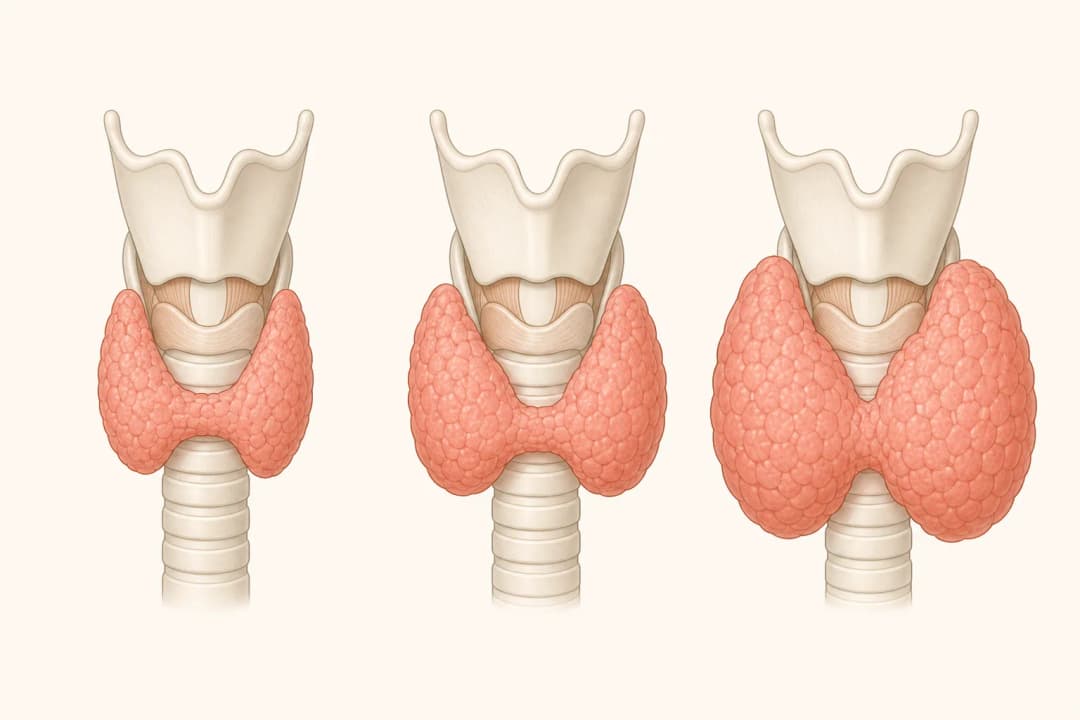
Thyroiditis is inflammation of the thyroid, while hyperthyroidism means that thyroid hormone levels are too high for the body.
This answers one question. It is not a diagnosis and does not replace an assessment by a licensed doctor.
At a glance
- Thyroiditis
- Inflammation of the thyroid gland.
- Hyperthyroidism
- Excess thyroid hormone activity in the body.
How they are connected
Some forms of thyroiditis damage thyroid cells and release stored hormone into the bloodstream. This can create a temporary hyperthyroid phase, followed in some cases by a low-thyroid phase as hormone stores run down. Other causes of hyperthyroidism make the gland produce too much hormone continuously. The pattern and duration depend on the cause.
Possible symptoms include palpitations, feeling anxious, difficulty sleeping, excessive sweating, heat intolerance, night sweats or diarrhoea. A symptom page can explain each complaint, but none of these symptoms identifies the cause by itself.
What to do next
Book an appointment for persistent or troublesome symptoms. Assessment may include a pulse check, neck examination and thyroid blood tests, with further tests when the cause is unclear. Tell the clinician about recent illness, neck pain, pregnancy or postpartum changes, and all medicines and supplements.
Treatment depends on whether the thyroid is releasing stored hormone or actively overproducing it. Follow the agreed plan, stay hydrated if bowel symptoms are present, and avoid changing medicine doses independently. Keep notes on palpitations, sleep, temperature sensitivity and bowel changes.
When to seek urgent care
Get urgent help for chest pain, severe breathlessness, fainting, marked confusion, a very fast or irregular heartbeat, or sudden worsening with fever. Severe excess thyroid hormone can place heavy stress on the heart and nervous system.
Questions for your doctor
Ask: Is this thyroiditis or ongoing hyperthyroidism? Which blood tests will clarify the phase? How long might symptoms last? Which medicines should I avoid, and what change in heartbeat or breathing needs urgent help?
Find care
General Clinics & Polyclinics in Abu Dhabi
That answer is general. If you want it applied to your own case, these are licensed general clinics & polyclinics listed in Abu Dhabi.
27 Ar Ruwwad St - Shakhbout City - MSH4 - Abu Dhabi - United Arab Emirates
Accepts: Daman, Thiqa, Cigna, MetLife +20 more
Al Ruwais, Al Dhafrah
Accepts: Daman, Thiqa, AXA, Cigna +16 more
Al Bahyah - Al Bahyah Old - Abu Dhabi - United Arab Emirates
Accepts: Daman, Thiqa, Cigna, Allianz Care +18 more
Abu Dhabi
Accepts: Daman, Thiqa, AXA, Cigna +27 more
Ordered by verification status and how complete each clinic's public record is, then alphabetically. This is a directory listing, not a ranking — Zavis does not rate or recommend providers.
A factual listing drawn from the DHA, DOH and MOHAP licence registers. It is not a referral, an endorsement, or advice that any of these providers is right for you.
Questions people ask
Does thyroiditis always cause hyperthyroidism?
No. Some forms release stored hormone, while others do not cause an overactive phase and may later reduce thyroid function.
Can palpitations be related to thyroiditis?
Palpitations can occur when thyroid hormone activity is high, but they have other possible causes and need assessment if persistent or severe.
Related
Related reading
Keep reading
Medical disclaimer. This page is general health information, not medical advice, and it cannot diagnose you. Always consult a licensed healthcare provider about your own symptoms and treatment. In an emergency in the UAE, call 998 for an ambulance.