
What Should You Know About Stabbing Pain in the Middle of the Foot?
Short answer
Stabbing pain in the middle of the foot may come from irritated joints, tendons, nerves, or a stress injury, so the timing and triggers help guide the next step.
This answers one question. It is not a diagnosis and does not replace an assessment by a licensed doctor.
At a glance
- Common triggers
- Walking, running, push-off, tight footwear, or a recent change in activity
- Useful clue
- Pinpoint tenderness over a bone needs assessment, especially after repeated loading
- First steps
- Reduce aggravating activity and use supportive, roomy footwear
The short answer
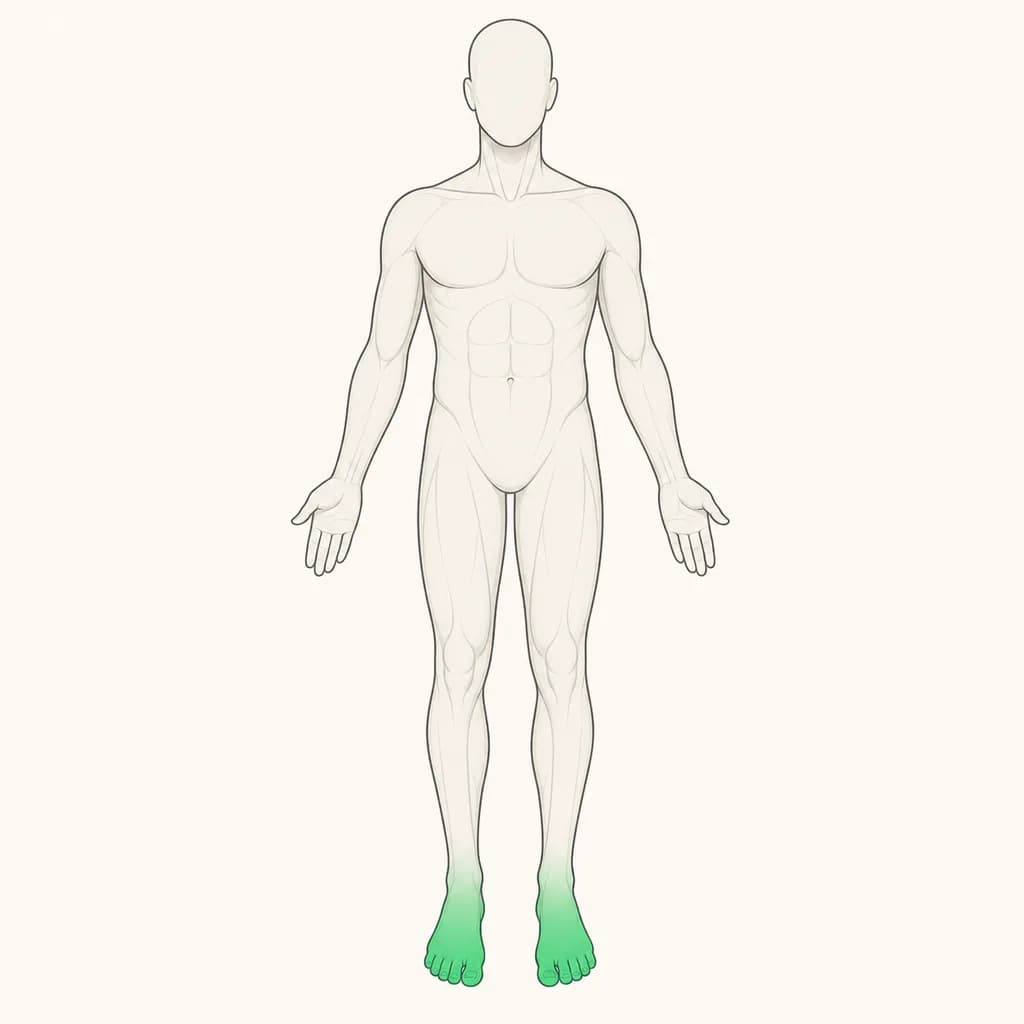
Pain that began after a twist, fall, or sudden increase in walking deserves more caution than soreness that appears gradually after shoes or activity. The exact location matters too: pain on the top, inner side, outer side, or sole can point toward different structures.
What it may mean
The midfoot contains small joints, ligaments, tendons, nerves, and several bones that share load while you walk. A strain or joint irritation may hurt when you push off or bend the foot. A nerve can produce brief, electric or burning stabs, sometimes with tingling. Repeated loading can cause a stress fracture, especially when pain becomes focused over one spot and worsens with activity.
Foot shape and movement can also shift pressure through the midfoot. Flat feet, bunions, a stiff big-toe joint, or curled toes may change how you roll forward. Plantar fascia irritation more often affects the sole near the heel, but foot pain can overlap, so an examination is useful when the pattern is unclear.
What you can do now
Reduce the activity that reliably triggers the stabbing sensation for a short period, while keeping gentle movement within comfort. Wear supportive shoes with enough room across the midfoot and avoid thin, unsupportive soles or tight laces. Elevating the foot after activity and using a wrapped cold pack briefly may help settle irritation.
Do not push through increasing, pinpoint pain or return quickly to running and jumping. If symptoms keep returning, a clinician or physiotherapist can check walking mechanics, joint motion, strength, and tenderness. Custom orthotics may be considered when pressure distribution or foot alignment is contributing.
When to seek care
Arrange prompt medical assessment after a significant injury, or if you cannot bear weight, the foot looks misshapen, swelling is marked, or bruising is spreading. Seek urgent help if the foot becomes cold, pale or blue, or if new weakness or loss of feeling develops.
Book an appointment if pain is pinpoint, keeps worsening, wakes you at night, or does not settle with reduced activity and supportive footwear. An examination may be followed by imaging when a bone or joint injury is suspected.
Questions for your doctor
Ask: Which structure seems to be causing the pain? Do I need imaging? Which activities and shoes are suitable while it settles? Could my foot shape or walking pattern be adding pressure? What symptoms should make me seek earlier care?
Find care
General Clinics & Polyclinics in Abu Dhabi
That answer is general. If you want it applied to your own case, these are licensed general clinics & polyclinics listed in Abu Dhabi.
27 Ar Ruwwad St - Shakhbout City - MSH4 - Abu Dhabi - United Arab Emirates
Accepts: Daman, Thiqa, Cigna, MetLife +20 more
Al Ruwais, Al Dhafrah
Accepts: Daman, Thiqa, AXA, Cigna +16 more
Al Bahyah - Al Bahyah Old - Abu Dhabi - United Arab Emirates
Accepts: Daman, Thiqa, Cigna, Allianz Care +18 more
Abu Dhabi
Accepts: Daman, Thiqa, AXA, Cigna +27 more
Ordered by verification status and how complete each clinic's public record is, then alphabetically. This is a directory listing, not a ranking — Zavis does not rate or recommend providers.
A factual listing drawn from the DHA, DOH and MOHAP licence registers. It is not a referral, an endorsement, or advice that any of these providers is right for you.
Questions people ask
Can shoes cause stabbing midfoot pain?
Yes. Tight laces, a narrow toe box, or a poorly supportive sole can increase pressure or irritate tissues. Change to comfortable supportive footwear and arrange assessment if the pain continues.
Should I walk on stabbing foot pain?
Gentle walking may be reasonable if it does not increase pain, but avoid impact activity and do not force weight-bearing when pain is sharp, swelling is present, or an injury is possible.
Could stabbing pain be a stress fracture?
It can be, particularly when pain is focused over one area and worsens with loading or follows a training increase. A clinician can examine the foot and decide whether imaging is needed.
Related
Related reading
Keep reading
Medical disclaimer. This page is general health information, not medical advice, and it cannot diagnose you. Always consult a licensed healthcare provider about your own symptoms and treatment. In an emergency in the UAE, call 998 for an ambulance.