
What should you know about single lead electrocardiogram?
Short answer
A single-lead electrocardiogram records one view of your heart's electrical activity and can flag rhythm patterns for clinical assessment.
This answers one question. It is not a diagnosis and does not replace an assessment by a licensed doctor.
At a glance
- What it records
- One view of electrical heart activity
- What an alert means
- A result needing clinical context
- What it cannot do
- Rule out every heart problem
What the reading means
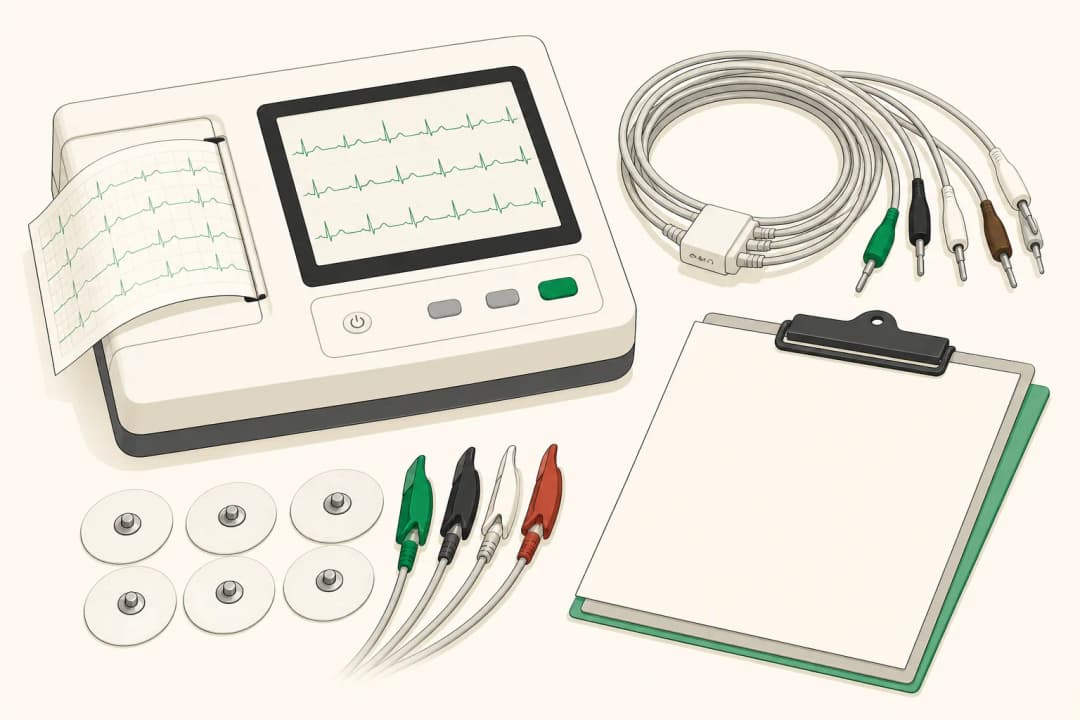
The device uses sensors touching the skin to detect electrical signals during a brief recording. A tracing may show a regular rhythm, an irregular rhythm, or a result that the device cannot classify. A single lead gives less information than a multi-lead clinical ECG, so an alert is a prompt for review rather than a diagnosis. A clinician considers your symptoms, pulse, medical history, medicines and the recording quality. Rhythm conditions such as atrial fibrillation can produce an irregular pattern, while chest discomfort has other possible causes, including angina. The test does not show every heart problem.
What to do next
Record the date, time, symptoms and activity when you took the reading, and keep the tracing available. Sit still, keep the contact points clean and dry, and follow the device instructions if you repeat it. Do not change heart medicines because of an app message. Arrange a GP Consultation if readings remain irregular, symptoms recur, or the device repeatedly cannot classify the result. A clinician may repeat the test with a standard Electrocardiogram or choose another assessment.
When to seek care
Seek urgent medical help for chest pressure or pain, severe breathlessness, fainting, new weakness on one side, confusion, or a fast or irregular heartbeat with feeling very unwell. These symptoms need assessment even if the single-lead recording appears normal. For milder palpitations that settle, arrange timely clinical advice and bring the recording; the pattern and your symptoms together matter more than a device label.
Questions for your doctor
Ask whether the recording quality is adequate, whether you need a standard ECG or monitoring, and which symptoms should trigger urgent help. You can also ask whether your medicines, thyroid health or known heart conditions could affect the rhythm.
Find care
General Clinics & Polyclinics in Abu Dhabi
That answer is general. If you want it applied to your own case, these are licensed general clinics & polyclinics listed in Abu Dhabi.
27 Ar Ruwwad St - Shakhbout City - MSH4 - Abu Dhabi - United Arab Emirates
Accepts: Daman, Thiqa, Cigna, MetLife +20 more
Al Ruwais, Al Dhafrah
Accepts: Daman, Thiqa, AXA, Cigna +16 more
Al Bahyah - Al Bahyah Old - Abu Dhabi - United Arab Emirates
Accepts: Daman, Thiqa, Cigna, Allianz Care +18 more
Abu Dhabi
Accepts: Daman, Thiqa, AXA, Cigna +27 more
Ordered by verification status and how complete each clinic's public record is, then alphabetically. This is a directory listing, not a ranking — Zavis does not rate or recommend providers.
A factual listing drawn from the DHA, DOH and MOHAP licence registers. It is not a referral, an endorsement, or advice that any of these providers is right for you.
Questions people ask
Is a single-lead ECG the same as a clinical ECG?
No. It records one electrical view, while a clinical ECG uses several leads and may provide a broader assessment.
Should an abnormal app result worry me?
Treat it as a reason to seek clinical advice, especially if symptoms are present; it is not a diagnosis by itself.
Related
Related reading
Keep reading
Medical disclaimer. This page is general health information, not medical advice, and it cannot diagnose you. Always consult a licensed healthcare provider about your own symptoms and treatment. In an emergency in the UAE, call 998 for an ambulance.