
What are the signs of aspiration pneumonia?
Short answer
Signs of aspiration pneumonia may include cough, fever, chills, breathlessness, chest discomfort, tiredness, and coughing up phlegm after inhaling material.
This answers one question. It is not a diagnosis and does not replace an assessment by a licensed doctor.
At a glance
- Common clue
- Coughing or choking during eating or drinking
- Lung symptoms
- Breathlessness, fever, and phlegm
- Position
- Keep an awake person upright if safe
How aspiration pneumonia develops
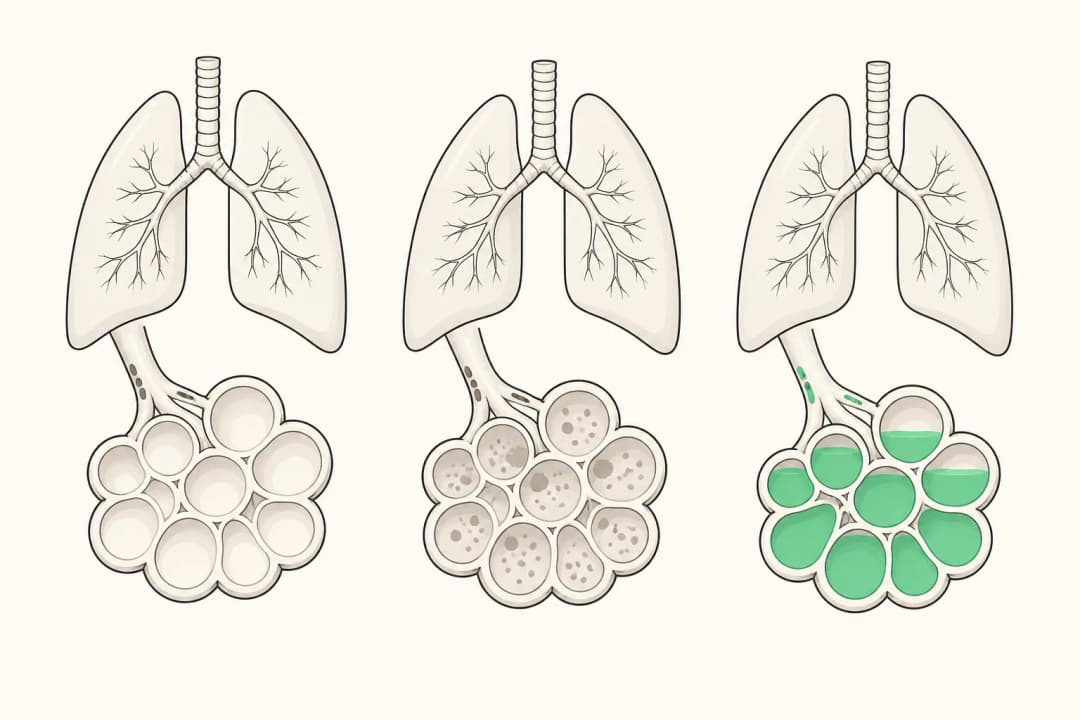
Aspiration pneumonia is a lung infection that can develop when food, drink, saliva, stomach contents, or vomit enters the lower airways instead of the swallowing tube. Coughing during meals, a wet or gurgly voice, repeated choking, or difficulty swallowing can be clues that material has gone the wrong way. Later symptoms may include fever, chills, worsening cough, fast or difficult breathing, chest pain when breathing deeply, weakness, and yellow or green phlegm. Symptoms can be subtle in older adults or people with swallowing, neurological, or reduced-alertness problems.
What to do next
Contact a clinician promptly if these symptoms follow choking, vomiting, sedation, a swallowing problem, or a reduced level of alertness. Keep the person sitting upright if they are awake and able to sit safely. Do not offer food or drink if swallowing is unsafe. A clinician may check oxygen levels, listen to the lungs, and arrange imaging or swallowing assessment. Treatment depends on examination findings and may include antibiotics, oxygen, fluids, or support for the underlying swallowing problem.
When to seek emergency help
Call emergency services for severe breathlessness, blue or grey lips, confusion, fainting, inability to speak normally, or rapidly worsening weakness. Urgent assessment is also needed for persistent fever, chest pain, or a cough that follows a choking episode. Pneumonia can worsen and may lead to sepsis, so do not wait for symptoms to become extreme when breathing or alertness is changing.
Questions for your doctor
Ask what may have entered the airway, whether swallowing should be assessed, which foods or textures are safer, and how to reduce aspiration risk during meals. Discuss medication effects, reflux, and steps to take if choking happens again.
Find care
General Clinics & Polyclinics in Abu Dhabi
That answer is general. If you want it applied to your own case, these are licensed general clinics & polyclinics listed in Abu Dhabi.
27 Ar Ruwwad St - Shakhbout City - MSH4 - Abu Dhabi - United Arab Emirates
Accepts: Daman, Thiqa, Cigna, MetLife +20 more
Al Ruwais, Al Dhafrah
Accepts: Daman, Thiqa, AXA, Cigna +16 more
Al Bahyah - Al Bahyah Old - Abu Dhabi - United Arab Emirates
Accepts: Daman, Thiqa, Cigna, Allianz Care +18 more
Abu Dhabi
Accepts: Daman, Thiqa, AXA, Cigna +27 more
Ordered by verification status and how complete each clinic's public record is, then alphabetically. This is a directory listing, not a ranking — Zavis does not rate or recommend providers.
A factual listing drawn from the DHA, DOH and MOHAP licence registers. It is not a referral, an endorsement, or advice that any of these providers is right for you.
Questions people ask
Can aspiration pneumonia start after vomiting?
Yes. Stomach contents can enter the airways during vomiting or when alertness is reduced.
Is every cough after swallowing pneumonia?
No. A brief cough may clear the airway, but persistent or worsening symptoms need clinical assessment.
Medical disclaimer. This page is general health information, not medical advice, and it cannot diagnose you. Always consult a licensed healthcare provider about your own symptoms and treatment. In an emergency in the UAE, call 998 for an ambulance.