
What should you know about sickle cell disease genetics?
Short answer
Sickle cell disease is caused by inherited changes in haemoglobin genes, so testing can clarify your status and family planning options.
This answers one question. It is not a diagnosis and does not replace an assessment by a licensed doctor.
At a glance
- Cause
- Inherited haemoglobin gene changes
- Clarifying test
- A blood test can identify haemoglobin patterns
- Planning support
- Genetic counselling and premarital screening
How the genetics work
A child receives one haemoglobin gene from each biological parent. Some people inherit changes that cause sickle cell disease, while others inherit one changed gene and one usual gene and have sickle cell trait. Trait is different from disease and is often identified through a blood test. If both parents carry a relevant change, a genetic counsellor can explain the possible combinations for a future child without predicting an individual outcome.
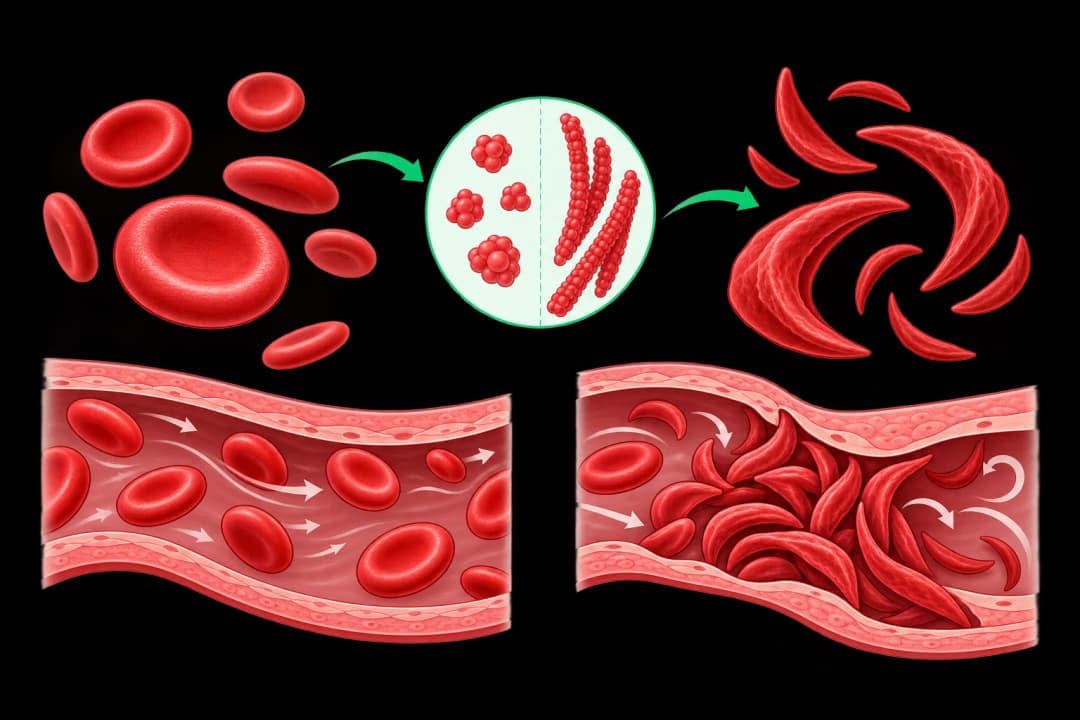
The altered haemoglobin can make red blood cells less flexible and may contribute to anaemia or episodes of blocked blood flow. Symptoms associated with sickle cell disease can include fatigue, joint pain, or pale skin, but symptoms alone cannot establish the genetic pattern.
Useful next steps
Ask a clinician whether a blood test should identify haemoglobin types and whether genetic counselling is appropriate. Premarital screening may help couples understand carrier status before pregnancy. Bring results from relatives if available, and ask whether the result shows disease, trait, or another haemoglobin pattern. Do not change medicines or make reproductive decisions from a family story alone; the exact laboratory result matters.
When prompt care matters
Seek urgent medical help for severe pain, trouble breathing, marked weakness, confusion, or a high temperature, particularly when sickle cell disease is already diagnosed. A new symptom such as fatigue or joint pain still needs assessment for its cause; it does not by itself show that a person has sickle cell disease.
Questions to ask
Ask: What does my haemoglobin result show? Do I have sickle cell trait or disease? Should my partner or close relatives be tested? Would genetic counselling help us understand pregnancy options?
Find care
General Clinics & Polyclinics in Abu Dhabi
That answer is general. If you want it applied to your own case, these are licensed general clinics & polyclinics listed in Abu Dhabi.
27 Ar Ruwwad St - Shakhbout City - MSH4 - Abu Dhabi - United Arab Emirates
Accepts: Daman, Thiqa, Cigna, MetLife +20 more
Al Ruwais, Al Dhafrah
Accepts: Daman, Thiqa, AXA, Cigna +16 more
Al Bahyah - Al Bahyah Old - Abu Dhabi - United Arab Emirates
Accepts: Daman, Thiqa, Cigna, Allianz Care +18 more
Abu Dhabi
Accepts: Daman, Thiqa, AXA, Cigna +27 more
Ordered by verification status and how complete each clinic's public record is, then alphabetically. This is a directory listing, not a ranking — Zavis does not rate or recommend providers.
A factual listing drawn from the DHA, DOH and MOHAP licence registers. It is not a referral, an endorsement, or advice that any of these providers is right for you.
Questions people ask
Can a person with sickle cell trait have a child with sickle cell disease?
The possibility depends on the haemoglobin genes carried by both biological parents. Testing both partners gives more useful information than symptoms or family history alone.
Does a family history prove that I have sickle cell disease?
No. Family history can prompt testing, but a laboratory assessment is needed to distinguish disease, trait, and other haemoglobin patterns.
Related
Related reading
Keep reading
Medical disclaimer. This page is general health information, not medical advice, and it cannot diagnose you. Always consult a licensed healthcare provider about your own symptoms and treatment. In an emergency in the UAE, call 998 for an ambulance.