
Sickle Cell Disease: Description and Symptoms
Short answer
Sickle cell disease is an inherited blood condition in which altered haemoglobin changes red blood cell shape and movement.
This answers one question. It is not a diagnosis and does not replace an assessment by a licensed doctor.
At a glance
- What changes
- Haemoglobin changes red blood cell shape, flexibility, and lifespan.
- Common effects
- Anaemia, fatigue, pain episodes, and reduced oxygen delivery.
- Diagnosis
- A blood test helps identify the haemoglobin pattern.
How the condition affects the body
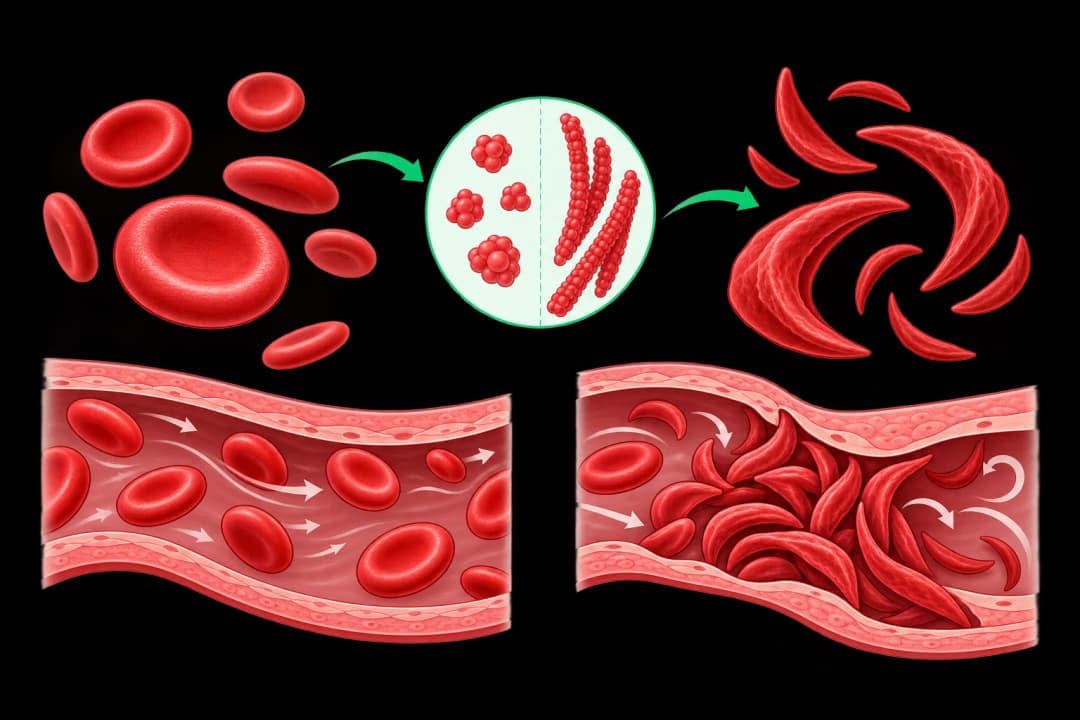
Healthy red blood cells are flexible and carry oxygen through small vessels. In sickle cell disease, some cells become firm and curved, break down sooner, and may block circulation. This can cause anaemia, with fatigue, reduced stamina, or pale skin, and episodes of pain in bones, the chest, abdomen, or joints. The condition is present from birth, although symptoms and their intensity can change with age and circumstances.
Sickle cell disease is not the same as sickle cell trait. A [Blood Test](/treatments/diagnostics-and-screening/blood-test/) can help distinguish haemoglobin patterns and support a diagnosis.
Living with the condition
Care usually combines regular reviews, prevention, vaccinations, prescribed medicines, and a clear plan for pain or fever. Keep hydrated according to your clinician's advice, learn your warning symptoms, and share the diagnosis with every healthcare professional involved in your care. Ask about monitoring for organ effects and support with school, work, exercise, or pregnancy planning. Families may also discuss genetic results through [Premarital Screening](/treatments/diagnostics-and-screening/premarital-screening/).
Symptoms that need urgent assessment
Seek urgent care for fever, chest pain, breathing difficulty, severe pain, sudden weakness, confusion, a seizure, fainting, or sudden vision change. Repeated vomiting or inability to drink can make illness worse and also needs prompt help. A healthcare team can assess whether symptoms represent a crisis, infection, anaemia, or another problem. Do not rely on symptom severity alone if your written plan sets an earlier threshold.
Questions for your doctor
Which type of sickle cell disease do I have? How will we monitor my blood and organs? What is my plan for pain and fever? Which activities or situations need extra preparation? Should my relatives or partner consider testing?
Find care
General Clinics & Polyclinics in Abu Dhabi
That answer is general. If you want it applied to your own case, these are licensed general clinics & polyclinics listed in Abu Dhabi.
27 Ar Ruwwad St - Shakhbout City - MSH4 - Abu Dhabi - United Arab Emirates
Accepts: Daman, Thiqa, Cigna, MetLife +20 more
Al Ruwais, Al Dhafrah
Accepts: Daman, Thiqa, AXA, Cigna +16 more
Al Bahyah - Al Bahyah Old - Abu Dhabi - United Arab Emirates
Accepts: Daman, Thiqa, Cigna, Allianz Care +18 more
Abu Dhabi
Accepts: Daman, Thiqa, AXA, Cigna +27 more
Ordered by verification status and how complete each clinic's public record is, then alphabetically. This is a directory listing, not a ranking — Zavis does not rate or recommend providers.
A factual listing drawn from the DHA, DOH and MOHAP licence registers. It is not a referral, an endorsement, or advice that any of these providers is right for you.
Questions people ask
Is sickle cell disease present from birth?
Yes. It is inherited, though symptoms may become more noticeable at different stages of life.
Can someone with sickle cell disease feel well?
Yes. Symptoms can vary, and people may have periods without an acute crisis while still needing ongoing monitoring.
Related
Related reading
Keep reading
Medical disclaimer. This page is general health information, not medical advice, and it cannot diagnose you. Always consult a licensed healthcare provider about your own symptoms and treatment. In an emergency in the UAE, call 998 for an ambulance.