
What should you know about routine urinalysis test?
Short answer
A routine urinalysis examines a urine sample for signs of infection, blood, protein, glucose, and other changes.
This answers one question. It is not a diagnosis and does not replace an assessment by a licensed doctor.
At a glance
- Sample
- Urine collected in a sterile container
- Checks
- Cells, chemicals, concentration, and signs of infection
- Interpretation
- Results are considered with symptoms and history
What the result can mean
A laboratory may assess appearance, acidity, concentration, cells, bacteria, protein, sugar, and ketones. A result outside the usual range is a clue, not a diagnosis by itself. Blood or protein can have several explanations, including temporary irritation, strenuous exercise, kidney problems, or contamination during collection. White cells, bacteria, or nitrites can support a urinary tract infection, while fever and pain in the side may raise concern for a kidney infection. A clinician interprets the pattern alongside symptoms, medicines, pregnancy status, and medical history.
How to prepare and follow up
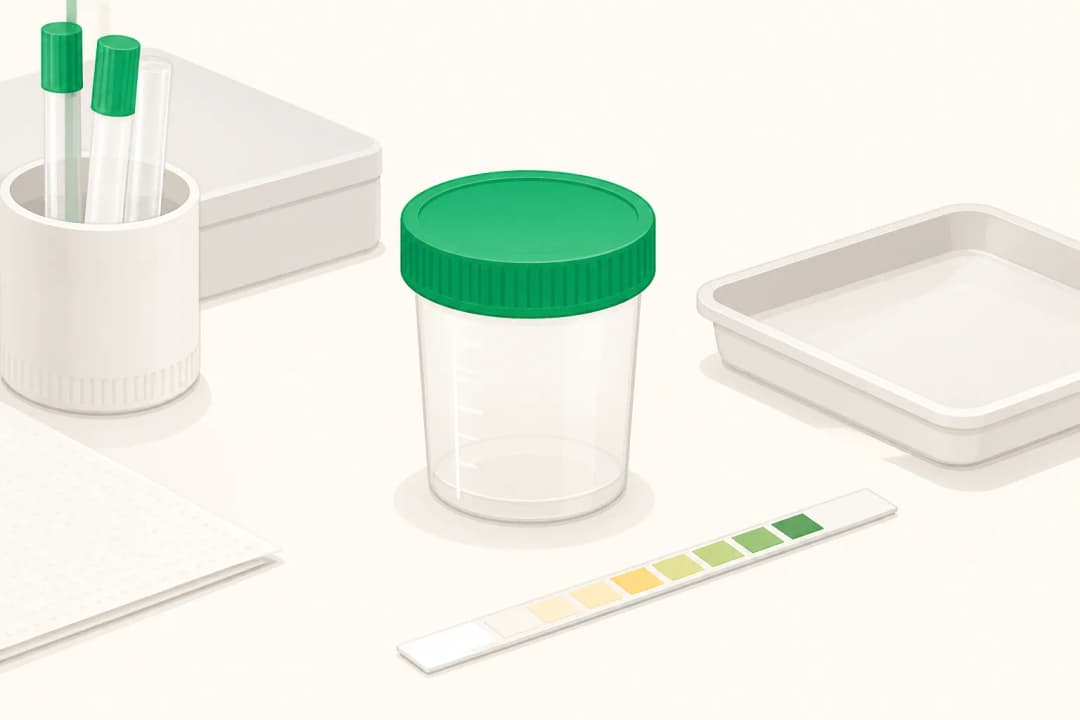
Follow the laboratory instructions. A clean-catch midstream sample often reduces contamination: wash your hands, begin urinating, collect the middle part in the sterile container, and close it without touching the inside. Tell the clinician about vaginal bleeding, menstruation, urinary symptoms, and medicines or supplements. Do not start leftover antibiotics because a test result may need confirmation and treatment depends on the cause. If symptoms persist despite a reassuring sample, arrange review; further testing may be needed.
When to seek care
Seek prompt medical advice for fever with urinary symptoms, pain in the back or side, vomiting, visible blood in urine, confusion, or difficulty passing urine. Urgent assessment is especially appropriate if you feel very unwell, are pregnant, or have a weakened immune system. A urine result should not delay care when symptoms are severe.
Questions for your doctor
Ask which findings were outside the expected range, whether the sample may have been contaminated, and whether you need a repeat test or culture. Clarify what symptoms should trigger review and whether any medicine could affect the result.
Find care
General Clinics & Polyclinics in Abu Dhabi
That answer is general. If you want it applied to your own case, these are licensed general clinics & polyclinics listed in Abu Dhabi.
27 Ar Ruwwad St - Shakhbout City - MSH4 - Abu Dhabi - United Arab Emirates
Accepts: Daman, Thiqa, Cigna, MetLife +20 more
Al Ruwais, Al Dhafrah
Accepts: Daman, Thiqa, AXA, Cigna +16 more
Al Bahyah - Al Bahyah Old - Abu Dhabi - United Arab Emirates
Accepts: Daman, Thiqa, Cigna, Allianz Care +18 more
Abu Dhabi
Accepts: Daman, Thiqa, AXA, Cigna +27 more
Ordered by verification status and how complete each clinic's public record is, then alphabetically. This is a directory listing, not a ranking — Zavis does not rate or recommend providers.
A factual listing drawn from the DHA, DOH and MOHAP licence registers. It is not a referral, an endorsement, or advice that any of these providers is right for you.
Questions people ask
Do I need to fast for a routine urinalysis?
Fasting is not usually required, but follow the instructions from your laboratory because other tests ordered at the same time may have different preparation needs.
Does an abnormal urine result prove an infection?
No. The pattern can suggest infection, but symptoms, examination, and sometimes a urine culture help determine the cause.
Related
Related reading
Keep reading
Medical disclaimer. This page is general health information, not medical advice, and it cannot diagnose you. Always consult a licensed healthcare provider about your own symptoms and treatment. In an emergency in the UAE, call 998 for an ambulance.