
Can chronic kidney disease be reversed?
Short answer
Chronic kidney disease may not be fully reversible, but treating its cause can sometimes improve kidney function and help protect it.
This answers one question. It is not a diagnosis and does not replace an assessment by a licensed doctor.
At a glance
- Focus
- Find the cause and protect remaining kidney function
- Monitoring
- Blood pressure, blood tests, and urine tests
- Avoid changes
- Do not stop prescribed treatment without advice
What reversal means
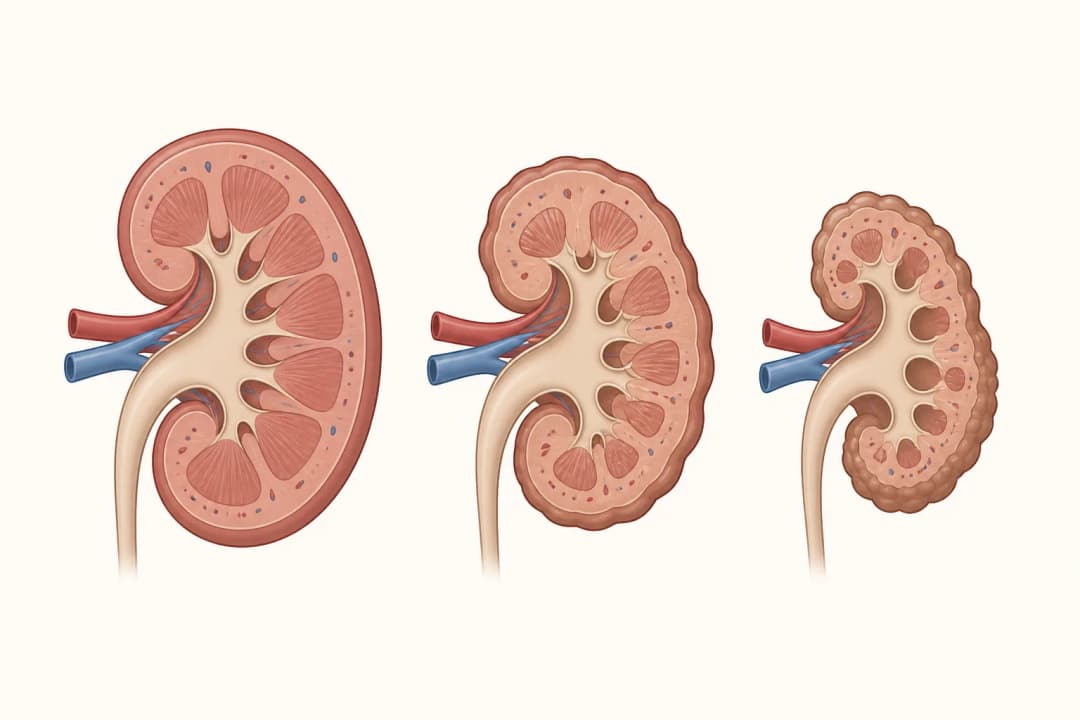
The kidneys filter waste, balance fluid and salts, and support blood pressure control. Chronic kidney disease means this work has been reduced or kidney damage has persisted over time. A temporary problem, such as dehydration, an infection, or a medicine effect, can sometimes make kidney tests worse and then improve when addressed. Established scarring is less likely to disappear. Your clinician may follow blood and urine tests to distinguish a reversible change from ongoing disease. Kidney disease can occur alongside hypertension, type 2 diabetes, anaemia or gout; treating these related problems may reduce strain on the kidneys.
Steps that protect kidney function
Arrange a review to identify the cause and understand your kidney blood and urine results. Take prescribed medicines as directed, and do not stop them because a result has changed without medical advice. Ask before using anti-inflammatory painkillers, supplements, or herbal products, since some can affect kidney function. Follow the fluid, salt, protein, and blood-pressure advice suited to you rather than adopting a restrictive diet independently. Keep diabetes and blood pressure checks up to date, and report new swelling, changes in urination, unusual tiredness, or persistent thirst.
When to seek care
Seek urgent medical help for severe breathlessness, chest pain, confusion, fainting, or very little urine. Contact a clinician promptly if vomiting or diarrhoea prevents you from drinking, swelling appears quickly, or you become markedly weaker. A sudden change can be different from your usual chronic kidney disease and may need same-day assessment.
Questions for your doctor
Which cause or contributors are affecting my kidney function? Which blood and urine results will we track? Should any medicine, painkiller, supplement, fluid plan, or diet change be adjusted? What symptoms should prompt an urgent call?
Find care
General Clinics & Polyclinics in Abu Dhabi
That answer is general. If you want it applied to your own case, these are licensed general clinics & polyclinics listed in Abu Dhabi.
27 Ar Ruwwad St - Shakhbout City - MSH4 - Abu Dhabi - United Arab Emirates
Accepts: Daman, Thiqa, Cigna, MetLife +20 more
Al Ruwais, Al Dhafrah
Accepts: Daman, Thiqa, AXA, Cigna +16 more
Al Bahyah - Al Bahyah Old - Abu Dhabi - United Arab Emirates
Accepts: Daman, Thiqa, Cigna, Allianz Care +18 more
Abu Dhabi
Accepts: Daman, Thiqa, AXA, Cigna +27 more
Ordered by verification status and how complete each clinic's public record is, then alphabetically. This is a directory listing, not a ranking — Zavis does not rate or recommend providers.
A factual listing drawn from the DHA, DOH and MOHAP licence registers. It is not a referral, an endorsement, or advice that any of these providers is right for you.
Questions people ask
Can kidney function improve after a poor test result?
Sometimes, particularly when dehydration, illness, or a medicine effect has caused a temporary change. Repeat testing helps clarify the pattern.
Can diet reverse chronic kidney disease?
A personalised diet can reduce kidney workload and manage related conditions, but it cannot reliably remove established kidney scarring.
Related
Related reading
Keep reading
Medical disclaimer. This page is general health information, not medical advice, and it cannot diagnose you. Always consult a licensed healthcare provider about your own symptoms and treatment. In an emergency in the UAE, call 998 for an ambulance.