
Pulled groin pain: what it may mean and what to do
Short answer
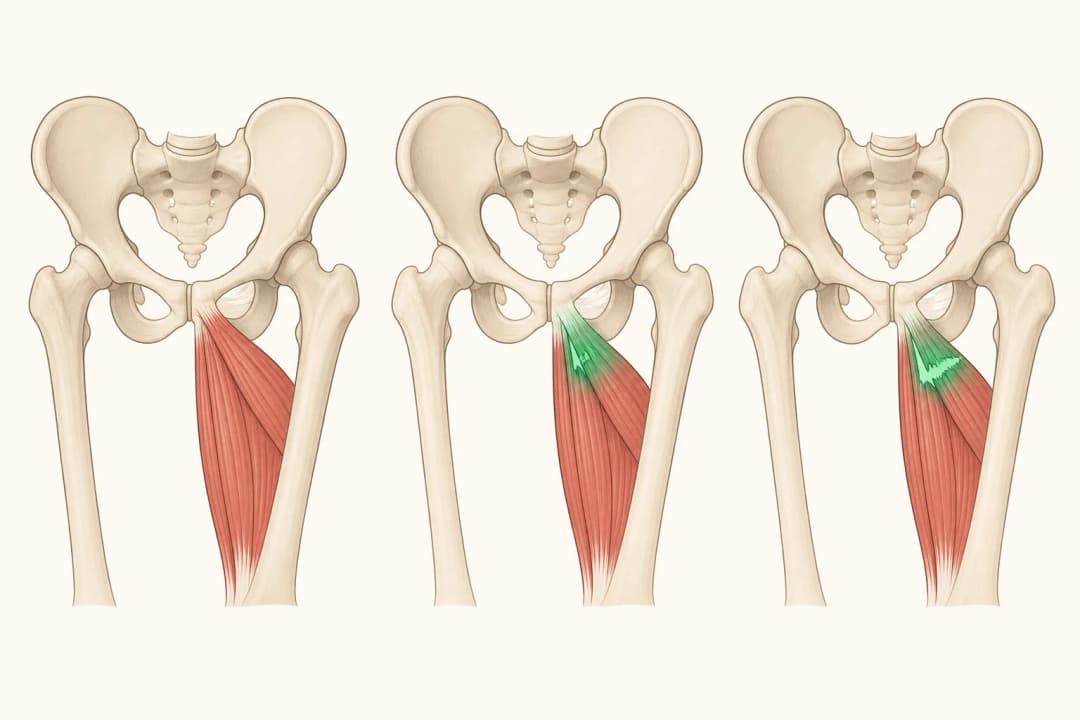
Pulled groin pain often comes from an overstretched inner-thigh muscle and may worsen with walking, squeezing the legs, or changing direction.
This answers one question. It is not a diagnosis and does not replace an assessment by a licensed doctor.
At a glance
- Main muscles
- Adductors on the inner thigh
- Often provoked by
- Leg squeeze, wide step, kick, or quick turn
- Helpful focus
- Protect first, then rebuild strength gradually
How a groin strain behaves
The adductor muscles connect the pelvis with the inner thigh and help draw the leg inward. A strain can happen during a sudden turn, kick, split, fall, or forceful change in stride. Pain may be sharp at the moment of injury and then become an ache with tenderness. It can be reproduced by pressing the knees together or stretching the inner thigh. Pain in this region can also arise from the hip, abdominal wall, nerves, or pelvic organs, so a diagnosis cannot be made from location alone.
Practical steps
Stop the activity that caused the pain and take shorter, comfortable steps. A wrapped cold pack may reduce discomfort; avoid placing ice directly on skin. Keep the hip moving gently within a comfortable range, but postpone deep lunges, sprinting, kicking, and forceful stretching. Once walking is easier, supervised Exercise Therapy can restore adductor and hip strength. Sports Physiotherapy is useful when the injury occurred during training or involves repeated cutting and acceleration.
When to get medical help
Arrange an examination for severe pain, persistent limping, marked weakness, increasing swelling, extensive bruising, or pain that fails to improve. Seek urgent care if you cannot bear weight, the leg becomes numb, cold, or pale, or a sudden groin or abdominal lump is painful. Fever, vomiting, urinary problems, testicular pain, or new pelvic symptoms also require prompt assessment.
Questions to bring
Ask whether the adductors, hip joint, abdominal wall, or another structure best explains the pain. Confirm which movements are safe, when strengthening can begin, whether imaging is useful, and what signs should stop an exercise session.
Find care
General Clinics & Polyclinics in Abu Dhabi
That answer is general. If you want it applied to your own case, these are licensed general clinics & polyclinics listed in Abu Dhabi.
27 Ar Ruwwad St - Shakhbout City - MSH4 - Abu Dhabi - United Arab Emirates
Accepts: Daman, Thiqa, Cigna, MetLife +20 more
Al Ruwais, Al Dhafrah
Accepts: Daman, Thiqa, AXA, Cigna +16 more
Al Bahyah - Al Bahyah Old - Abu Dhabi - United Arab Emirates
Accepts: Daman, Thiqa, Cigna, Allianz Care +18 more
Abu Dhabi
Accepts: Daman, Thiqa, AXA, Cigna +27 more
Ordered by verification status and how complete each clinic's public record is, then alphabetically. This is a directory listing, not a ranking — Zavis does not rate or recommend providers.
A factual listing drawn from the DHA, DOH and MOHAP licence registers. It is not a referral, an endorsement, or advice that any of these providers is right for you.
Questions people ask
Where is pulled groin pain usually felt?
It is commonly felt where the inner thigh meets the pelvis, though discomfort can spread along the inner thigh.
Is stretching helpful straight away?
Forceful stretching early on can aggravate an injured muscle; gentle movement and later guided loading are usually more suitable.
Related
Related reading
Keep reading
Medical disclaimer. This page is general health information, not medical advice, and it cannot diagnose you. Always consult a licensed healthcare provider about your own symptoms and treatment. In an emergency in the UAE, call 998 for an ambulance.