
What should you know about a personal microderm pro device?
Short answer
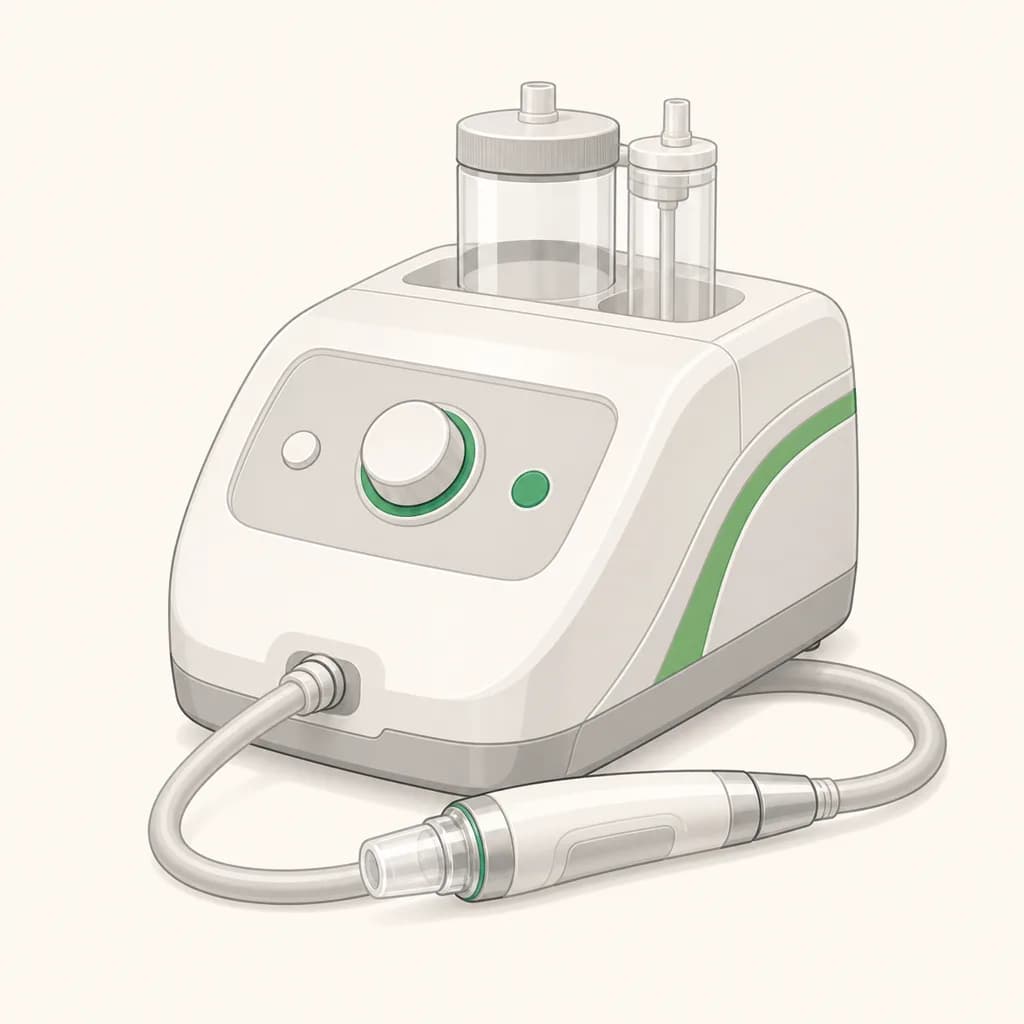
A personal microderm pro device can abrade and suction surface skin, yet a professional label does not remove the need for gentle settings and careful screening.
This answers one question. It is not a diagnosis and does not replace an assessment by a licensed doctor.
At a glance
- Controls affect
- Friction and suction
- Do not treat
- Cuts, infection, or flares
- First step
- Use a small-area test
What pro features can and cannot do
A pro-style home device may offer different tips, suction levels, or controls. Those features change how much friction and pull reach the skin; they do not make the device suitable for every complexion. Temporary smoothness is different from correcting active disease, deep scarring, or a suspicious growth.
Using too much suction can leave pinpoint marks, bruising, tenderness, or prolonged redness. Abrasion can also make a flare more uncomfortable and may trigger pigment changes in some skin tones.
A safer routine
Check the manual before the first use and choose the lowest effective setting. Test a discreet small area, keep the hand moving, and avoid repeated passes. Clean and dry the tip as directed; never share it. Do not use the device over cuts, infection, cold sores, active inflammatory spots, or recently treated skin. Keep post-treatment care uncomplicated with a gentle moisturiser and sunscreen, and stop other exfoliants until sensitivity has gone.
A clinician can help compare home equipment with professional Microdermabrasion Device options and identify whether your concern needs a different approach.
Warning signs
Get medical advice for severe pain, blistering, pus, worsening warmth, spreading redness, or swelling that does not settle. Seek assessment for persistent colour change or a lesion that bleeds, crusts, changes shape, or fails to heal. Do not keep increasing the setting to chase a result.
What to discuss
Ask whether the device is appropriate for your diagnosis, skin tone, medicines, and recent procedures. Clarify which settings and body areas are acceptable, what recovery should look like, and which signs mean you should stop.
Find care
General Clinics & Polyclinics in Abu Dhabi
That answer is general. If you want it applied to your own case, these are licensed general clinics & polyclinics listed in Abu Dhabi.
27 Ar Ruwwad St - Shakhbout City - MSH4 - Abu Dhabi - United Arab Emirates
Accepts: Daman, Thiqa, Cigna, MetLife +20 more
Al Ruwais, Al Dhafrah
Accepts: Daman, Thiqa, AXA, Cigna +16 more
Al Bahyah - Al Bahyah Old - Abu Dhabi - United Arab Emirates
Accepts: Daman, Thiqa, Cigna, Allianz Care +18 more
Abu Dhabi
Accepts: Daman, Thiqa, AXA, Cigna +27 more
Ordered by verification status and how complete each clinic's public record is, then alphabetically. This is a directory listing, not a ranking — Zavis does not rate or recommend providers.
A factual listing drawn from the DHA, DOH and MOHAP licence registers. It is not a referral, an endorsement, or advice that any of these providers is right for you.
Questions people ask
Is a pro device the same as clinic treatment?
No. Device design, settings, technique, hygiene, and clinical assessment can differ substantially.
What if my skin is red afterward?
Mild short-lived sensitivity can occur, but worsening or persistent redness should prompt a pause and medical advice.
Related
Related reading
Keep reading
Medical disclaimer. This page is general health information, not medical advice, and it cannot diagnose you. Always consult a licensed healthcare provider about your own symptoms and treatment. In an emergency in the UAE, call 998 for an ambulance.