
Pathophysiology of pneumonia nursing
Short answer
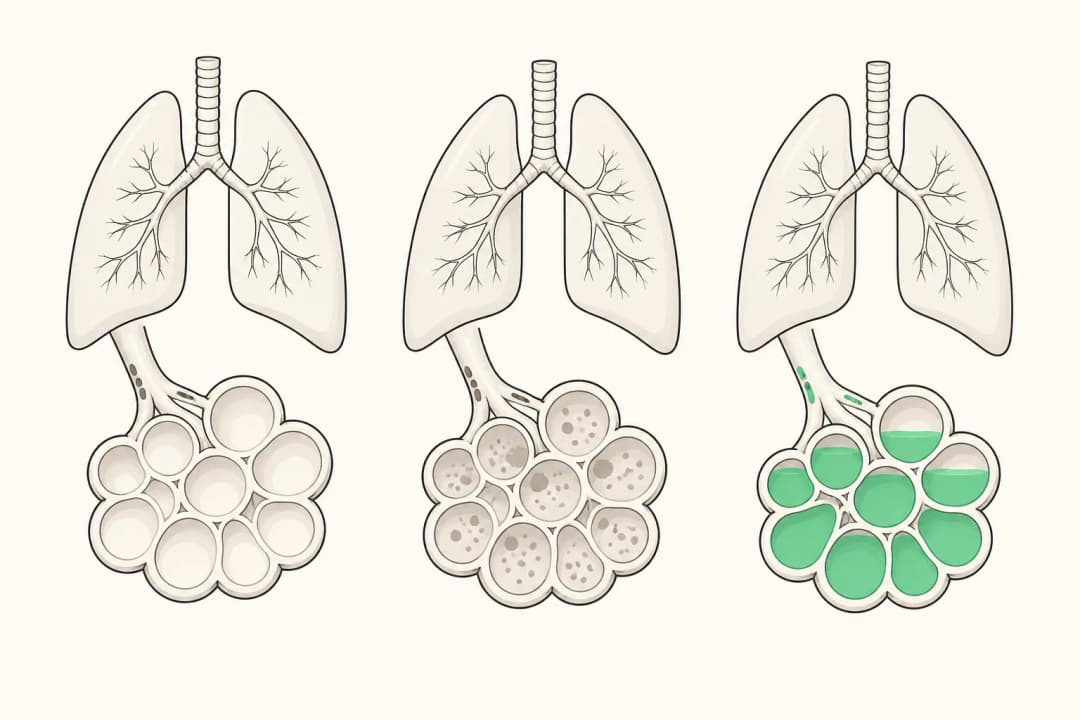
Pneumonia inflames lung tissue and fills some air sacs with fluid or pus, reducing efficient oxygen exchange.
This answers one question. It is not a diagnosis and does not replace an assessment by a licensed doctor.
At a glance
- Affected area
- Lung tissue and air sacs
- Main effect
- Less efficient oxygen exchange
- Monitoring
- Breathing, oxygen, hydration, and alertness
How pneumonia changes breathing
Infection triggers inflammation in the small air sacs where oxygen normally passes into the blood. Swelling and secretions make these spaces less effective, while narrowed airways may make it harder to move air. The immune response can cause [Fever](/symptoms/fever/), [Chills](/symptoms/chills/), tiredness, and a [Cough](/symptoms/cough/); mucus may be yellow, green, or blood-streaked without its colour alone proving the cause. Bacterial, viral, and aspiration-related pneumonia can look different, so assessment matters. COVID-19 and [Influenza](/conditions/influenza/) can lead to pneumonia, and severe infection can affect organs beyond the lungs.
Care and monitoring
A clinician may check breathing rate, oxygen level, temperature, hydration, and mental alertness, then choose tests or treatment according to the suspected cause. Follow the prescribed plan, rest, drink if able, and use fever or pain medicine only as advised. Nursing care often includes positioning the person upright, encouraging safe fluids and gentle movement, supporting effective coughing, and watching for increasing breathlessness or confusion. Do not stop prescribed medicine because symptoms ease. Learn more about [Pneumonia](/conditions/pneumonia/) and [Coughing Up Phlegm](/symptoms/coughing-up-phlegm/).
When urgent help is needed
Seek emergency care for severe difficulty breathing, blue or grey lips, new confusion, fainting, chest pain with breathing, inability to keep fluids down, or marked drowsiness. A worsening fever, rapidly increasing weakness, or much less urine needs same-day medical advice. Sepsis is a serious response to infection; sudden deterioration should not be managed at home.
Questions for your doctor
What type of pneumonia is suspected, and what tests are needed? How will oxygen, hydration, and response to treatment be monitored? Which activities and fluids are safe? What change in breathing or alertness means I should return urgently?
Find care
General Clinics & Polyclinics in Abu Dhabi
That answer is general. If you want it applied to your own case, these are licensed general clinics & polyclinics listed in Abu Dhabi.
27 Ar Ruwwad St - Shakhbout City - MSH4 - Abu Dhabi - United Arab Emirates
Accepts: Daman, Thiqa, Cigna, MetLife +20 more
Al Ruwais, Al Dhafrah
Accepts: Daman, Thiqa, AXA, Cigna +16 more
Al Bahyah - Al Bahyah Old - Abu Dhabi - United Arab Emirates
Accepts: Daman, Thiqa, Cigna, Allianz Care +18 more
Abu Dhabi
Accepts: Daman, Thiqa, AXA, Cigna +27 more
Ordered by verification status and how complete each clinic's public record is, then alphabetically. This is a directory listing, not a ranking — Zavis does not rate or recommend providers.
A factual listing drawn from the DHA, DOH and MOHAP licence registers. It is not a referral, an endorsement, or advice that any of these providers is right for you.
Questions people ask
Why does pneumonia cause phlegm?
Inflammation increases mucus and immune-cell debris in the airways, which the body tries to remove by coughing.
Does every pneumonia need antibiotics?
No. Antibiotics treat susceptible bacterial infections, not viral pneumonia; the appropriate plan depends on the clinical assessment.
Related
Related reading
Medical disclaimer. This page is general health information, not medical advice, and it cannot diagnose you. Always consult a licensed healthcare provider about your own symptoms and treatment. In an emergency in the UAE, call 998 for an ambulance.