
What causes nicotine dependence?
Short answer
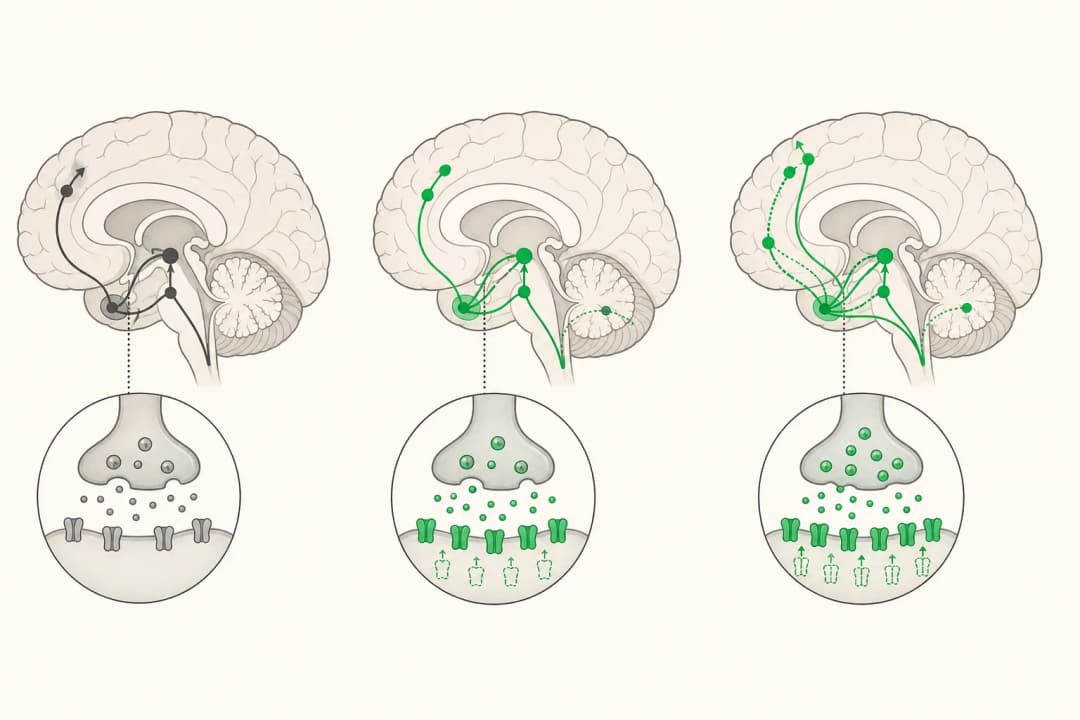
Nicotine dependence develops when repeated exposure trains the brain to expect nicotine and withdrawal makes stopping difficult.
This answers one question. It is not a diagnosis and does not replace an assessment by a licensed doctor.
At a glance
- Common drivers
- Brain adaptation, withdrawal, routines and environmental cues
- Helpful starting point
- Record triggers and cravings before choosing a quit plan
Why dependence develops
Nicotine reaches the brain quickly and can briefly change alertness, mood or concentration. With repeated use, the brain adapts to its presence. When nicotine levels fall, cravings and withdrawal may appear, including irritability, restlessness, feeling anxious and difficulty concentrating.
Dependence is not simply a matter of willpower. The pattern can be strengthened by routines such as smoking after meals, social cues, stress, alcohol or seeing other people use nicotine. Vaping, cigarettes and other nicotine products can all maintain the cycle.
How to understand your pattern
Notice which situations trigger an urge and what you expect nicotine to do for you. Write down the time, trigger, product and feeling for several days. This gives a practical starting point for changing routines and planning a response to cravings.
A Smoking Cessation Programme can combine behavioural support with treatment options. A clinician can also review symptoms such as a chronic cough and explain how nicotine use relates to your wider health.
When to seek care
Arrange a review if cravings control your day, you use nicotine soon after waking, or repeated attempts to stop have been difficult. Seek prompt advice for chest pain, severe breathlessness, coughing blood, fainting, or sudden weakness in an arm or leg.
Questions for your doctor
Which withdrawal symptoms should I expect? What support suits my products and routine? Could my cough, breathing or circulation symptoms need checking?
Find care
General Clinics & Polyclinics in Abu Dhabi
That answer is general. If you want it applied to your own case, these are licensed general clinics & polyclinics listed in Abu Dhabi.
27 Ar Ruwwad St - Shakhbout City - MSH4 - Abu Dhabi - United Arab Emirates
Accepts: Daman, Thiqa, Cigna, MetLife +20 more
Al Ruwais, Al Dhafrah
Accepts: Daman, Thiqa, AXA, Cigna +16 more
Al Bahyah - Al Bahyah Old - Abu Dhabi - United Arab Emirates
Accepts: Daman, Thiqa, Cigna, Allianz Care +18 more
Abu Dhabi
Accepts: Daman, Thiqa, AXA, Cigna +27 more
Ordered by verification status and how complete each clinic's public record is, then alphabetically. This is a directory listing, not a ranking — Zavis does not rate or recommend providers.
A factual listing drawn from the DHA, DOH and MOHAP licence registers. It is not a referral, an endorsement, or advice that any of these providers is right for you.
Questions people ask
Does dependence mean I lack self-control?
No. Repeated nicotine exposure changes the response to nicotine, while withdrawal and cues can reinforce use.
Can vaping cause nicotine dependence?
Yes. A nicotine-containing vape can maintain dependence, even when the product differs from cigarettes.
Related
Related reading
Keep reading
Medical disclaimer. This page is general health information, not medical advice, and it cannot diagnose you. Always consult a licensed healthcare provider about your own symptoms and treatment. In an emergency in the UAE, call 998 for an ambulance.