
What an MRI Scan Is Done For
Short answer
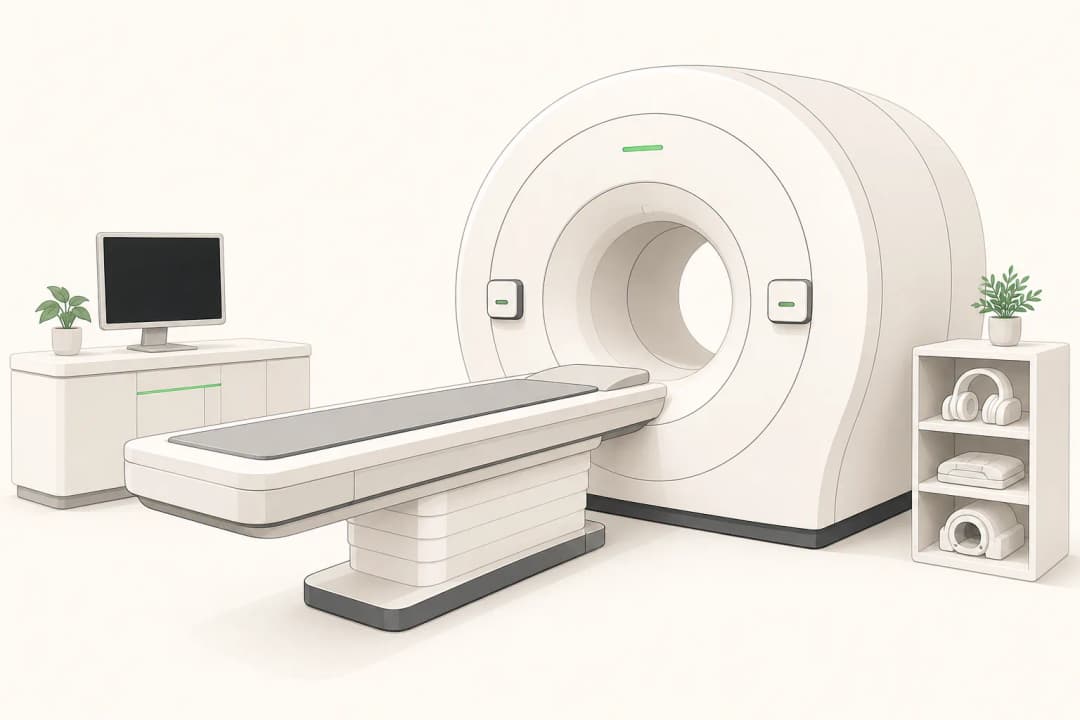
An MRI scan is done to create detailed pictures of organs, soft tissues, joints, blood vessels, and parts of the nervous system so clinicians can investigate symptoms or plan care.
This answers one question. It is not a diagnosis and does not replace an assessment by a licensed doctor.
At a glance
- Purpose
- Investigating symptoms and planning or monitoring care
- Method
- Magnetic fields and radio waves create images
- Result
- A radiologist interprets the images for your care team
How MRI fits into assessment
MRI can reveal the position and appearance of an area that is causing concern. It may be used after a clinical examination or another scan, to monitor a known condition, to help plan surgery or radiotherapy, or to guide where a biopsy should be taken. The images provide information, but they are interpreted alongside your history and other test results. An MRI finding alone cannot establish a cancer diagnosis.
Preparing for the scan
Before booking, tell the imaging team about implanted devices, metal fragments, kidney problems, allergies, or possible pregnancy. Follow instructions about fasting, drinking, or changing clothes. During the appointment, you lie still on a moving table while the scanner records images. It is noisy, and speaking with the team through an intercom is possible. If enclosed spaces worry you, mention this when arranging the scan so suitable support can be discussed.
When not to wait for the scan
Seek prompt medical help for sudden weakness, new confusion, loss of bladder or bowel control, severe breathing difficulty, or rapidly worsening pain. These symptoms may need immediate assessment and should not be managed by waiting for a scheduled imaging appointment.
Useful questions
Ask what the scan is looking for, whether contrast is planned, which medicines or devices matter, how you will receive the report, and what decision the result may inform.
Questions people ask
Does an MRI always find the cause of symptoms?
No. Some symptoms need examination, laboratory tests, another scan, or tissue sampling as well as MRI.
Can I move during the scan?
Small movements can blur images, so remain still and tell the team if you need to adjust your position.
Related
Related reading
Keep reading
Cancer care in the UAE
Hospitals & Medical Centers in Abu Dhabi
Most UAE cancer care is delivered inside hospital services rather than by standalone oncology clinics, so these are licensed hospitals & medical centers listed in Abu Dhabi. Confirm the specific cancer service exists before you travel, and know that asking for a second opinion is routine.
Ahalia Hospital Musaffah Building - Musaffah - Musaffah Industrial - Abu Dhabi - United Arab Emirates
Accepts: Daman, Thiqa, AXA, Cigna +26 more
Al Ruwais Industrial City - Abu Dhabi - United Arab Emirates
Accepts: Daman, Thiqa, AXA, Cigna +30 more
Abu Dhabi, Abu Dhabi
Accepts: Daman, Thiqa, AXA, Cigna +30 more
Second opinions are routine in cancer care and asking for one does not affect your treatment. How to arrange a second opinion in the UAE.
Ordered by verification status and how complete each clinic's public record is, then alphabetically. This is a directory listing, not a ranking — Zavis does not rate or recommend providers.
A factual listing drawn from the DHA, DOH and MOHAP licence registers. It is not a referral, an endorsement, or advice that any of these providers is right for you.
Medical disclaimer. This page is general health information, not medical advice, and it cannot diagnose you. Always consult a licensed healthcare provider about your own symptoms and treatment. In an emergency in the UAE, call 998 for an ambulance.