
What is the most common cause of ventilator-associated pneumonia?
Short answer
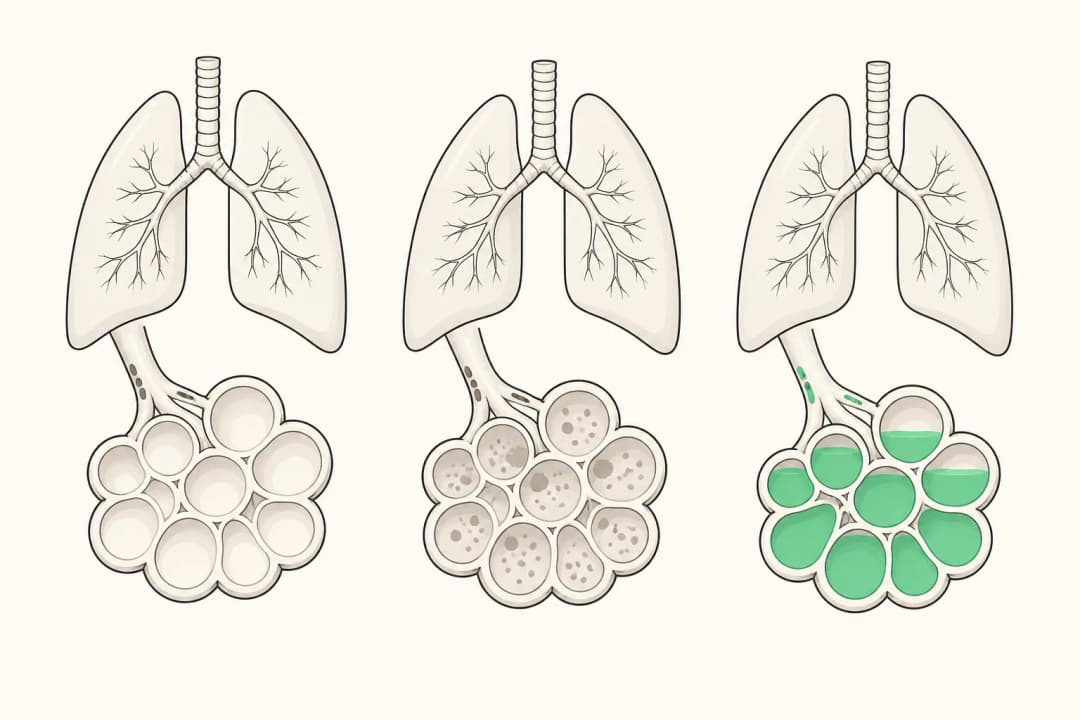
The most common cause of ventilator-associated pneumonia is bacteria entering the lower airways around an endotracheal tube.
This answers one question. It is not a diagnosis and does not replace an assessment by a licensed doctor.
At a glance
- Typical route
- Secretions moving around a breathing tube
- Setting
- Mechanical ventilation in intensive care
- Urgent changes
- Worsening oxygen need, fever, or low blood pressure
How it develops
A breathing tube can reduce the normal protection provided by coughing and swallowing. Secretions can collect above its cuff and move into the lungs, carrying bacteria from the mouth or throat. The risk is also influenced by severe illness, reduced alertness, prolonged ventilation, and exposure to healthcare-associated germs. Ventilator-associated pneumonia is different from a cough or fever alone: clinicians look for a combination of new lung findings, changes in oxygen needs, secretions, and examination results. COVID-19 or influenza may affect the lungs but do not automatically explain a ventilator-associated infection.
What the care team does
This condition needs assessment in the intensive-care setting. The team may examine the patient, review oxygen and ventilator requirements, obtain respiratory samples, and choose antibiotics when bacterial infection is suspected. Hand hygiene, careful mouth care, raising the head of the bed when suitable, and reviewing the need for the tube are practical prevention measures. Families should tell staff about new changes rather than adjusting equipment or medicines themselves.
When to seek care
A ventilated patient needs immediate review for worsening oxygen levels, increased breathing support, new fever or chills, thicker or blood-stained phlegm, falling blood pressure, confusion, or reduced urine. These changes can signal pneumonia or sepsis and require prompt bedside assessment. Call the clinical team at once if alarms sound or the patient appears to struggle with breathing.
Questions for the care team
Ask what changes led to concern, whether a respiratory sample was collected, how oxygen needs are changing, and how treatment will be reviewed. You can also ask which infection-prevention measures are appropriate for the patient and what improvement the team is looking for.
Find care
General Clinics & Polyclinics in Abu Dhabi
That answer is general. If you want it applied to your own case, these are licensed general clinics & polyclinics listed in Abu Dhabi.
27 Ar Ruwwad St - Shakhbout City - MSH4 - Abu Dhabi - United Arab Emirates
Accepts: Daman, Thiqa, Cigna, MetLife +20 more
Al Ruwais, Al Dhafrah
Accepts: Daman, Thiqa, AXA, Cigna +16 more
Al Bahyah - Al Bahyah Old - Abu Dhabi - United Arab Emirates
Accepts: Daman, Thiqa, Cigna, Allianz Care +18 more
Abu Dhabi
Accepts: Daman, Thiqa, AXA, Cigna +27 more
Ordered by verification status and how complete each clinic's public record is, then alphabetically. This is a directory listing, not a ranking — Zavis does not rate or recommend providers.
A factual listing drawn from the DHA, DOH and MOHAP licence registers. It is not a referral, an endorsement, or advice that any of these providers is right for you.
Questions people ask
Is every infection in a ventilated patient ventilator-associated pneumonia?
No. The diagnosis depends on the timing, lung findings, respiratory changes, and clinical assessment.
Can families help prevent it?
Follow staff guidance on hand hygiene and visitation, and alert the team promptly about changes in the patient's condition.
Medical disclaimer. This page is general health information, not medical advice, and it cannot diagnose you. Always consult a licensed healthcare provider about your own symptoms and treatment. In an emergency in the UAE, call 998 for an ambulance.