
What should you know about melanoma prognosis by age?
Short answer
Melanoma prognosis is not determined by age alone; stage, tumour features, overall health, and treatment response matter more.
This answers one question. It is not a diagnosis and does not replace an assessment by a licensed doctor.
At a glance
- Main drivers
- Stage, tumour features, health, and treatment response
- Age’s role
- It may affect treatment choices and recovery, but is not the sole predictor
How age fits into prognosis
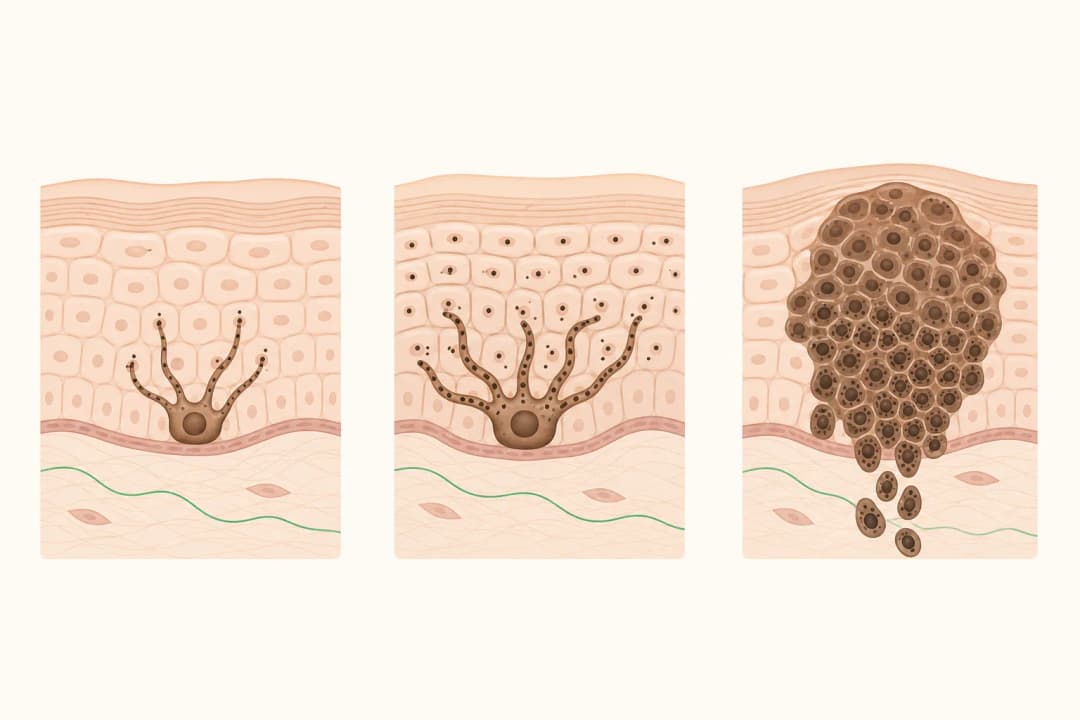
A prognosis is an estimate of how melanoma may behave and respond to treatment. Clinicians consider how deep the primary tumour is, whether it has ulceration, whether nearby lymph nodes or distant organs are involved, and whether treatment is controlling it. Age can affect other health conditions, medication choices, recovery, and the balance between treatment benefits and burdens. These factors explain why two people of the same age can have different outlooks, while people of different ages can share similar treatment pathways.
How to get a useful personal estimate
Ask the treating team to explain the confirmed stage and the pathology findings in plain language. Bring a list of medicines and health conditions, because these may affect surgery, immune-based treatment, scans, or recovery. Keep appointments for planned examinations and tests, and report new symptoms rather than waiting for the next routine visit. Follow-up after treatment helps clinicians look for recurrence and manage lasting effects. Prognosis is updated when new examination, pathology, imaging, or treatment-response information becomes available.
When to contact the care team
Contact the team promptly about a new lump near the treated area, a changing skin mark, unexplained bleeding, persistent pain, worsening breathlessness, new neurological symptoms, or a marked decline in daily function. During treatment, report fever, severe rash, diarrhoea, or other sudden changes because some therapies need rapid adjustment. Emergency help is appropriate for severe breathing difficulty, confusion, weakness on one side, or uncontrolled bleeding.
Questions for your doctor
Ask which tumour features determine your outlook, what the stage means, and which uncertainties remain. Ask how your other health conditions affect treatment choices, which symptoms need same-day advice, and how follow-up will be organised. Request a written summary if medical terms are difficult to remember.
Find care
General Clinics & Polyclinics in Abu Dhabi
That answer is general. If you want it applied to your own case, these are licensed general clinics & polyclinics listed in Abu Dhabi.
27 Ar Ruwwad St - Shakhbout City - MSH4 - Abu Dhabi - United Arab Emirates
Accepts: Daman, Thiqa, Cigna, MetLife +20 more
Al Ruwais, Al Dhafrah
Accepts: Daman, Thiqa, AXA, Cigna +16 more
Al Bahyah - Al Bahyah Old - Abu Dhabi - United Arab Emirates
Accepts: Daman, Thiqa, Cigna, Allianz Care +18 more
Abu Dhabi
Accepts: Daman, Thiqa, AXA, Cigna +27 more
Ordered by verification status and how complete each clinic's public record is, then alphabetically. This is a directory listing, not a ranking — Zavis does not rate or recommend providers.
A factual listing drawn from the DHA, DOH and MOHAP licence registers. It is not a referral, an endorsement, or advice that any of these providers is right for you.
Questions people ask
Does being older always mean a worse melanoma prognosis?
No. Age alone cannot predict an individual outlook; tumour stage, biology, health, and response to treatment are more informative.
Can prognosis change after diagnosis?
Yes. New pathology, imaging, examination, or treatment-response information can refine the clinical assessment.
Related
Related reading
Keep reading
Medical disclaimer. This page is general health information, not medical advice, and it cannot diagnose you. Always consult a licensed healthcare provider about your own symptoms and treatment. In an emergency in the UAE, call 998 for an ambulance.