
What should you know about melanoma in situ pathology?
Short answer
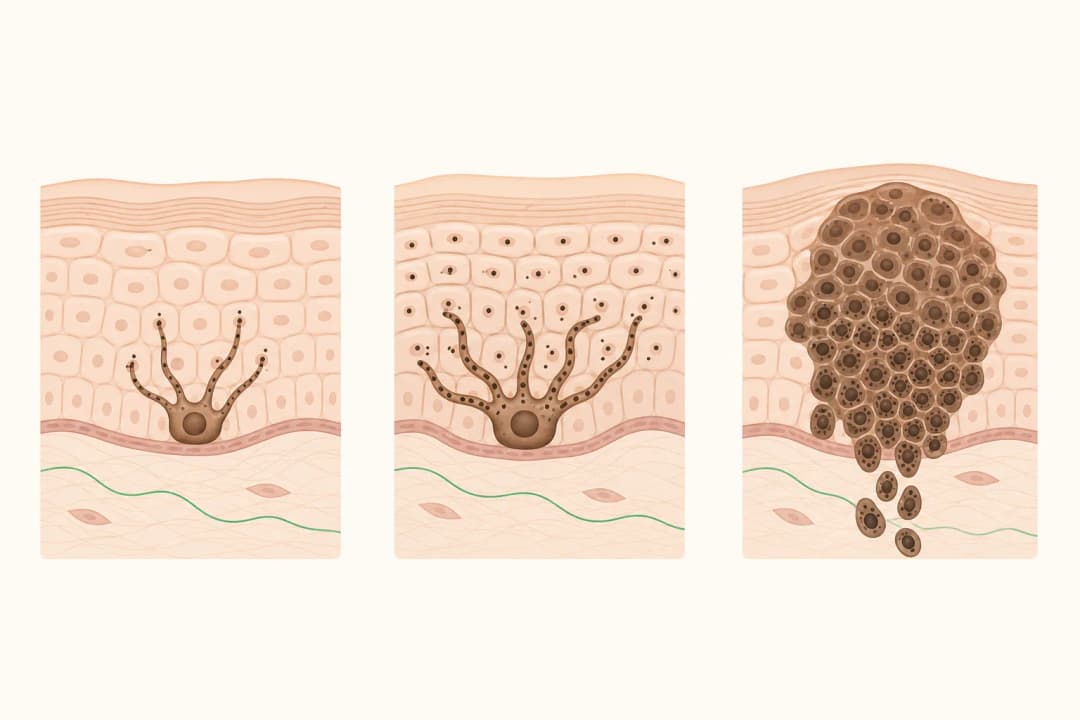
Melanoma in situ pathology means abnormal melanoma cells are confined to the skin’s outer layer, so the report guides complete removal and follow-up.
This answers one question. It is not a diagnosis and does not replace an assessment by a licensed doctor.
At a glance
- Meaning of in situ
- Cells are confined to the outer skin layer in the examined tissue.
- Common next discussion
- Whether the biopsy margins are clear and whether further excision is needed.
- Follow-up
- Regular skin checks and attention to new or changing pigmented areas.
What the report describes
A pathologist examines tissue removed during a biopsy. The phrase in situ means the melanoma has not been shown to grow into deeper skin layers in the sampled tissue. The report may describe the site, pattern, margins and whether the specimen is complete. Margins are the edges of the removed tissue; a margin involved by melanoma cells can mean that more tissue needs to be removed. This diagnosis is different from invasive melanoma, which has entered deeper skin and is assessed by measurements such as thickness.
Pathology is interpreted alongside the examination and the biopsy details. A report can therefore lead to a treatment discussion even when the visible spot seems small. Learn more about [Melanoma](/conditions/melanoma/).
What happens next
Arrange a review with the clinician who took the biopsy or a dermatologist. Ask whether the margins are clear and whether a wider [Surgical Excision](/treatments/surgical-dermatology/excisional-surgery/) is advised. The procedure removes a planned border of nearby skin and sends the tissue for another examination. Keep the biopsy wound clean as directed, and protect the area from sun while it heals. A follow-up plan may include regular skin checks and examination of the scar and nearby skin.
When to contact your care team
Contact the clinic promptly if the biopsy or excision site becomes increasingly red, hot, swollen, painful, or produces pus, or if bleeding does not settle with firm pressure. Seek urgent help for heavy bleeding, faintness, breathing difficulty, or rapidly spreading facial swelling. Contact your dermatologist sooner if a new or changing pigmented area appears, because a separate lesion needs its own assessment.
Questions to take along
Ask: What do the margins show? Do I need further excision? Was the whole lesion present in the specimen? How often should my skin be checked? Should close relatives know about skin surveillance? What wound changes should prompt a call?
Find care
General Clinics & Polyclinics in Abu Dhabi
That answer is general. If you want it applied to your own case, these are licensed general clinics & polyclinics listed in Abu Dhabi.
27 Ar Ruwwad St - Shakhbout City - MSH4 - Abu Dhabi - United Arab Emirates
Accepts: Daman, Thiqa, Cigna, MetLife +20 more
Al Ruwais, Al Dhafrah
Accepts: Daman, Thiqa, AXA, Cigna +16 more
Al Bahyah - Al Bahyah Old - Abu Dhabi - United Arab Emirates
Accepts: Daman, Thiqa, Cigna, Allianz Care +18 more
Abu Dhabi
Accepts: Daman, Thiqa, AXA, Cigna +27 more
Ordered by verification status and how complete each clinic's public record is, then alphabetically. This is a directory listing, not a ranking — Zavis does not rate or recommend providers.
A factual listing drawn from the DHA, DOH and MOHAP licence registers. It is not a referral, an endorsement, or advice that any of these providers is right for you.
Questions people ask
Does melanoma in situ mean invasive cancer?
No. In situ indicates that invasion into deeper skin was not identified in the examined specimen, but complete management remains important.
Why might more skin be removed?
Further excision may be recommended when melanoma reaches or is close to a specimen edge, or when the clinician needs a planned surrounding margin.
Related
Related reading
Keep reading
Medical disclaimer. This page is general health information, not medical advice, and it cannot diagnose you. Always consult a licensed healthcare provider about your own symptoms and treatment. In an emergency in the UAE, call 998 for an ambulance.