
What should you know about maxillary sinus infection?
Short answer
A maxillary sinus infection affects the air-filled spaces behind the cheeks and can cause facial pressure, blocked nose and thick nasal drainage.
This answers one question. It is not a diagnosis and does not replace an assessment by a licensed doctor.
At a glance
- Main area
- Cheeks and the spaces beneath the eyes
- Common features
- Pressure, blocked nose and nasal drainage
- Possible trigger
- A cold or swelling that blocks drainage
The short answer
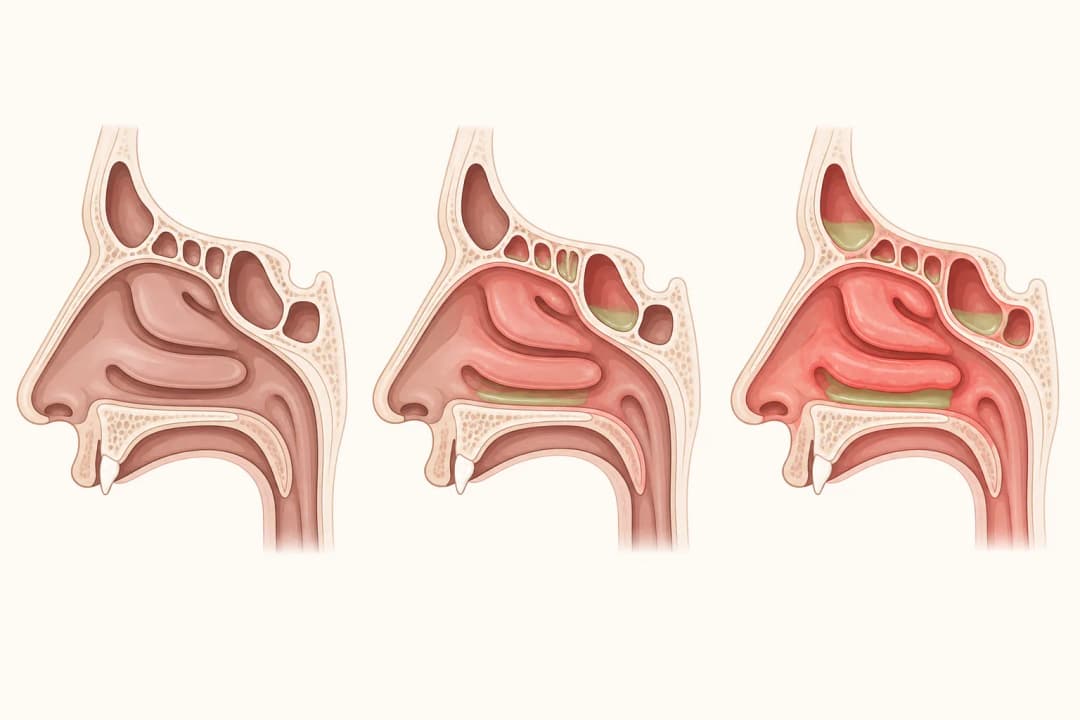
A maxillary sinus infection affects the air-filled spaces behind the cheeks and can cause facial pressure, blocked nose and thick nasal drainage. It may follow a cold or develop when inflammation prevents normal sinus drainage.
What it means
The maxillary sinuses sit below the eyes, beside the nose and above the upper teeth. Swelling at the sinus opening can trap mucus, producing pressure that may feel worse when bending forward. A sinus infection can also cause reduced smell, cough from drainage and a fever. Similar symptoms occur with a Common Cold or Allergic Rhinitis, so symptom pattern and duration matter.
What you can do
Rest, drink fluids and use warm moisture or a warm compress over the cheeks for comfort. Saline nasal spray or rinse may help clear mucus; use sterile, distilled or previously boiled water for a rinse and clean the device as directed. Avoid cigarette smoke and other irritants. A pharmacist or clinician can advise whether a pain reliever or nasal treatment is suitable for you. Antibiotics are not automatically needed, because many sinus infections begin after viral illness.
When to seek care
Arrange medical advice if symptoms are severe, keep worsening, return after improving, or do not begin to settle. Seek urgent help for swelling or redness around an eye, vision changes, severe headache, confusion, stiff neck, repeated vomiting or marked illness. Facial Pain and Pressure with a high fever or significant dental pain also deserves assessment, as another cause may need treatment.
Questions for your doctor
Ask whether your symptoms fit Sinusitis, whether an examination of your nose, throat and teeth is needed, and which treatments are safe with your medicines or health conditions. You can also ask how to perform a saline rinse and what change should prompt a review.
Find care
General Clinics & Polyclinics in Abu Dhabi
That answer is general. If you want it applied to your own case, these are licensed general clinics & polyclinics listed in Abu Dhabi.
27 Ar Ruwwad St - Shakhbout City - MSH4 - Abu Dhabi - United Arab Emirates
Accepts: Daman, Thiqa, Cigna, MetLife +20 more
Al Ruwais, Al Dhafrah
Accepts: Daman, Thiqa, AXA, Cigna +16 more
Al Bahyah - Al Bahyah Old - Abu Dhabi - United Arab Emirates
Accepts: Daman, Thiqa, Cigna, Allianz Care +18 more
Abu Dhabi
Accepts: Daman, Thiqa, AXA, Cigna +27 more
Ordered by verification status and how complete each clinic's public record is, then alphabetically. This is a directory listing, not a ranking — Zavis does not rate or recommend providers.
A factual listing drawn from the DHA, DOH and MOHAP licence registers. It is not a referral, an endorsement, or advice that any of these providers is right for you.
Questions people ask
Can a maxillary sinus infection cause tooth pain?
Yes. Pressure in the sinus above the upper teeth can feel like tooth pain, although a dental problem can cause similar discomfort.
Do all maxillary sinus infections need antibiotics?
No. The cause and symptom course matter; a clinician can decide whether antibiotics are appropriate.
Related
Related reading
Keep reading
Medical disclaimer. This page is general health information, not medical advice, and it cannot diagnose you. Always consult a licensed healthcare provider about your own symptoms and treatment. In an emergency in the UAE, call 998 for an ambulance.