
What should you know about magnetic resonance imaging uses?
Short answer
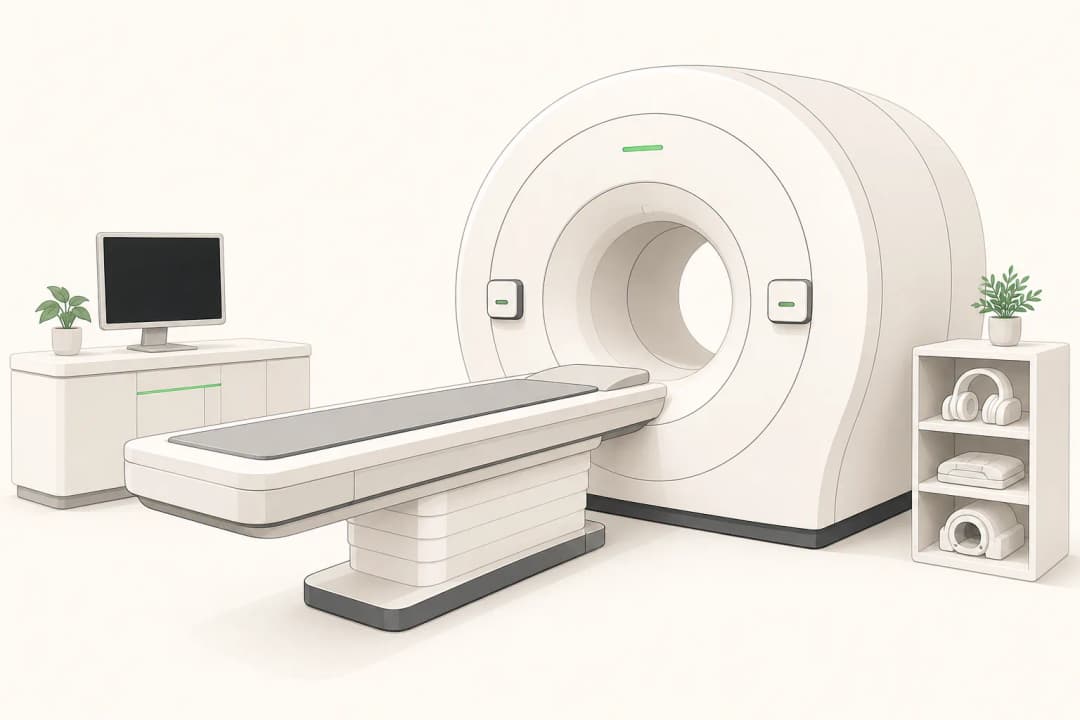
Magnetic resonance imaging is used to examine soft tissues, locate abnormalities, assess their extent, and help guide diagnosis or treatment planning.
This answers one question. It is not a diagnosis and does not replace an assessment by a licensed doctor.
At a glance
- Main strength
- Detailed views of soft tissue
- Common roles
- Diagnosis, staging, planning, and follow-up
- Key preparation
- Report implants, metal, kidney problems, and pregnancy
Why clinicians request MRI
MRI gives detailed images of soft tissues without using x-rays. In oncology, it may help assess the brain, spine, pelvis, breast, or other body areas, depending on the clinical question. Images can show the position and size of a finding, its relationship with nearby structures, and changes over time.
MRI can support diagnosis, staging, treatment planning, and follow-up, but the images are only one part of the assessment. A scan may suggest that an area needs closer examination; it does not automatically establish a cancer diagnosis. A biopsy may be needed when tissue confirmation is required.
What to do before the appointment
Give the imaging team a complete history of implanted metal, pacemakers or other devices, previous operations, kidney disease, allergies, pregnancy, and claustrophobia. Follow instructions about food, drink, and medicines. Remove metal objects and bring information about any device if you have it.
The scanner makes repeated loud sounds, and you must keep the body part still. Some examinations use contrast to make selected tissues clearer. Ask whether you can eat normally, whether someone should accompany you, and when the report will be discussed.
When to seek urgent care
Urgent symptoms such as sudden weakness, new speech difficulty, a seizure, severe breathing trouble, or sudden confusion need emergency assessment rather than waiting for a routine scan. After an injection, seek immediate help for facial swelling, wheezing, faintness, or a rapidly worsening rash.
Questions for your doctor
What body area and clinical question are being assessed? Is contrast needed? How might the result change the next step, such as observation, biopsy, or treatment planning?
Questions people ask
Does MRI use radiation?
MRI uses magnetic fields and radio waves rather than x-rays.
Does an MRI result always mean cancer?
No. An image can show an abnormality for many reasons, so the result must be interpreted with your symptoms and other tests.
Related
Related reading
Keep reading
Cancer care in the UAE
Hospitals & Medical Centers in Abu Dhabi
Most UAE cancer care is delivered inside hospital services rather than by standalone oncology clinics, so these are licensed hospitals & medical centers listed in Abu Dhabi. Confirm the specific cancer service exists before you travel, and know that asking for a second opinion is routine.
Ahalia Hospital Musaffah Building - Musaffah - Musaffah Industrial - Abu Dhabi - United Arab Emirates
Accepts: Daman, Thiqa, AXA, Cigna +26 more
Al Ruwais Industrial City - Abu Dhabi - United Arab Emirates
Accepts: Daman, Thiqa, AXA, Cigna +30 more
Abu Dhabi, Abu Dhabi
Accepts: Daman, Thiqa, AXA, Cigna +30 more
Second opinions are routine in cancer care and asking for one does not affect your treatment. How to arrange a second opinion in the UAE.
Ordered by verification status and how complete each clinic's public record is, then alphabetically. This is a directory listing, not a ranking — Zavis does not rate or recommend providers.
A factual listing drawn from the DHA, DOH and MOHAP licence registers. It is not a referral, an endorsement, or advice that any of these providers is right for you.
Medical disclaimer. This page is general health information, not medical advice, and it cannot diagnose you. Always consult a licensed healthcare provider about your own symptoms and treatment. In an emergency in the UAE, call 998 for an ambulance.