
Left hepatectomy steps
Short answer
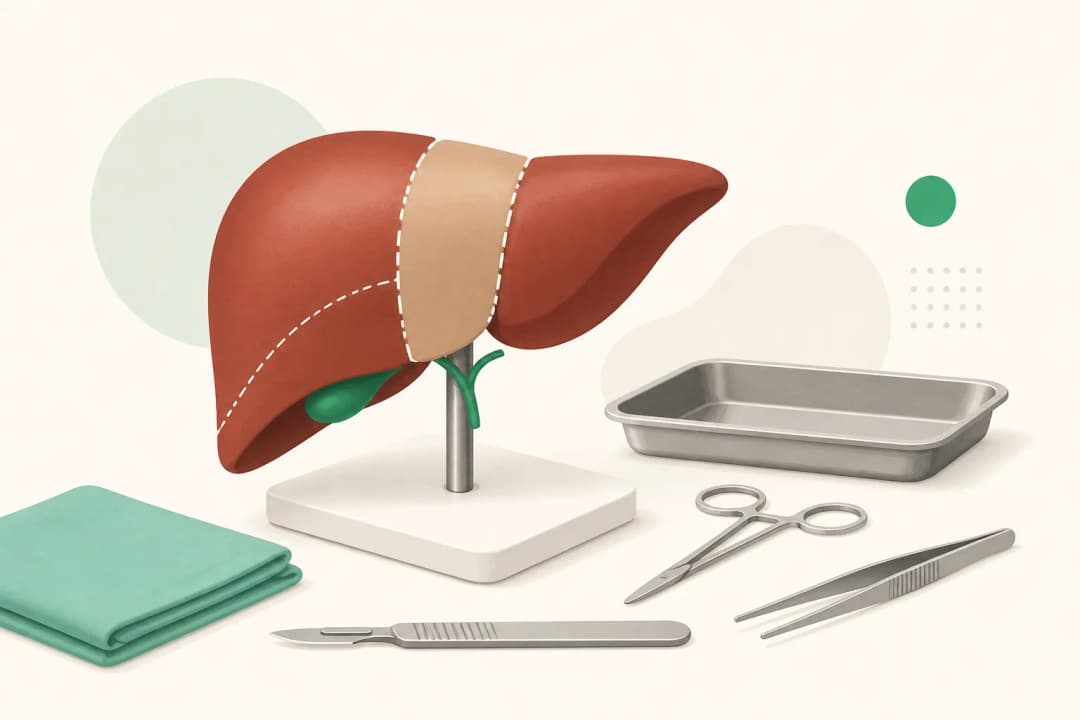
Left hepatectomy steps usually include assessment, anaesthesia, careful removal of the planned liver section, and monitored recovery.
This answers one question. It is not a diagnosis and does not replace an assessment by a licensed doctor.
At a glance
- Procedure
- Removal of the planned left liver section
- Anaesthesia
- General anaesthesia
- Recovery focus
- Walking, nutrition, wound care, and liver monitoring
What the operation involves
A left hepatectomy removes the left portion of the liver while preserving healthy liver tissue when possible. Before surgery, imaging and blood tests help the team map the tumour, nearby blood vessels, bile ducts, and the amount of liver that can remain. The procedure takes place under general anaesthesia. The surgeon separates the planned liver tissue, controls blood vessels and bile drainage, removes the specimen, and checks the remaining liver. The operation may use open or minimally invasive access, depending on the tumour and your anatomy.
How to prepare and recover
Follow the instructions about eating, drinking, medicines, and smoking before admission. Arrange help at home, because lifting and strenuous activity may be restricted while the incision heals. In hospital, staff monitor pain, breathing, wound drainage, liver blood tests, and your ability to eat and walk. Gentle movement helps recovery, while short walks should be increased gradually. Your team will explain when you can drive, work, bathe, and resume exercise. The reason for surgery may include Bowel Cancer, Liver Cancer, or Liver Metastases; the pathology result helps guide further care.
When to seek urgent help
Contact your surgical team promptly for fever, worsening abdominal pain, repeated vomiting, increasing yellowing of the eyes or skin, a swollen abdomen, new confusion, or redness and discharge from the wound. Seek emergency help for severe breathlessness, fainting, heavy bleeding, or sudden chest pain. These symptoms can have several causes, so describe when they began and how they are changing.
Questions for your doctor
Ask which liver segments will be removed, whether the approach is open or minimally invasive, and how the remaining liver was assessed. Clarify the expected hospital stay, pain plan, wound care, activity limits, pathology timing, and signs that require a call. Ask whether Liver Resection or Tumour Ablation is relevant to your treatment plan.
Questions people ask
Is the whole liver removed during a left hepatectomy?
No. The operation removes the planned left portion and leaves the remaining liver in place.
What happens after the liver tissue is removed?
The surgical team checks bleeding and bile drainage, closes the incision, and monitors recovery and liver tests.
Related
Related reading
Keep reading
Cancer care in the UAE
Hospitals & Medical Centers in Abu Dhabi
Most UAE cancer care is delivered inside hospital services rather than by standalone oncology clinics, so these are licensed hospitals & medical centers listed in Abu Dhabi. Confirm the specific cancer service exists before you travel, and know that asking for a second opinion is routine.
Ahalia Hospital Musaffah Building - Musaffah - Musaffah Industrial - Abu Dhabi - United Arab Emirates
Accepts: Daman, Thiqa, AXA, Cigna +26 more
Al Ruwais Industrial City - Abu Dhabi - United Arab Emirates
Accepts: Daman, Thiqa, AXA, Cigna +30 more
Abu Dhabi, Abu Dhabi
Accepts: Daman, Thiqa, AXA, Cigna +30 more
Second opinions are routine in cancer care and asking for one does not affect your treatment. How to arrange a second opinion in the UAE.
Ordered by verification status and how complete each clinic's public record is, then alphabetically. This is a directory listing, not a ranking — Zavis does not rate or recommend providers.
A factual listing drawn from the DHA, DOH and MOHAP licence registers. It is not a referral, an endorsement, or advice that any of these providers is right for you.
Medical disclaimer. This page is general health information, not medical advice, and it cannot diagnose you. Always consult a licensed healthcare provider about your own symptoms and treatment. In an emergency in the UAE, call 998 for an ambulance.