
What should you know about laparoscopic left salpingectomy?
Short answer
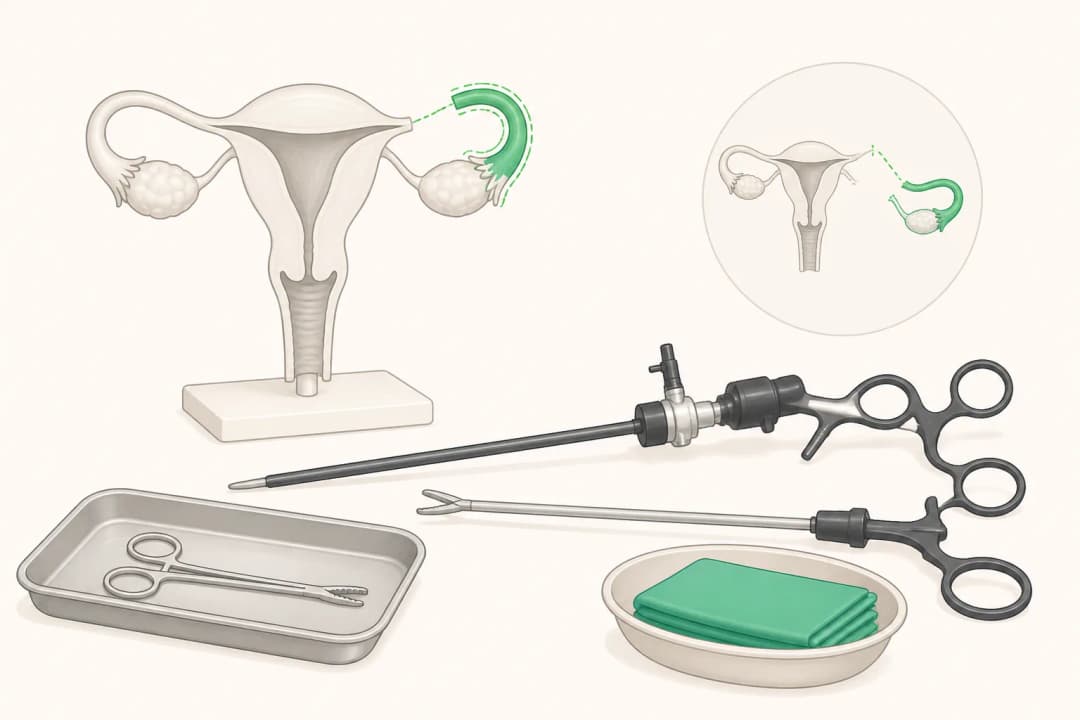
Laparoscopic left salpingectomy is keyhole surgery to remove the left fallopian tube while leaving the ovaries in place.
This answers one question. It is not a diagnosis and does not replace an assessment by a licensed doctor.
At a glance
- Side removed
- Left fallopian tube
- Ovaries
- Not removed by salpingectomy
- Main fertility question
- The health of the remaining right tube and other factors
What the left-sided operation involves
The surgeon enters through small abdominal openings, uses a camera to view the pelvis, and separates the left tube from its blood supply and surrounding tissues before removing it. Reasons can include a left ectopic pregnancy, damage or blockage, or a planned operation. The left ovary is not removed by a salpingectomy, so it can continue releasing eggs and hormones.
Natural conception may remain possible if the right tube is healthy and other fertility factors are favourable. An operation for ectopic pregnancy may involve additional findings, so ask how the right tube and ovary look and whether follow-up pregnancy planning is needed.
What to do before and after surgery
Tell the team about medicines, allergies, prior pelvic surgery, and possible pregnancy. Plan a ride home and practical help for the first part of recovery. Mild wound soreness, fatigue, bloating, or shoulder discomfort can follow laparoscopy. Keep the wounds clean and follow instructions about activity, sex, bathing, driving, and pain medicine. Attend the review appointment even if the incisions appear to be healing well.
When to seek care
Report fever, worsening one-sided or general abdominal pain, heavy bleeding, persistent vomiting, painful urination, or redness and discharge at a wound. Seek emergency help for fainting, severe pain, breathlessness, or chest pain. If a future pregnancy test is positive, contact a clinician early because a previous ectopic pregnancy changes the monitoring plan.
Questions for your doctor
Ask why the left tube must be removed, whether the right tube is healthy, how fertility may be affected, what the operation found, and when it is appropriate to try for pregnancy.
Find care
General Clinics & Polyclinics in Abu Dhabi
That answer is general. If you want it applied to your own case, these are licensed general clinics & polyclinics listed in Abu Dhabi.
27 Ar Ruwwad St - Shakhbout City - MSH4 - Abu Dhabi - United Arab Emirates
Accepts: Daman, Thiqa, Cigna, MetLife +20 more
Al Ruwais, Al Dhafrah
Accepts: Daman, Thiqa, AXA, Cigna +16 more
Al Bahyah - Al Bahyah Old - Abu Dhabi - United Arab Emirates
Accepts: Daman, Thiqa, Cigna, Allianz Care +18 more
Abu Dhabi
Accepts: Daman, Thiqa, AXA, Cigna +27 more
Ordered by verification status and how complete each clinic's public record is, then alphabetically. This is a directory listing, not a ranking — Zavis does not rate or recommend providers.
A factual listing drawn from the DHA, DOH and MOHAP licence registers. It is not a referral, an endorsement, or advice that any of these providers is right for you.
Questions people ask
Does left salpingectomy affect periods?
Removing one fallopian tube does not usually stop periods because the uterus and ovaries remain, though your individual situation matters.
Why might this surgery be urgent?
A damaged or ectopic left pregnancy can threaten health and may require prompt treatment.
Related
Related reading
Keep reading
Medical disclaimer. This page is general health information, not medical advice, and it cannot diagnose you. Always consult a licensed healthcare provider about your own symptoms and treatment. In an emergency in the UAE, call 998 for an ambulance.