
What should you know about Jod-Basedow hyperthyroidism?
Short answer
Jod-Basedow hyperthyroidism is an overactive thyroid response after excess iodine, requiring assessment of symptoms, medicines and thyroid tests.
This answers one question. It is not a diagnosis and does not replace an assessment by a licensed doctor.
At a glance
- Trigger
- A sudden iodine load can stimulate hormone production in susceptible thyroid tissue.
- Assessment
- Thyroid blood tests and an exposure history help clarify the cause.
What the term describes
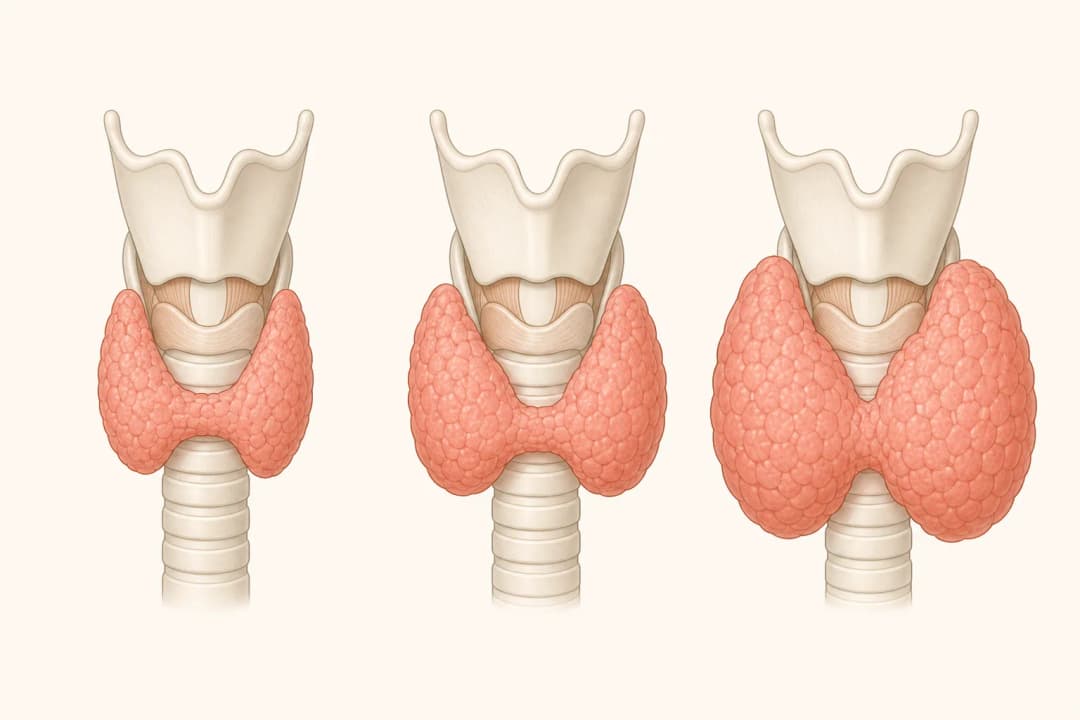
Iodine is used to make thyroid hormones. In some people with previously unrecognised thyroid autonomy or thyroid disease, a sudden iodine load can increase hormone production. This reaction is called the Jod-Basedow phenomenon. Possible sources include iodine-containing medicines, supplements, contrast used for some scans or other medical products; do not assume every source is suitable to stop without advice.
Hyperthyroidism can present with palpitations, feeling anxious, difficulty sleeping, excessive sweating, heat intolerance, diarrhoea or night sweats. The symptom pattern does not identify the cause on its own. Blood tests and a review of recent iodine exposure help clinicians distinguish this problem from other forms of an overactive thyroid.
What to do next
Tell your doctor about recent scans, antiseptics, supplements and medicines, including when they were started. Do not take iodine supplements or alter prescribed treatment without guidance. Keep hydrated if sweating or diarrhoea is present, limit stimulants that worsen palpitations and arrange thyroid testing. A clinician may adjust the plan according to symptoms, heart health and test results.
When to seek care
Contact a clinician promptly for a fast or irregular heartbeat, worsening tremor, marked weakness, persistent diarrhoea or increasing heat intolerance. Seek emergency help for chest pain, severe breathlessness, fainting, severe confusion, collapse or a very high temperature with a racing heartbeat.
Questions for your doctor
Ask whether iodine exposure could explain your results, which products to avoid, when thyroid tests should be repeated and how to manage palpitations. Mention pregnancy, heart disease, eye symptoms and every supplement or recent imaging procedure.
Find care
General Clinics & Polyclinics in Abu Dhabi
That answer is general. If you want it applied to your own case, these are licensed general clinics & polyclinics listed in Abu Dhabi.
27 Ar Ruwwad St - Shakhbout City - MSH4 - Abu Dhabi - United Arab Emirates
Accepts: Daman, Thiqa, Cigna, MetLife +20 more
Al Ruwais, Al Dhafrah
Accepts: Daman, Thiqa, AXA, Cigna +16 more
Al Bahyah - Al Bahyah Old - Abu Dhabi - United Arab Emirates
Accepts: Daman, Thiqa, Cigna, Allianz Care +18 more
Abu Dhabi
Accepts: Daman, Thiqa, AXA, Cigna +27 more
Ordered by verification status and how complete each clinic's public record is, then alphabetically. This is a directory listing, not a ranking — Zavis does not rate or recommend providers.
A factual listing drawn from the DHA, DOH and MOHAP licence registers. It is not a referral, an endorsement, or advice that any of these providers is right for you.
Questions people ask
Can a scan trigger this reaction?
Some scans use iodine-containing contrast, so tell the imaging team and your clinician about thyroid disease or prior reactions.
Should I stop all iodine immediately?
No. Ask a clinician first because iodine may be part of a prescribed product or needed for a specific reason.
Related
Related reading
Keep reading
Medical disclaimer. This page is general health information, not medical advice, and it cannot diagnose you. Always consult a licensed healthcare provider about your own symptoms and treatment. In an emergency in the UAE, call 998 for an ambulance.