
Itchy Head At Night: What It Can Mean
Short answer
Itchy head at night can reflect scalp irritation, dryness, dandruff, or head lice, so check the scalp and seek assessment if it persists.
This answers one question. It is not a diagnosis and does not replace an assessment by a licensed doctor.
At a glance
- Common clues
- Flakes, redness, nits, sores, or a new hair product
- First step
- Inspect the scalp in bright light and avoid scratching
What nighttime itching may mean
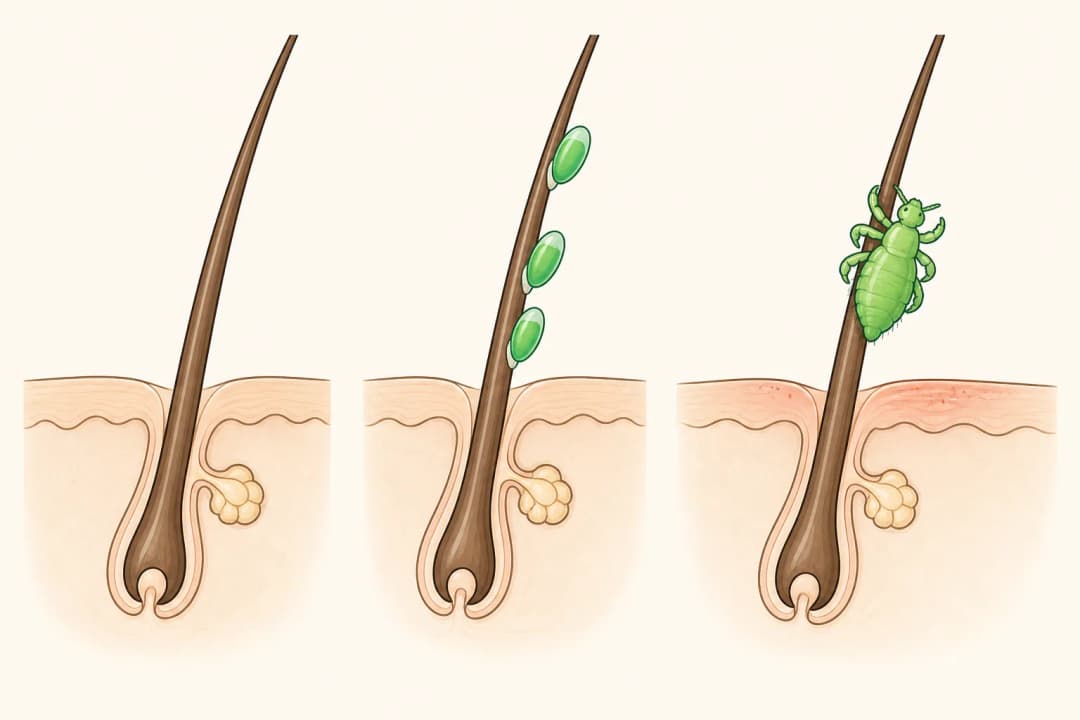
Heat from bedding, sweat, dry air, and attention during quiet hours can make an existing itch feel stronger at night. Head lice may cause scalp itching, especially around the ears and the back of the neck; look for moving insects or firmly attached nits rather than loose flakes. Other causes include a reaction to shampoo, hair dye, oils, or styling products, as well as eczema or dandruff.
Nighttime itching alone does not identify the cause. Compare the timing with a new product, inspect the scalp in bright light, and notice whether there are flakes, redness, sores, or hair changes.
What you can do tonight
Use lukewarm water, avoid scratching with fingernails, and pause recently introduced scalp products. Keep nails short and use a cool compress if the urge to scratch is strong. If you see live lice or attached nits, follow professional advice on [Head Lice Treatment](/treatments/medical-dermatology/head-lice-treatment/) rather than repeatedly applying products.
A clinician can examine the scalp and guide treatment. A [GP Consultation](/treatments/consultations-and-assessment/gp-consultation/) is useful when symptoms continue or the cause is unclear. More detail is available on [Itchy Scalp](/symptoms/itchy-scalp/) and [Itching Worse At Night](/symptoms/itching-worse-at-night/).
When to seek care
Arrange assessment if itching lasts, repeatedly wakes you, causes broken skin, or comes with a spreading rash, swelling, pus, fever, or noticeable hair loss. Seek prompt care for severe swelling, breathing difficulty, or signs of a serious allergic reaction. Do not share combs, hats, or pillows while lice remain possible; see [Head Lice](/conditions/head-lice/) for recognition guidance.
Questions for your doctor
Ask whether the scalp shows lice, dermatitis, eczema, or infection; whether a product should be stopped; which treatment suits your age and pregnancy status; and how to protect scratched skin while it heals.
Find care
General Clinics & Polyclinics in Abu Dhabi
That answer is general. If you want it applied to your own case, these are licensed general clinics & polyclinics listed in Abu Dhabi.
27 Ar Ruwwad St - Shakhbout City - MSH4 - Abu Dhabi - United Arab Emirates
Accepts: Daman, Thiqa, Cigna, MetLife +20 more
Al Ruwais, Al Dhafrah
Accepts: Daman, Thiqa, AXA, Cigna +16 more
Al Bahyah - Al Bahyah Old - Abu Dhabi - United Arab Emirates
Accepts: Daman, Thiqa, Cigna, Allianz Care +18 more
Abu Dhabi
Accepts: Daman, Thiqa, AXA, Cigna +27 more
Ordered by verification status and how complete each clinic's public record is, then alphabetically. This is a directory listing, not a ranking — Zavis does not rate or recommend providers.
A factual listing drawn from the DHA, DOH and MOHAP licence registers. It is not a referral, an endorsement, or advice that any of these providers is right for you.
Questions people ask
Does nighttime scalp itching prove I have head lice?
No. Lice are one possibility, but irritation, dryness, dandruff, and other scalp conditions can also itch at night.
When should I arrange an appointment?
Arrange one when the itch persists, disturbs sleep, damages the skin, or appears with infection signs or hair loss.
Related
Related reading
Keep reading
Medical disclaimer. This page is general health information, not medical advice, and it cannot diagnose you. Always consult a licensed healthcare provider about your own symptoms and treatment. In an emergency in the UAE, call 998 for an ambulance.