
What should you know about interstitial pneumonia?
Short answer
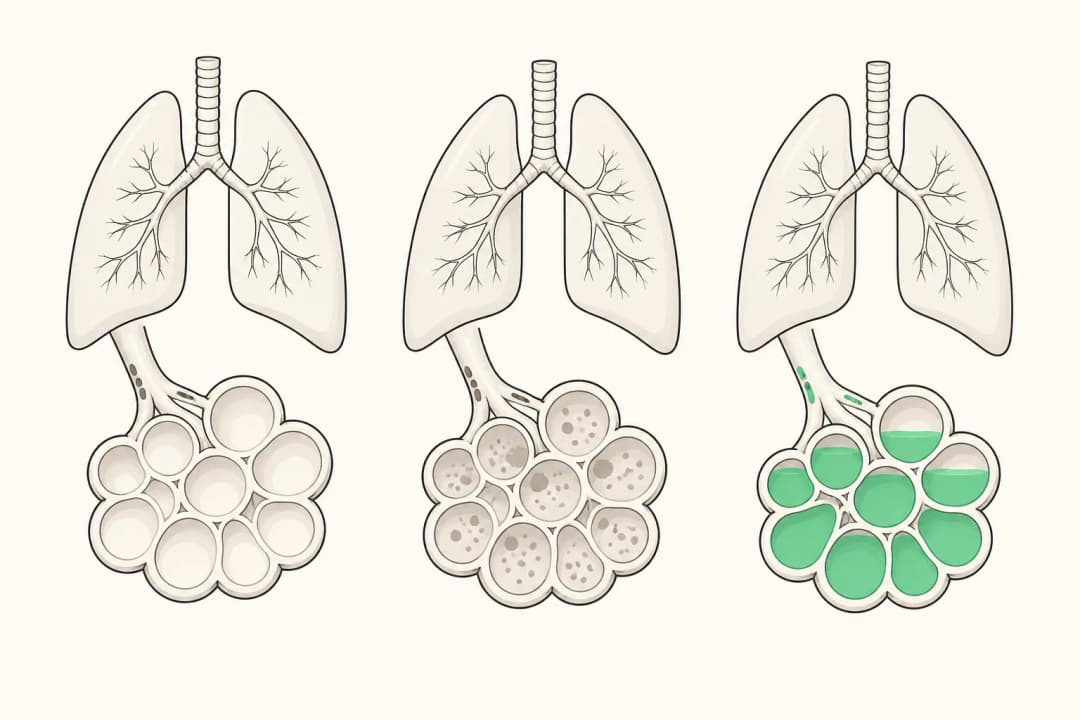
Interstitial pneumonia is inflammation or infection affecting the lung tissue around the air sacs, and it can make breathing harder.
This answers one question. It is not a diagnosis and does not replace an assessment by a licensed doctor.
At a glance
- Affected area
- Supporting tissue around the lung air sacs
- Possible symptoms
- Cough, fever, chills, tiredness, and breathlessness
- Assessment
- Symptoms, examination, oxygen reading, imaging, and selected tests
The short answer
The term describes a pattern of lung involvement rather than one single germ or one uniform illness. Causes may include respiratory infections, including viral illnesses, or inflammation not caused by an infection. A clinician may need to combine your symptoms, examination, oxygen reading, chest imaging, and selected tests to understand the cause.
What it means
The interstitium is the fine supporting tissue between the lung air sacs and their small blood vessels. When this tissue becomes swollen or inflamed, oxygen can have more difficulty moving from the air sacs into the bloodstream. This may cause a dry or productive cough, fever, chills, tiredness, chest discomfort, or shortness of breath. Symptoms can develop gradually or become noticeable during an illness.
A chest X-ray or CT scan can show changes in the lungs, but an image alone does not always identify the cause. Recent infections, medicines, workplace or environmental exposures, smoking, and existing lung or immune conditions can all be relevant to the assessment.
What to do next
Arrange a medical assessment if you have new breathlessness, a persistent cough, fever, or worsening symptoms. Keep a record of when the symptoms began, whether they occur at rest or with activity, and any recent contact with someone who was unwell. Tell the clinician about medicines, allergies, smoking or vaping, travel, work exposures, and previous lung problems.
Treatment depends on the cause and severity. It may involve rest, fluids, oxygen monitoring, medicine for a confirmed infection, or treatment for inflammation. Do not start leftover antibiotics or stop a prescribed medicine without advice. Follow the plan for review, because breathing symptoms can change even when the initial illness seems mild.
When to seek urgent care
Seek emergency help for severe or rapidly worsening difficulty breathing, blue or grey lips, new confusion, fainting, inability to stay awake, or severe chest pain. Urgent assessment is also appropriate if you cannot keep fluids down, your breathing is much harder than usual, or you feel suddenly very unwell.
A high fever with marked weakness, fast breathing, reduced urination, or cold and clammy skin can signal a serious infection. These warning signs need prompt care because lung infection can sometimes affect the whole body. If you have a pulse oximeter, follow the threshold and action plan given by your clinician rather than relying on a single reading in isolation.
Questions for your doctor
Useful questions include: What findings suggest interstitial pneumonia in my case? Do I need chest imaging or an oxygen assessment? Is an infection suspected, and how will the cause be checked? Which symptoms should prompt urgent review? When should my breathing and imaging be reassessed?
Find care
General Clinics & Polyclinics in Abu Dhabi
That answer is general. If you want it applied to your own case, these are licensed general clinics & polyclinics listed in Abu Dhabi.
27 Ar Ruwwad St - Shakhbout City - MSH4 - Abu Dhabi - United Arab Emirates
Accepts: Daman, Thiqa, Cigna, MetLife +20 more
Al Ruwais, Al Dhafrah
Accepts: Daman, Thiqa, AXA, Cigna +16 more
Al Bahyah - Al Bahyah Old - Abu Dhabi - United Arab Emirates
Accepts: Daman, Thiqa, Cigna, Allianz Care +18 more
Abu Dhabi
Accepts: Daman, Thiqa, AXA, Cigna +27 more
Ordered by verification status and how complete each clinic's public record is, then alphabetically. This is a directory listing, not a ranking — Zavis does not rate or recommend providers.
A factual listing drawn from the DHA, DOH and MOHAP licence registers. It is not a referral, an endorsement, or advice that any of these providers is right for you.
Questions people ask
Is interstitial pneumonia the same as pneumonia?
Interstitial pneumonia is a pattern of inflammation or infection in the supporting lung tissue. Pneumonia is a broader term for infection or inflammation affecting lung tissue, so the terms can overlap but are not always interchangeable.
Can interstitial pneumonia be caused by a virus?
Yes. Some viral respiratory infections can affect the tissue around the air sacs. The likely cause depends on your symptoms, examination, exposure history, and test results.
How do doctors check for interstitial pneumonia?
They may assess your breathing and oxygen level, listen to your chest, and arrange chest imaging or other tests when needed. The choice depends on symptom severity and your medical history.
Medical disclaimer. This page is general health information, not medical advice, and it cannot diagnose you. Always consult a licensed healthcare provider about your own symptoms and treatment. In an emergency in the UAE, call 998 for an ambulance.