
I have asthma and my chest hurts: what should I know?
Short answer
Chest pain with asthma should be assessed by its character, breathing symptoms and response to your action plan.
This answers one question. It is not a diagnosis and does not replace an assessment by a licensed doctor.
At a glance
- First step
- Stop exertion, sit upright and follow your action plan
- Emergency sign
- Severe breathlessness or heavy pain spreading beyond the chest
What should you know first?
Chest pain with asthma should be assessed by its character, breathing symptoms and response to your action plan. Tightness during a flare can accompany wheezing, cough and breathlessness, but new, severe or unusual pain should not automatically be attributed to asthma.
What it may mean
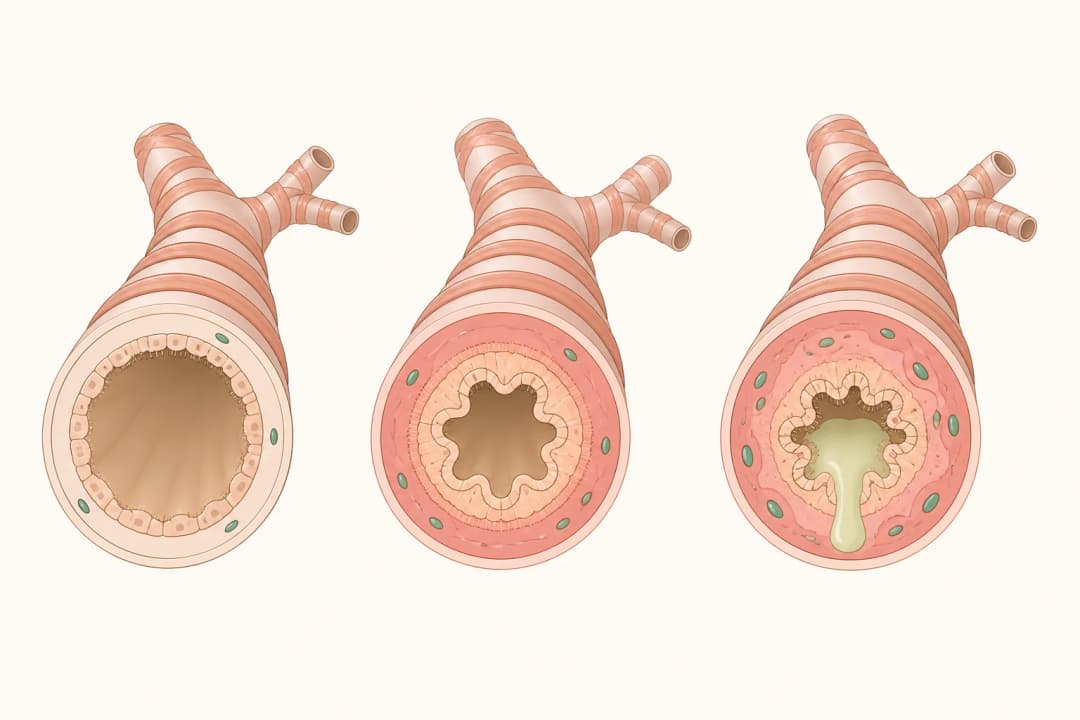
Asthma can narrow the airways and make the chest feel tight or sore, especially after repeated coughing or strenuous breathing. Allergic rhinitis and house dust mite allergy may trigger airway symptoms. Chronic cough can strain chest muscles. Chest tightness, wheezing and cough often occur together during airway narrowing, yet chest pain can also arise from heart, lung, muscle or digestive problems, which require clinical assessment.
What to do now
Stop exertion and sit upright. Follow your prescribed asthma action plan, including the reliever dose and timing it gives you. Move away from smoke, dust or another known trigger. Avoid lying flat if breathing feels difficult. Note whether the pain is pressure, sharp pain or soreness with movement, and record wheezing, cough, fever, dizziness and how your reliever affects symptoms. Do not delay help to test whether it settles.
When to seek care
Call emergency services for crushing or heavy chest pain, pain spreading to the arm, jaw or back, severe breathlessness, blue lips, fainting, confusion or inability to speak normally. Seek urgent care when chest pain is sudden, persistent, worsening, linked with coughing blood, or does not improve as your asthma plan expects. Arrange a review after a flare or when symptoms are waking you, limiting activity or needing reliever medicine more often.
Questions for your doctor
Does this pain fit airway tightness, muscle strain or another cause? Is my inhaler technique correct? Should my action plan change? Do I need breathing tests, an ECG or other assessment? When would nebuliser treatment be appropriate?
Find care
General Clinics & Polyclinics in Abu Dhabi
That answer is general. If you want it applied to your own case, these are licensed general clinics & polyclinics listed in Abu Dhabi.
27 Ar Ruwwad St - Shakhbout City - MSH4 - Abu Dhabi - United Arab Emirates
Accepts: Daman, Thiqa, Cigna, MetLife +20 more
Al Ruwais, Al Dhafrah
Accepts: Daman, Thiqa, AXA, Cigna +16 more
Al Bahyah - Al Bahyah Old - Abu Dhabi - United Arab Emirates
Accepts: Daman, Thiqa, Cigna, Allianz Care +18 more
Abu Dhabi
Accepts: Daman, Thiqa, AXA, Cigna +27 more
Ordered by verification status and how complete each clinic's public record is, then alphabetically. This is a directory listing, not a ranking — Zavis does not rate or recommend providers.
A factual listing drawn from the DHA, DOH and MOHAP licence registers. It is not a referral, an endorsement, or advice that any of these providers is right for you.
Questions people ask
Can asthma make the chest hurt?
Asthma-related airway narrowing can feel like chest tightness, and repeated coughing can make muscles sore, but new chest pain still deserves careful assessment.
What if my reliever does not help?
Follow the urgent steps in your asthma plan and seek emergency care if breathing or chest symptoms remain severe or worsen.
Related
Related reading
Keep reading
Medical disclaimer. This page is general health information, not medical advice, and it cannot diagnose you. Always consult a licensed healthcare provider about your own symptoms and treatment. In an emergency in the UAE, call 998 for an ambulance.