
What should you know about hyperthyroidism types?
Short answer
Hyperthyroidism types are grouped by why the thyroid releases too much hormone and how long the overactivity lasts.
This answers one question. It is not a diagnosis and does not replace an assessment by a licensed doctor.
At a glance
- Types differ by
- Cause, duration and pattern of hormone release
- Diagnosis
- Thyroid blood tests plus assessment of the likely cause
Main patterns
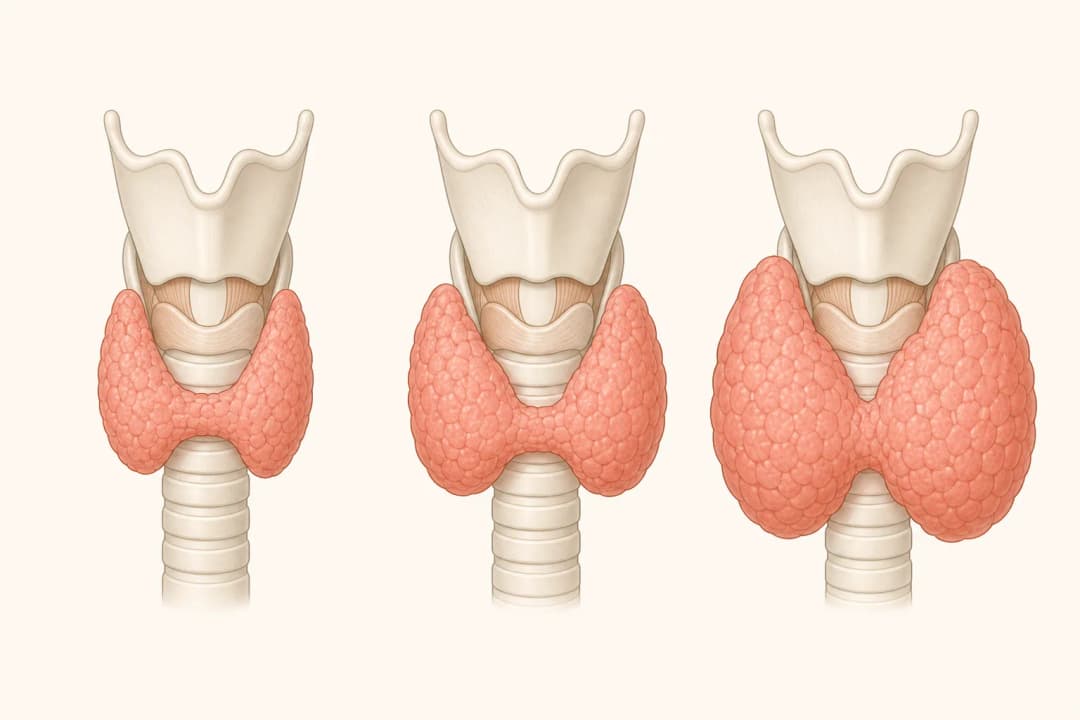
Graves’ disease is an immune-related form in which antibodies stimulate the whole thyroid. Toxic multinodular goitre and toxic adenoma involve one or more areas making hormone without normal control. Thyroiditis is inflammation: stored hormone escapes into the blood, so the overactive phase may be temporary and can be followed by low thyroid activity. A medication-related form can happen when thyroid hormone replacement is more than the body needs.
The label matters because treatment differs. Tests may include thyroid hormones, antibodies, an examination of the neck, and sometimes imaging. Symptoms such as palpitations, sweating, heat intolerance, poor sleep and diarrhoea can occur across types, so symptoms alone cannot identify the pattern.
How to proceed
Book an appointment for thyroid blood tests if symptoms persist or recur. Take your medicine packets and supplement list to the visit, including the dose and timing of thyroid hormone. Mention neck swelling, eye irritation or changes in vision, recent illness, pregnancy plans and previous thyroid problems. Follow the recommended testing plan even if symptoms settle, because temporary thyroiditis can change phase.
Red flags
Go to urgent care for chest pain, fainting, severe breathlessness, confusion, a very rapid heartbeat or a high temperature with severe agitation. New or worsening eye pain, double vision or reduced vision needs prompt assessment. Contact a clinician quickly if repeated vomiting or severe diarrhoea makes drinking difficult.
What to ask
Ask which type your tests support, whether the overactivity is expected to be temporary, what follow-up will detect a low-thyroid phase, and which treatment options fit your circumstances.
Find care
General Clinics & Polyclinics in Abu Dhabi
That answer is general. If you want it applied to your own case, these are licensed general clinics & polyclinics listed in Abu Dhabi.
27 Ar Ruwwad St - Shakhbout City - MSH4 - Abu Dhabi - United Arab Emirates
Accepts: Daman, Thiqa, Cigna, MetLife +20 more
Al Ruwais, Al Dhafrah
Accepts: Daman, Thiqa, AXA, Cigna +16 more
Al Bahyah - Al Bahyah Old - Abu Dhabi - United Arab Emirates
Accepts: Daman, Thiqa, Cigna, Allianz Care +18 more
Abu Dhabi
Accepts: Daman, Thiqa, AXA, Cigna +27 more
Ordered by verification status and how complete each clinic's public record is, then alphabetically. This is a directory listing, not a ranking — Zavis does not rate or recommend providers.
A factual listing drawn from the DHA, DOH and MOHAP licence registers. It is not a referral, an endorsement, or advice that any of these providers is right for you.
Questions people ask
Is Graves’ disease the only type of hyperthyroidism?
No. Nodules, thyroid inflammation and excess thyroid medicine can also produce an overactive thyroid picture.
Can hyperthyroidism be temporary?
Yes. In thyroiditis, stored hormone may leak for a limited period before thyroid activity changes again.
Related
Related reading
Keep reading
Medical disclaimer. This page is general health information, not medical advice, and it cannot diagnose you. Always consult a licensed healthcare provider about your own symptoms and treatment. In an emergency in the UAE, call 998 for an ambulance.