
How long does PRP for hair loss take to work for female pattern hair loss?
Short answer
PRP for female pattern hair loss may show early changes after several months, while the full response requires follow-up over the hair-growth cycle.
This answers one question. It is not a diagnosis and does not replace an assessment by a licensed doctor.
At a glance
- First review
- Often assessed after several months
- Best comparison
- Matching photographs over time
- Tell the clinic
- Mention illness, hormonal changes and scalp symptoms
How to interpret progress
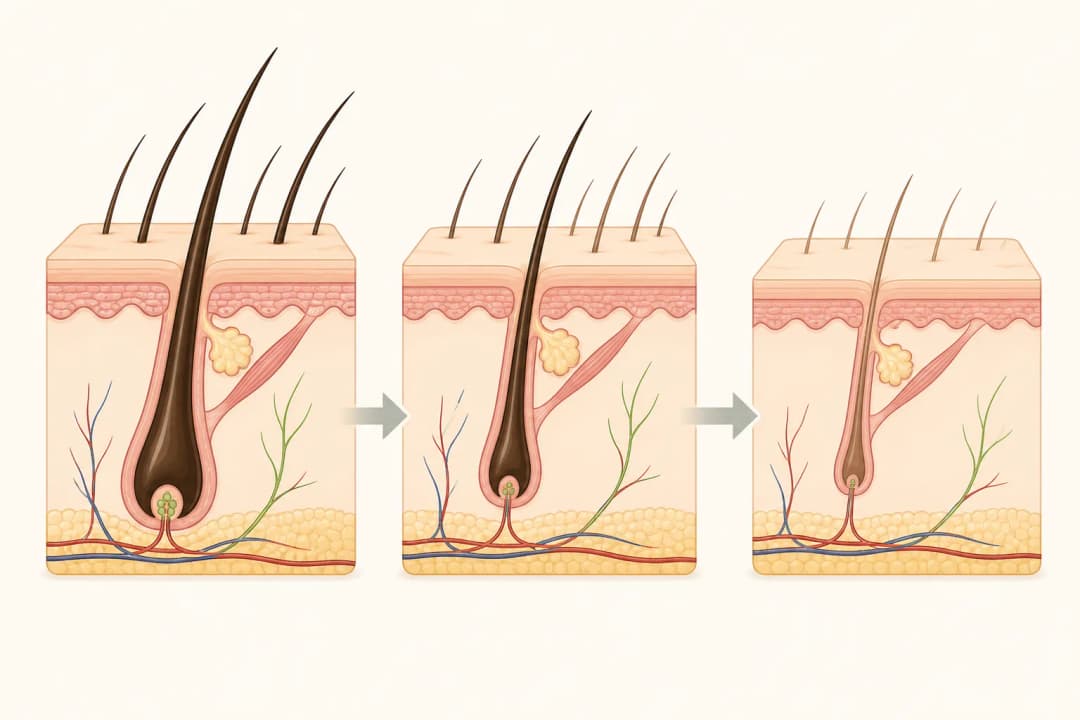
Female pattern hair loss can cause widening of the part or reduced density over the top of the scalp. PRP places concentrated blood components into selected areas, but follicles need time to move through their growth cycle. Some people first notice less shedding, while others notice changes in the feel or coverage of the hair later. Menstrual changes, illness, nutritional problems and scalp inflammation can also affect shedding and should be discussed during assessment.
Preparing for assessment
Follow the clinic’s treatment and aftercare instructions, and attend planned reviews. Take scalp photographs using the same parting, distance and lighting each time. Keep a simple record of shedding changes and report scalp itching, scaling or pain. Do not use a short-term change in styling as proof of regrowth. For treatment information, read [PRP For Hair Loss](/treatments/hair-restoration/prp-hair-treatment/) and [Female Pattern Hair Loss](/conditions/female-pattern-hair-loss/).
When to ask for help
Contact the clinic promptly if post-injection pain increases, redness spreads, swelling is marked, drainage appears or fever develops. Arrange an earlier review for sudden patchy loss, significant scalp inflammation or rapid worsening. A different pattern may need another examination before further treatment.
Questions for your doctor
Ask how progress will be measured, when photographs will be compared and whether blood tests or a scalp examination are appropriate. Ask whether medicines, pregnancy plans or hormonal changes affect the treatment choice.
Find care
General Clinics & Polyclinics in Abu Dhabi
That answer is general. If you want it applied to your own case, these are licensed general clinics & polyclinics listed in Abu Dhabi.
27 Ar Ruwwad St - Shakhbout City - MSH4 - Abu Dhabi - United Arab Emirates
Accepts: Daman, Thiqa, Cigna, MetLife +20 more
Al Ruwais, Al Dhafrah
Accepts: Daman, Thiqa, AXA, Cigna +16 more
Al Bahyah - Al Bahyah Old - Abu Dhabi - United Arab Emirates
Accepts: Daman, Thiqa, Cigna, Allianz Care +18 more
Abu Dhabi
Accepts: Daman, Thiqa, AXA, Cigna +27 more
Ordered by verification status and how complete each clinic's public record is, then alphabetically. This is a directory listing, not a ranking — Zavis does not rate or recommend providers.
A factual listing drawn from the DHA, DOH and MOHAP licence registers. It is not a referral, an endorsement, or advice that any of these providers is right for you.
Questions people ask
Why can shedding change before density?
Shedding and visible fullness reflect different parts of the hair cycle, so one may change before the other.
What if the hair loss is patchy?
Arrange a clinical assessment. Patchy loss can have causes that differ from female pattern hair loss and may need a different approach.
Related
Related reading
Keep reading
Medical disclaimer. This page is general health information, not medical advice, and it cannot diagnose you. Always consult a licensed healthcare provider about your own symptoms and treatment. In an emergency in the UAE, call 998 for an ambulance.