
How long does paediatric physiotherapy take to work for Osgood-Schlatter disease?
Short answer
Paediatric physiotherapy may reduce activity-related knee pain over several visits, while restoring strength and a comfortable return to running or jumping can take longer and varies with growth and training load.
This answers one question. It is not a diagnosis and does not replace an assessment by a licensed doctor.
At a glance
- First changes
- Less activity-related pain and better movement control.
- Return to sport
- Built in stages as strength and tolerance improve.
- Knee bump
- May remain after symptoms settle.
Why recovery is gradual
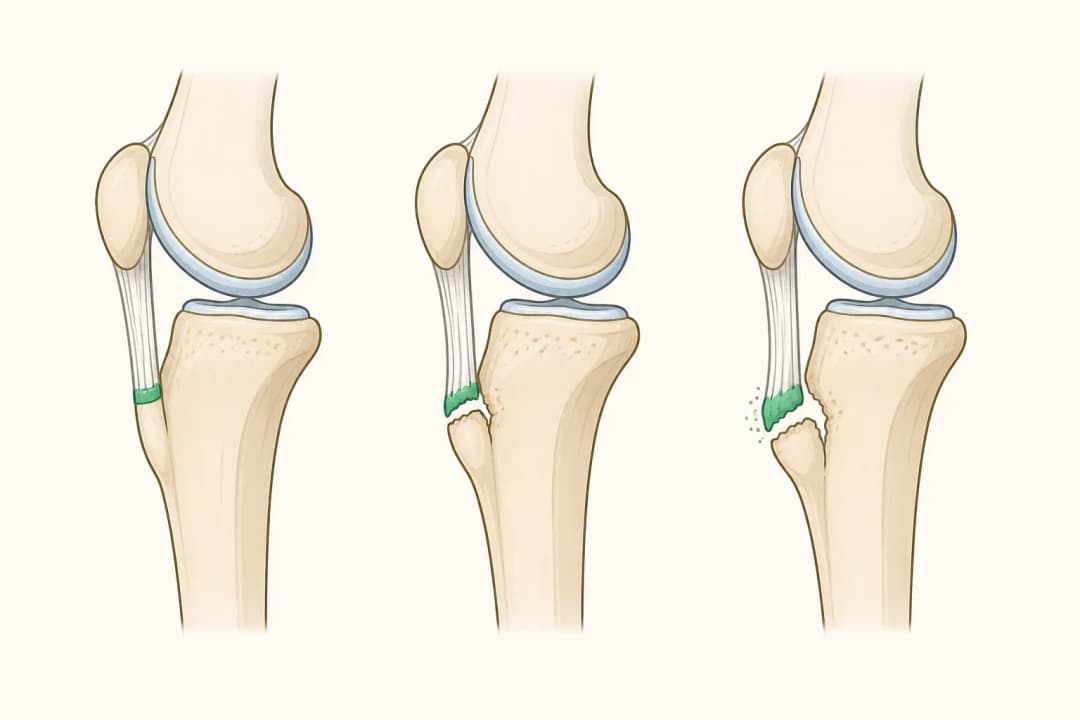
Osgood-Schlatter disease affects the growth area below the knee where the tendon attaches. Repeated running, jumping and rapid changes in training can keep loading this area. Physiotherapy cannot stop growth, so the aim is to improve tolerance while symptoms settle. Progress may mean less pain after sport, easier stairs, stronger thighs and hips, or completing drills with better control.
The plan may include thigh and hip strengthening, calf or thigh flexibility work, activity modification and a gradual return to impact. A visible bump below the knee can remain even when symptoms improve.
Making treatment more effective
Follow the agreed activity limits and complete exercises with the technique taught by the therapist. Record which activities bring on pain and whether discomfort settles with rest. Increase running or jumping in stages rather than returning to the full training schedule at once. Tell the physiotherapist about tournaments, school sports and footwear so the plan fits real demands. Ice or other symptom measures should be used only as advised.
When to arrange another assessment
Contact the care team if pain is worsening, appears at rest or at night, causes a limp, or does not settle with the agreed reduction in load. Seek urgent care after a forceful injury if the child cannot bear weight, the knee suddenly swells, or there is severe pain or inability to straighten the leg.
Questions to ask
What level of running and jumping is suitable now? Which symptom means the training load is too high? How will strength and readiness for sport be tested? Should both legs follow the same exercise plan? When should persistent pain prompt imaging or an orthopaedic review?
Find care
General Clinics & Polyclinics in Abu Dhabi
That answer is general. If you want it applied to your own case, these are licensed general clinics & polyclinics listed in Abu Dhabi.
27 Ar Ruwwad St - Shakhbout City - MSH4 - Abu Dhabi - United Arab Emirates
Accepts: Daman, Thiqa, Cigna, MetLife +20 more
Al Ruwais, Al Dhafrah
Accepts: Daman, Thiqa, AXA, Cigna +16 more
Al Bahyah - Al Bahyah Old - Abu Dhabi - United Arab Emirates
Accepts: Daman, Thiqa, Cigna, Allianz Care +18 more
Abu Dhabi
Accepts: Daman, Thiqa, AXA, Cigna +27 more
Ordered by verification status and how complete each clinic's public record is, then alphabetically. This is a directory listing, not a ranking — Zavis does not rate or recommend providers.
A factual listing drawn from the DHA, DOH and MOHAP licence registers. It is not a referral, an endorsement, or advice that any of these providers is right for you.
Questions people ask
Does physiotherapy remove the bump below the knee?
No. The bump is related to the growth area and tendon attachment; therapy focuses on pain, strength, movement and activity tolerance.
Should my child stop all sport?
Not always. The therapist can adjust impact, intensity and rest while keeping suitable activity, but pain and limping should guide a reassessment.
Related
Related reading
Keep reading
Medical disclaimer. This page is general health information, not medical advice, and it cannot diagnose you. Always consult a licensed healthcare provider about your own symptoms and treatment. In an emergency in the UAE, call 998 for an ambulance.