
How is trigger finger treated?
Short answer
Trigger finger is treated with activity changes, splinting, an injection, or release surgery depending on severity and response.
This answers one question. It is not a diagnosis and does not replace an assessment by a licensed doctor.
At a glance
- Common options
- Activity changes, splinting, injection, or release surgery
- Assessment focus
- Catching, stiffness, tendon movement, and hand function
What treatment involves
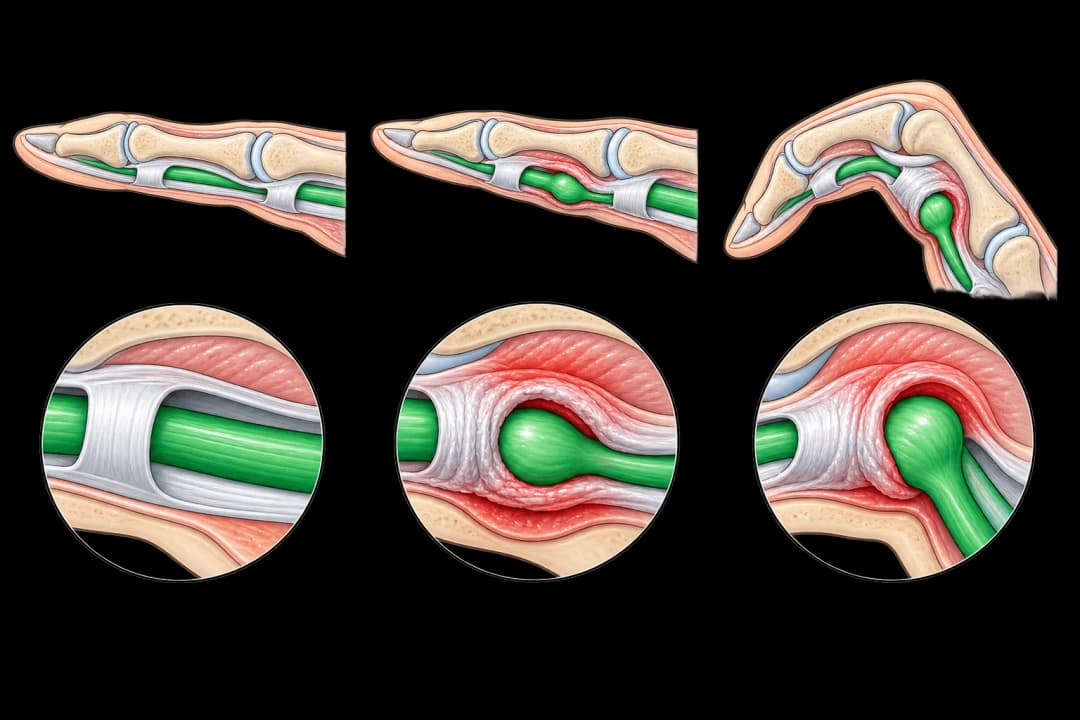
Trigger finger happens when a finger tendon does not glide smoothly through its surrounding pulley. This can cause morning stiffness, clicking, or a finger that catches while bending or straightening. Mild symptoms may settle when gripping, pinching, or repetitive hand work is reduced. A clinician may recommend a night splint to keep the finger in a comfortable position and limit irritation.
A cortisone injection can reduce swelling around the tendon and may improve movement. If symptoms continue, return, or prevent the finger from opening, trigger finger release surgery can widen the tight pulley so the tendon moves more freely. The choice depends on how long symptoms have been present, which finger is affected, and your examination.
What you can do now
Avoid forceful repeated gripping for a short period, but keep the other fingers moving gently. Do not force a locked finger straight. Use a splint only as directed, because prolonged restriction can make the hand stiffer. Arrange an assessment if catching persists, if pain interferes with work or sleep, or if you cannot fully bend or straighten the finger.
When to seek care
Seek prompt medical care after an injury if the finger is visibly deformed, deeply cut, unusually pale or blue, or suddenly impossible to move. Arrange routine review for ongoing locking, increasing swelling, numbness, or reduced hand use so tendon movement and nerve function can be checked.
Questions for your doctor
Ask whether splinting fits your pattern of symptoms, what benefit an injection may offer, and when release surgery would be considered. You can also ask which activities to modify and how to regain comfortable movement after treatment.
Find care
General Clinics & Polyclinics in Abu Dhabi
That answer is general. If you want it applied to your own case, these are licensed general clinics & polyclinics listed in Abu Dhabi.
27 Ar Ruwwad St - Shakhbout City - MSH4 - Abu Dhabi - United Arab Emirates
Accepts: Daman, Thiqa, Cigna, MetLife +20 more
Al Ruwais, Al Dhafrah
Accepts: Daman, Thiqa, AXA, Cigna +16 more
Al Bahyah - Al Bahyah Old - Abu Dhabi - United Arab Emirates
Accepts: Daman, Thiqa, Cigna, Allianz Care +18 more
Abu Dhabi
Accepts: Daman, Thiqa, AXA, Cigna +27 more
Ordered by verification status and how complete each clinic's public record is, then alphabetically. This is a directory listing, not a ranking — Zavis does not rate or recommend providers.
A factual listing drawn from the DHA, DOH and MOHAP licence registers. It is not a referral, an endorsement, or advice that any of these providers is right for you.
Questions people ask
Can trigger finger improve without surgery?
Some cases improve with activity changes, a splint, or an injection; persistent locking may need release surgery.
Should I force a locked finger open?
No. Forcing it can increase pain; have the finger assessed if it repeatedly catches or stays locked.
Related
Related reading
Keep reading
Medical disclaimer. This page is general health information, not medical advice, and it cannot diagnose you. Always consult a licensed healthcare provider about your own symptoms and treatment. In an emergency in the UAE, call 998 for an ambulance.