
How is inguinal hernia treated?
Short answer
An inguinal hernia is treated by monitoring suitable mild cases or repairing the weak groin area with surgery when needed.
This answers one question. It is not a diagnosis and does not replace an assessment by a licensed doctor.
At a glance
- Assessment
- Usually starts with a groin examination
- Definitive repair
- Surgery reinforces the weak area when indicated
How treatment is chosen
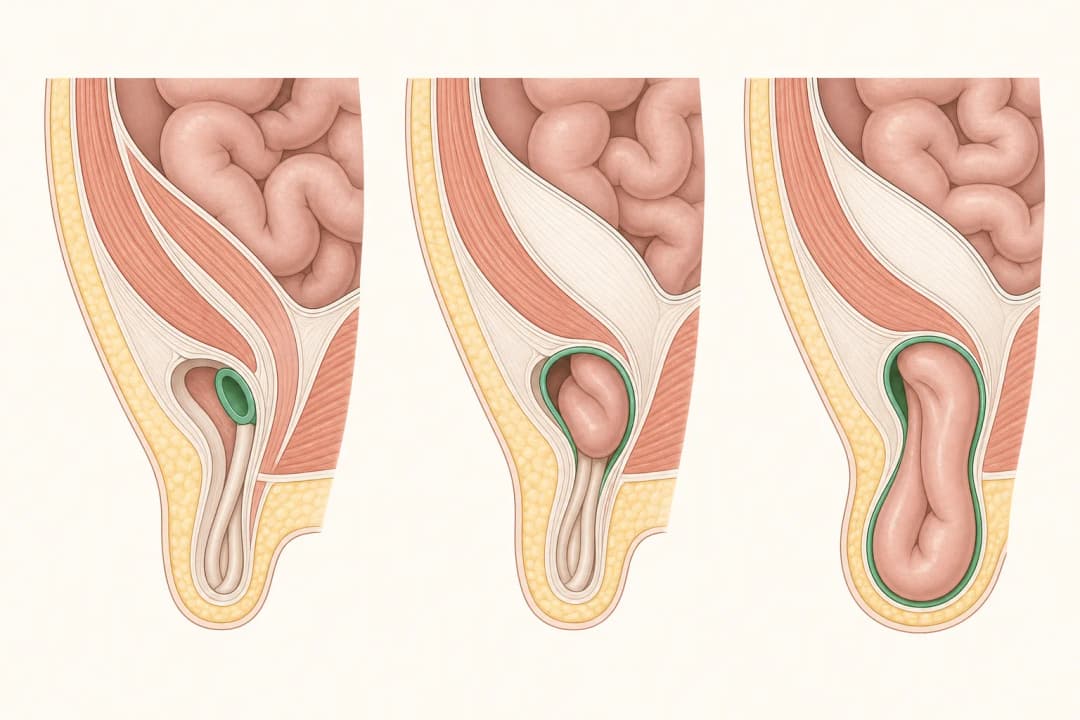
An inguinal hernia occurs when tissue pushes through a weak area in the groin. A clinician usually examines the lump while you stand, cough, or strain. A GP Consultation can confirm whether the swelling fits a hernia and whether another problem should be considered.
If the hernia is small and causes little trouble, a clinician may recommend observation, symptom tracking, and avoiding activities that provoke pain. This does not close the weakness. Surgery is considered for ongoing discomfort, enlargement, difficulty with daily activity, or concern that tissue is trapped.
Before and after treatment
Avoid heavy lifting that causes pain, treat constipation, and ask about safe activity rather than stopping all movement. Repair may be performed through small incisions or a larger incision, with the weak area reinforced. Recovery advice covers wound care, movement, lifting, and return to usual activities. An Abdominal Ultrasound may help when the examination is unclear.
When to seek urgent care
Seek urgent help if a hernia becomes suddenly painful, firm, discoloured, or cannot be gently pushed back, especially with vomiting, bloating, or inability to pass stool or gas. New Abdominal Pain or Testicular Pain with a groin swelling also needs prompt assessment.
Questions for your doctor
Ask whether monitoring is reasonable, what activity is safe, which changes should trigger urgent care, and whether a surgical referral or imaging is needed. Discuss how other illnesses and previous operations may affect the repair plan.
Find care
General Clinics & Polyclinics in Abu Dhabi
That answer is general. If you want it applied to your own case, these are licensed general clinics & polyclinics listed in Abu Dhabi.
27 Ar Ruwwad St - Shakhbout City - MSH4 - Abu Dhabi - United Arab Emirates
Accepts: Daman, Thiqa, Cigna, MetLife +20 more
Al Ruwais, Al Dhafrah
Accepts: Daman, Thiqa, AXA, Cigna +16 more
Al Bahyah - Al Bahyah Old - Abu Dhabi - United Arab Emirates
Accepts: Daman, Thiqa, Cigna, Allianz Care +18 more
Abu Dhabi
Accepts: Daman, Thiqa, AXA, Cigna +27 more
Ordered by verification status and how complete each clinic's public record is, then alphabetically. This is a directory listing, not a ranking — Zavis does not rate or recommend providers.
A factual listing drawn from the DHA, DOH and MOHAP licence registers. It is not a referral, an endorsement, or advice that any of these providers is right for you.
Questions people ask
Can an inguinal hernia heal by itself?
The underlying weakness does not close by itself, although mild symptoms may sometimes be monitored.
When is an inguinal hernia an emergency?
Sudden severe pain, a firm trapped lump, vomiting, or bowel symptoms require urgent assessment.
Related
Related reading
Keep reading
Medical disclaimer. This page is general health information, not medical advice, and it cannot diagnose you. Always consult a licensed healthcare provider about your own symptoms and treatment. In an emergency in the UAE, call 998 for an ambulance.