
How Is Gluteal Tendinopathy Treated?
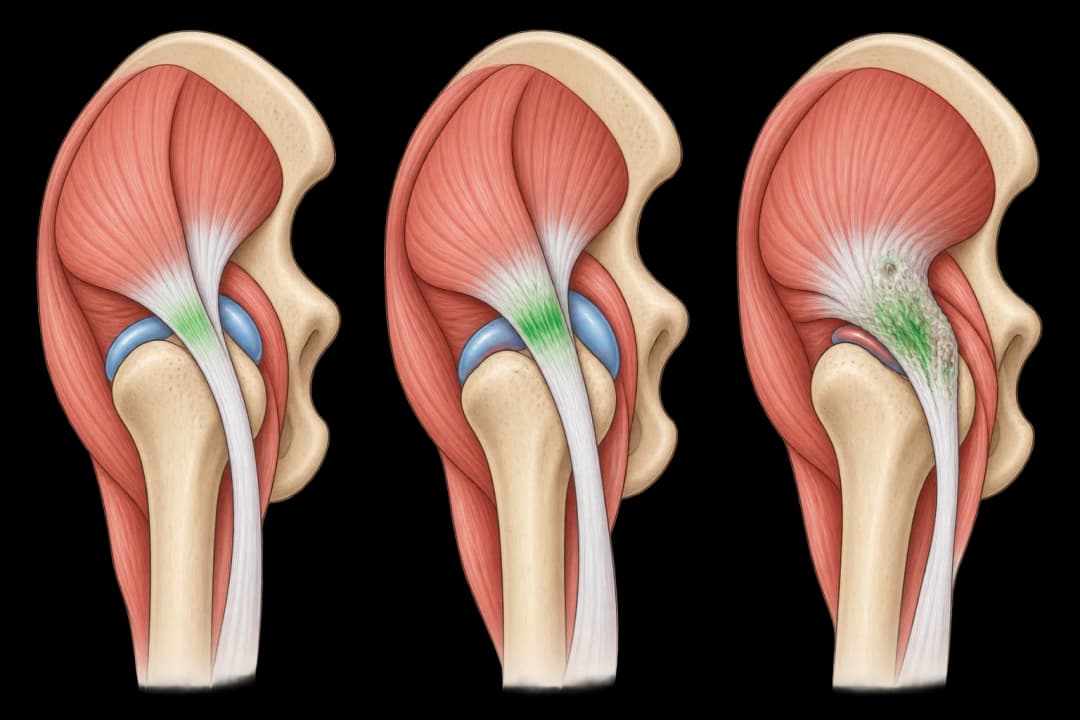
Short answer
Gluteal tendinopathy is treated by reducing tendon irritation, then progressively rebuilding hip strength and tolerance through rehabilitation.
This answers one question. It is not a diagnosis and does not replace an assessment by a licensed doctor.
At a glance
- First focus
- Reduce compression and provoking load without complete inactivity
- Progression
- Controlled hip strength work advances as symptoms settle
Understanding the tendon problem
Gluteal tendinopathy affects the tendons that help stabilise the outer hip and pelvis. It may cause buttock or outer hip pain when lying on that side, climbing stairs, standing on one leg or walking uphill. The symptoms reflect a tendon that is sensitive to load and compression, rather than a need to stop all movement.
A clinician considers the pain pattern, hip movement, strength and other possible sources of hip or buttock pain. This helps distinguish tendon symptoms from problems in the joint, lower back or surrounding tissues.
Building tolerance safely
Early care usually reduces positions that compress the tendon: avoid lying directly on the painful side, crossing the legs for long periods and dropping the hip when standing. A pillow between the knees may reduce pressure during sleep. Keep activity moving at a level that does not cause a lasting flare.
Physiotherapy can begin with isometric exercises and progress to controlled hip abductor and pelvic strength work. Strength Training Rehabilitation helps the tendon adapt to daily and sporting demands. Shockwave Therapy may be discussed as an adjunct when symptoms persist, but it does not replace load management and exercise.
When to seek care
Arrange assessment if pain follows a significant fall, you cannot bear weight, the hip looks abnormal, or there is marked weakness. Seek urgent care for fever with a hot swollen joint, rapidly increasing pain, new numbness or loss of bladder or bowel control. Review is also sensible when symptoms persist, recur or prevent sleep despite sensible activity changes.
Questions for your doctor
Ask: Is the tendon the main pain source? Which positions should I modify? What exercise level is appropriate today? How will we progress strengthening? Could Physiotherapy, Shockwave Therapy or Strength Training Rehabilitation fit my situation?
Find care
General Clinics & Polyclinics in Abu Dhabi
That answer is general. If you want it applied to your own case, these are licensed general clinics & polyclinics listed in Abu Dhabi.
27 Ar Ruwwad St - Shakhbout City - MSH4 - Abu Dhabi - United Arab Emirates
Accepts: Daman, Thiqa, Cigna, MetLife +20 more
Al Ruwais, Al Dhafrah
Accepts: Daman, Thiqa, AXA, Cigna +16 more
Al Bahyah - Al Bahyah Old - Abu Dhabi - United Arab Emirates
Accepts: Daman, Thiqa, Cigna, Allianz Care +18 more
Abu Dhabi
Accepts: Daman, Thiqa, AXA, Cigna +27 more
Ordered by verification status and how complete each clinic's public record is, then alphabetically. This is a directory listing, not a ranking — Zavis does not rate or recommend providers.
A factual listing drawn from the DHA, DOH and MOHAP licence registers. It is not a referral, an endorsement, or advice that any of these providers is right for you.
Questions people ask
Should I stop walking completely?
Complete rest is not usually the aim; reduce provoking hills, stairs or distances and build back according to symptoms and professional guidance.
What exercise helps gluteal tendinopathy?
A programme commonly progresses from tolerable static loading to hip and pelvic strengthening, with the exact exercises selected after assessment.
Related
Related reading
Keep reading
Medical disclaimer. This page is general health information, not medical advice, and it cannot diagnose you. Always consult a licensed healthcare provider about your own symptoms and treatment. In an emergency in the UAE, call 998 for an ambulance.