
How effective are topical retinoids for milia?
Short answer
Topical retinoids may gradually improve some milia by increasing skin-cell turnover, but results vary and treatment is not immediate.
This answers one question. It is not a diagnosis and does not replace an assessment by a licensed doctor.
At a glance
- Expected pace
- Gradual change rather than an immediate result
- Main limitation
- Some individual milia may not respond
- Key safety point
- Avoid self-extraction and protect delicate eye-area skin
What this means for milia
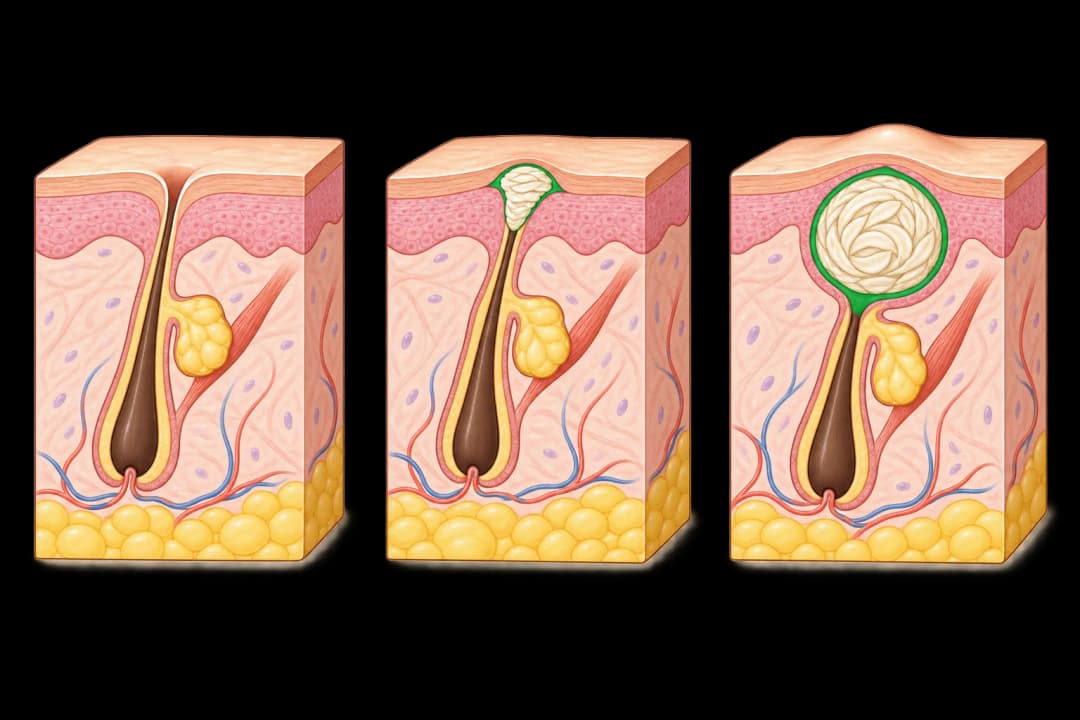
Milia are small keratin-filled cysts just beneath the surface of the skin. A retinoid can help loosen the way dead skin cells are retained, which may make a superficial bump easier for the skin to shed over time. This approach is more gradual than professional extraction, and an individual spot may not respond.
A dermatologist may consider a retinoid when milia are numerous, recur, or occur alongside acne-prone skin. The product and strength should match the treatment area. Skin around the eyes is thin and easily irritated, so ordinary facial retinoid products should not be applied close to the eyelid unless a clinician specifically advises it.
What you can do
Use only the retinoid and schedule recommended for your skin. Apply a thin amount to clean, dry skin, keep it away from the eyes and lips, and use a bland moisturiser if dryness develops. Mild peeling, redness, stinging, or increased sensitivity can occur, especially when starting.
Do not squeeze, pierce, or scrape milia at home. That can injure the surrounding skin and leave a mark or introduce infection. Gentle cleansing and daily sun protection can reduce irritation while you are treating the area. If the bumps remain unchanged, a dermatologist can confirm the diagnosis and discuss sterile removal or another suitable option.
When to seek care
Arrange a dermatology assessment if a bump is painful, inflamed, bleeding, rapidly changing, or not clearly a typical pearly-white milia. Seek advice promptly if a retinoid causes marked swelling, blistering, severe burning, or a spreading rash. Tell the clinician if you are pregnant, planning pregnancy, breastfeeding, or taking other medicines before starting a retinoid.
Questions for your doctor
Ask whether the bumps are definitely milia, whether a retinoid is appropriate for their location, and how long to try it before reviewing the plan. You can also ask which irritation symptoms are expected, when extraction would be preferable, and which products should be avoided around the eyes.
Find care
General Clinics & Polyclinics in Abu Dhabi
That answer is general. If you want it applied to your own case, these are licensed general clinics & polyclinics listed in Abu Dhabi.
27 Ar Ruwwad St - Shakhbout City - MSH4 - Abu Dhabi - United Arab Emirates
Accepts: Daman, Thiqa, Cigna, MetLife +20 more
Al Ruwais, Al Dhafrah
Accepts: Daman, Thiqa, AXA, Cigna +16 more
Al Bahyah - Al Bahyah Old - Abu Dhabi - United Arab Emirates
Accepts: Daman, Thiqa, Cigna, Allianz Care +18 more
Abu Dhabi
Accepts: Daman, Thiqa, AXA, Cigna +27 more
Ordered by verification status and how complete each clinic's public record is, then alphabetically. This is a directory listing, not a ranking — Zavis does not rate or recommend providers.
A factual listing drawn from the DHA, DOH and MOHAP licence registers. It is not a referral, an endorsement, or advice that any of these providers is right for you.
Questions people ask
Can I use a retinoid near milia under my eyes?
Only use a product near the eye area when a clinician has given specific instructions. The thin skin there is more prone to irritation, and accidental eye contact can be uncomfortable.
Is retinoid treatment faster than milia extraction?
Usually, retinoid treatment is a gradual approach. A dermatologist may remove a suitable milia during an appointment, while a retinoid is used over time and may not clear every bump.
What if the bumps do not improve?
Have the diagnosis and treatment plan reviewed. Persistent bumps may need professional extraction or assessment for another skin condition.
Related
Related reading
Keep reading
Medical disclaimer. This page is general health information, not medical advice, and it cannot diagnose you. Always consult a licensed healthcare provider about your own symptoms and treatment. In an emergency in the UAE, call 998 for an ambulance.