
What should you know about HbA1c in sickle cell disease?
Short answer
HbA1c measures glucose attached to haemoglobin and is commonly used to assess average blood glucose over the life of a red blood cell.
This answers one question. It is not a diagnosis and does not replace an assessment by a licensed doctor.
At a glance
- HbA1c measures
- Glucose attached to haemoglobin
- Possible limitation
- Changed red-cell survival can distort the estimate
- Useful context
- Transfusions, haemoglobin type, and direct glucose readings
Why can HbA1c be different in sickle cell disease?
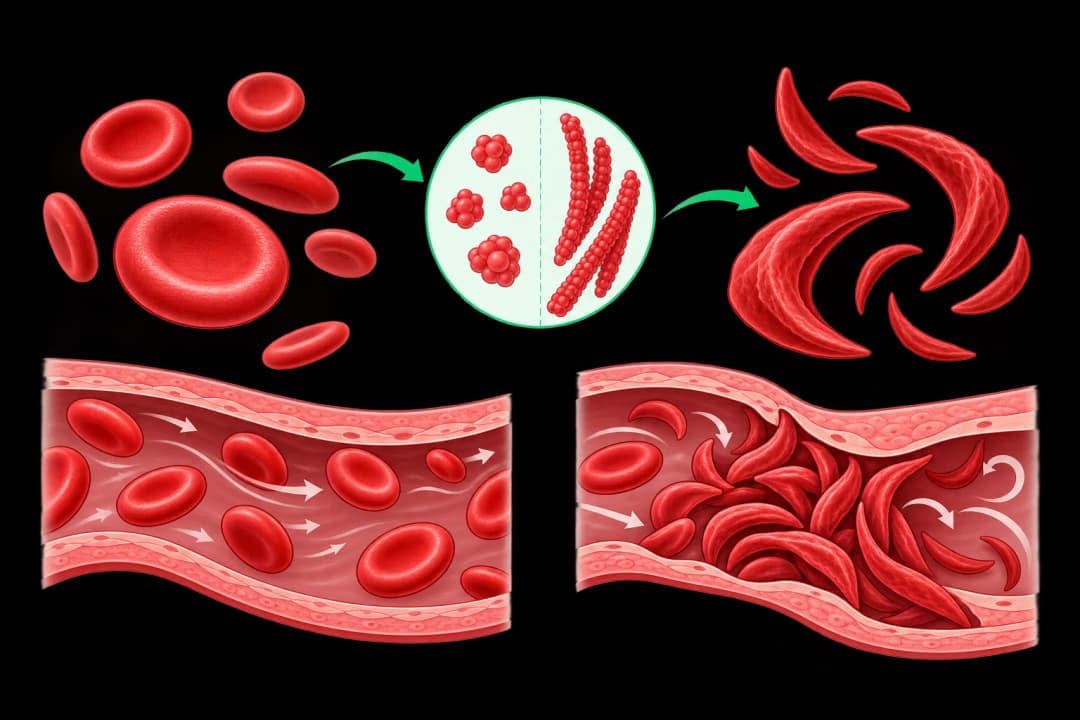
HbA1c measures glucose attached to haemoglobin and is commonly used to assess average blood glucose over the life of a red blood cell. Sickle cell disease changes red-cell shape and survival, and transfusions can introduce haemoglobin from another person. These factors may make HbA1c appear lower or otherwise fail to match your day-to-day glucose readings. The result should therefore be interpreted alongside your haemoglobin type, treatment history, symptoms, and direct glucose measurements.
What does the result tell you?
An HbA1c result that does not fit home readings, a glucose test, or symptoms needs careful review rather than automatic reassurance. Fatigue, pale skin, thirst, frequent urination, and blurred vision can have different explanations, including anaemia, a sickle cell episode, or high blood glucose. Your clinician may use a blood glucose test or another marker that is less dependent on red-cell lifespan. Recent transfusion, haemolysis, kidney problems, or a haemoglobin variant can all affect the choice of test.
What should you do next?
Tell the diabetes or haematology team when your last transfusion occurred and which sickle cell medicines you take. Bring home glucose records, meter details, and a list of symptoms to the appointment. Do not change diabetes treatment from HbA1c alone. If a different test is recommended, ask how to prepare and how its result will guide care. Continue your established sickle cell plan, drink fluids as advised, and seek help early during a pain or fever episode.
When should you seek care?
Seek urgent help for chest pain, difficulty breathing, sudden weakness, confusion, severe dehydration, or a fever during a sickle cell illness. Arrange prompt review for repeated very high or low glucose readings, vomiting, worsening fatigue, or new pale skin. A mismatch between your symptoms and HbA1c should be reported promptly so it can be assessed with a suitable test.
Questions for your doctor
Is HbA1c dependable with my haemoglobin type and recent transfusions? Which blood glucose or alternative test should we use? How should I record readings during sickle cell pain or illness? Could anaemia or kidney health change the interpretation?
Find care
General Clinics & Polyclinics in Abu Dhabi
That answer is general. If you want it applied to your own case, these are licensed general clinics & polyclinics listed in Abu Dhabi.
27 Ar Ruwwad St - Shakhbout City - MSH4 - Abu Dhabi - United Arab Emirates
Accepts: Daman, Thiqa, Cigna, MetLife +20 more
Al Ruwais, Al Dhafrah
Accepts: Daman, Thiqa, AXA, Cigna +16 more
Al Bahyah - Al Bahyah Old - Abu Dhabi - United Arab Emirates
Accepts: Daman, Thiqa, Cigna, Allianz Care +18 more
Abu Dhabi
Accepts: Daman, Thiqa, AXA, Cigna +27 more
Ordered by verification status and how complete each clinic's public record is, then alphabetically. This is a directory listing, not a ranking — Zavis does not rate or recommend providers.
A factual listing drawn from the DHA, DOH and MOHAP licence registers. It is not a referral, an endorsement, or advice that any of these providers is right for you.
Questions people ask
Can sickle cell disease make HbA1c inaccurate?
Yes. Red-cell survival, haemoglobin variants, and transfusions can affect how the result reflects average glucose.
What may be used instead of HbA1c?
Depending on your situation, a clinician may use direct blood glucose testing or another marker, with the choice guided by your blood history and treatment.
Related
Related reading
Keep reading
Medical disclaimer. This page is general health information, not medical advice, and it cannot diagnose you. Always consult a licensed healthcare provider about your own symptoms and treatment. In an emergency in the UAE, call 998 for an ambulance.